Greater Poland National Park Day Trip From Poznan
Greater Poland National Park sits within easy day-trip range of Poznan, the capital of the Wielkopolskie voivodeship in western Poland, and this guide sets out what is verified, what is not, and how to plan the outing around it.

Short answer
Greater Poland National Park is a forest and lakeland day trip from Poznan. No entry fee, opening hours or bus line for the park is verified in this desk's sources, so confirm terms on the park's official channels; the verified planning figures that do exist, for Kornik, Rogalin, Biskupin and Gniezno, are all in this guide.
Greater Poland National Park is one of the green day-trip options that sits within reach of Poznan, the capital of the Wielkopolskie voivodeship (Greater Poland) in western Poland, on the Warta river. This guide takes a research-and-reporting approach to it. The park's own entry fee, its opening schedule and its museum terms are not carried in this desk's verified sources, so nothing on this page invents them. What the sources do carry, in full, is everything around the trip: the seasons, the train times into and out of Poznan, and the verified hours and ticket prices of the Wielkopolska sights that pair naturally with a park outing, from Kornik Castle to Biskupin.
What Is Greater Poland National Park And Why Visit From Poznan?
Greater Poland National Park is a protected forest and lakeland landscape in the Wielkopolska region, reachable as a day trip from Poznan, and it is a common escape for visitors who want a day of quiet woodland walking and lakeside trails between the city's museums and squares. Its draw is nature rather than monuments, with no entry fee, opening schedule or trail status verified here. The park protects a wooded landscape with lakes and walking trails, and it is a common escape for visitors based in Poznan who want a day of nature between the city's museums and squares. The park's visitor terms are the one thing this desk could not verify: no entry fee, opening schedule or trail status appears in the verified sources behind this page, so the park's own official channels are where those details must be confirmed before you set out.
That honesty matters, because plenty of third-party pages quote park prices and hours with confidence this desk cannot match. The rule on this site is simple: a figure that is not sourced is not printed. For the park itself, that means describing the experience rather than pricing it. For everything else on the itinerary, the hours and zloty figures below come from the operators' own pages and can be planned around.
The park also fits a pattern that defines Wielkopolska as a day-trip region. Poznan sits at the centre of a ring of small destinations, Gniezno, Kornik, Rogalin, Biskupin and Lednica among them, each an hour or less away by regional standards, and the park is the natural-pause option in that ring. Visitors pairing a morning of trails with an afternoon at one of the castles get two very different halves of the same day.

How To Get To Greater Poland National Park
No bus line, timetable or journey time to Greater Poland National Park is verified in this desk's sources, so the honest answer is to plan the route on the park's official visitor page and the rail operators' planners, with Poznan as the base. Regional trains radiate from Poznan Glowny to the towns of Wielkopolska, and the national rail planner is the tool that shows which serves the park's gateway best on your travel date. For drivers, a hired car is the flexible option, since the park and its surrounding sights are spread across a region where a single vehicle saves the connection wait.
Two anchors help. For train travel, check the operator's planner for the day: the desk's verified long-distance figures from Poznan Glowny are ranges only, and regional connections to towns around the park are listed there with live times. For the road option, compare car hire in Poznan before committing to a rail-and-walk plan.

A practical note on arriving from abroad: Poland notified temporary internal border controls at its land borders with Germany and Lithuania, running from 2 October 2026 to 30 March 2027, so anyone reaching Poznan overland from Berlin should carry a passport or national ID on the train. The EU's Entry/Exit System is fully operational at external Schengen borders, and visa-exempt visitors may have fingerprints and a photo registered at their first entry. Anyone connecting from Berlin by rail can check Berlin to Poznan train options for the outbound leg.
The verified long-distance train ranges from Poznan Glowny, treated as approximate and always worth re-checking on the operator's planner:
| Destination | Typical direct time from Poznan Glowny |
|---|---|
| Warsaw | about 2 h 20 to 3 h 20 |
| Berlin | about 4 h 30 to 5 h 30 |
| Wroclaw | about 2 h 20 to 3 h 30 |
| Gdansk | about 3 h 40 to 5 h |
| Krakow | about 4 h to 6 h |
| Gniezno | about 25 to 45 minutes |
The Gniezno figure is the one regional range this desk carries, and it matters here because Gniezno is one of the natural add-ons to a park day. For Warsaw-bound planning at either end of a longer trip, check Poznan to Warsaw train options on the planner rather than relying on printed times.
What Can You Do Inside The Park?
Inside the park the core activities are woodland walking, lakeside trails and slow nature tourism amid protected forest and lakes, in a region that otherwise trades in castles and museums. The trail map, entry terms and any guided options are published by the park itself, and because fees and schedules change, its official page is the only place to confirm them. What this desk can say from its sources is the character of the visit: protected forest, lakes and marked trails in a region that otherwise trades in castles and museums. What it cannot say, and will not invent, is a trail length, an entry fee, a parking charge or a season opening date for the park. Those belong to the park's official page, and a day trip planned around them should start there.
That framing is not a hedge, it is the difference between a guide that holds up and one that quietly rots. Park fees and schedules change, and a copied figure from an aggregator is usually a year or two stale. The pattern elsewhere in this region shows why care pays off: the Palm House in Poznan itself is closed for rebuilding, with part of the pavilions due back towards the end of 2028, and the Town Hall museum interior is closed with no published reopening date. Attractions in this region shift, and the park is no exception.

For structure, treat the park day in three blocks. The first is the travel block, getting out of Poznan in the morning while the day is still long. The second is the trail block, a walk of whatever length the park's own map supports on the day, with the weather table lower down this page as the planning input. The third is the add-on block, and this is where Wielkopolska is generous: Kornik, Rogalin, Gniezno and Biskupin all sit in the same regional ring, and their verified hours and prices are laid out in the tables below.
If the weather turns, Poznan itself has a deep indoor bench. The rainy day guide to Poznan covers the indoor options, and the National Museum in Poznan anchor page is the place to start, noting that its branches are free on Tuesdays, never Sundays.
When Is The Best Time Of Year To Visit The Park?
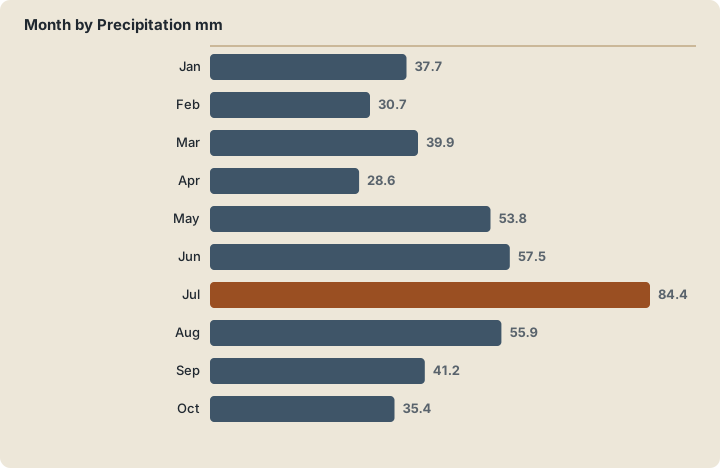
WMO's 1991-2020 climate normals for the Poznan station show the warmest months are July at a 25.2 C mean daily high and August at 24.9 C, April is the driest at 28.6 mm, and July is the wettest at 84.4 mm, so late spring and early autumn offer the best balance for trail walking. May and June combine mean highs of 19.8 C and 23.1 C with moderate rainfall of 53.8 mm and 57.5 mm, and September cools to a 19.5 C high with 41.2 mm. Winter walking is possible but cold: January averages a high of just 2.1 C with 19.7 frost days in the month.
The full normals, station 12330 Poznan, distributed by NOAA's climate normals product:
| Month | Mean daily high C | Mean daily low C | Precipitation mm | Days with 1 mm+ |
|---|---|---|---|---|
| Jan | 2.1 | -2.9 | 37.7 | 9.1 |
| Feb | 3.7 | -2.4 | 30.7 | 7.6 |
| Mar | 8.1 | 0.0 | 39.9 | 8.6 |
| Apr | 15.0 | 4.0 | 28.6 | 6.1 |
| May | 19.8 | 8.4 | 53.8 | 8.3 |
| Jun | 23.1 | 11.9 | 57.5 | 8.4 |
| Jul | 25.2 | 14.1 | 84.4 | 9.5 |
| Aug | 24.9 | 13.7 | 55.9 | 8.4 |
| Sep | 19.5 | 9.6 | 41.2 | 7.4 |
| Oct | 13.3 | 5.4 | 35.4 | 7.8 |
| Nov | 7.1 | 1.8 | 33.6 | 7.3 |
| Dec | 3.2 | -1.4 | 40.1 | 9.1 |
Two planning reads come out of that table. First, the wettest month is July, not a winter month: a summer visit carries the highest rain risk of the year, so trail plans for July should carry a fallback. Second, April is the driest month on the sheet, and its 15.0 C mean high is comfortable walking weather, which makes late April one of the quietly strong windows for a park day. Frost days drop to 4.6 in April and effectively vanish from May through August. Everything else covered here is indexed on Poznan Travel Guide.

Season also reshapes the add-ons. Kornik Castle's 2026 tourist season closes on 14 December, and its low-season hours from 1 October to 30 November run Tuesday to Sunday 10:00-15:15 with last entry at 14:30. Biskupin drops to 9:00-16:00 from November to March. A winter park visit is therefore a purer nature outing, with fewer of the regional sights open around it, while a May or September visit can stack a castle into the same day.
What Does A Greater Poland National Park Day Trip Cost?
The park's own entry cost is unsourced on this desk and must be confirmed with the park, but the verified costs around the trip are concrete: Kornik Castle at 40 zl normal and 20 zl reduced, the Kornik Arboretum at 10 zl, Rogalin Palace Museum at 20 zl, Biskupin at 28 zl and the Gniezno hill sights from 12 zl for the terrace upward. Those figures come from each operator's own price page, and they are the reliable skeleton of a day-trip budget. Poland uses the zloty, never the euro, and rates move daily, so no fixed conversion is printed here.
The verified ticket prices for the sights that pair with a park day:
| Sight | Normal zl | Reduced zl | Family or note |
|---|---|---|---|
| Kornik Castle | 40 | 20 | 2026 season closes 14 Dec |
| Kornik Arboretum | 10 | 7 | family 25, free under 5 |
| Rogalin Palace Museum | 20 | 13 | Tuesday free |
| Biskupin Archaeological Museum | 28 | 19 | family 2+2 75, under 7 free |
| Museum of the First Piasts at Lednica, museum seat | 30 | 20 | under 7 free |
| Ostrow Lednicki | 25 | 17 | 35 / 20 with audio guide |
At Gniezno's Lech Hill the individual options are priced separately, and an all-inclusive pass with audio guide exists at 48 zl normal and 42 zl reduced:
| Gniezno Lech Hill ticket | Normal zl | Reduced zl |
|---|---|---|
| Gniezno Doors | 16 | 14 |
| Cathedral vaults | 14 | 12 |
| Viewing terrace (tower) | 12 | 10 |
| Museum of the Archdiocese | 18 | 16 |
| All-inclusive pass with audio guide | 48 | 42 |
One Gniezno trap deserves its own sentence: on Sundays the cathedral and museum on Lech Hill are closed to tourists, with only the viewing terrace opening in two afternoon windows, 13:00-15:00 and 16:00-17:30. The Museum of the Origins of the Polish State in Gniezno, by contrast, is open daily and free on Sundays. Sunday planners should therefore aim for the origins museum, not the hill.
Kornik also sells guide services and audio guides, useful for visitors who want the castle explained rather than just walked:
| Kornik service | Price zl |
|---|---|
| Guide, Polish | 150 |
| Guide, English or German | 200 |
| Audio guide rental | 15 |
For anyone weighing the total against a shorter Poznan stay, the daily budget question for Poland is covered separately, and the Poznan on a budget guide lists the city's free days, including the Tuesday free admission at the National Museum branches.

Which Other Day Trips Combine Well With The Park?
The strongest pairings with a Greater Poland National Park day are Kornik Castle and Arboretum, Rogalin Palace, Gniezno and Biskupin, all in the same regional ring as Poznan, with verified hours that mostly close on Mondays and a season that thins after October. Kornik Castle is closed on Mondays and runs its low-season hours of 10:00-15:15 from 1 October to 30 November, while the Arboretum stays open daily at 10:00-16:00 from November to March. Rogalin closes Mondays too. Biskupin is open daily by season. Gniezno's origins museum is open daily and free on Sundays.
The verified hours, the detail that most often breaks a plan:
| Sight | Period | Hours | Monday |
|---|---|---|---|
| Kornik Castle | 1 Oct to 30 Nov 2026 | Tue-Sun 10:00-15:15, last entry 14:30 | closed |
| Kornik Arboretum | Nov to Mar | daily 10:00-16:00 | open |
| Rogalin Palace Museum | Nov to Feb | Tue-Sun 9:00-16:00 | closed |
| Rogalin park | Nov to Feb | 9:00-16:30 | open |
| Biskupin | Nov to Mar | daily 9:00-16:00 | open |
| Museum of the Origins of the Polish State, Gniezno | Oct to Apr | daily 9:00-16:00 | open |
The Monday pattern is the single most useful planning fact in the region. Kornik Castle and Rogalin both shut on Mondays, so a Monday park day should either stay in the park or head to Biskupin and the Gniezno origins museum, which do not. A full set of options for the wider ring sits on the Kornik Castle day trip page, the Rogalin Palace guide, the Biskupin day trip page and the Gniezno guide, each with its own verified detail.
Puszczykowo belongs in this ring as well. The Arkady Fiedler Museum in Puszczykowo is another Wielkopolska outing, though its visiting terms are unsourced on this desk and must be checked directly. For a longer loop that strings several of these destinations together, the seven days in Poland via Poznan itinerary and the Lake Lednica and Ostrow Lednicki page cover the ground in order.
For visitors who would rather not self-drive the ring, the region's flagship guided day covers the palace, the castle and the ancient oaks in one booked outing.
The alternative is a history-led guided day that connects the region's story across several sites, which suits travellers who want the narrative as much as the drive.
Both options leave the planning, the route and the tickets to the operator, which is exactly the trade a park-first day wants: the morning walk is self-guided by nature, and the afternoon becomes someone else's logistics.
What Should You Know Before You Go?
Check the park's official page for entry terms and trail status, carry a passport or ID if arriving across the German land border before 30 March 2027, plan Mondays around the castle closures, and bring zloty in cash for smaller sights, since Poland is not in the euro area. The park's fee and hours are unverified here, so they are the first thing to confirm. The regional sights mostly close on Mondays. Border controls on the German land border run to 30 March 2027, and the Entry/Exit System is live, so first entries may involve biometrics.

Packing follows the climate table rather than instinct. A July walk carries the highest rain risk of the year at 84.4 mm across the month, so a light shell belongs in the bag even on a warm forecast. An April visit pairs a 15.0 C mean high with nights around 4.0 C, which means layers. Winter visitors should note the 19.7 frost days in January and the -2.9 C mean low, and treat the trails as a cold-weather outing rather than a mild one.
Time in the city before or after the park day is worth planning too. The one day in Poznan itinerary sequences the old square and the cathedral island, and the Old Market Square guide covers the heart of it, with the Town Hall goats appearing on the facade daily at noon and, since recently, also at 3 pm, though their schedule during the current facade works is not confirmed and should not be promised.
For a shorter guided introduction to the city itself, a half-day tour is the standard option.

Common Questions About Greater Poland National Park
How to get to wielkopolski national park
No bus line or timetable to the park is verified in this desk's sources. Plan the route on the park's official visitor page and the rail operators' planners, using Poznan as the base. Regional trains run from Poznan Glowny to towns across Wielkopolska, and a hired car is the flexible alternative for reaching the trailheads directly.
Is Greater Poland National Park worth a day trip from Poznan?
Yes, for visitors who want forest and lakes between city sightseeing days. The park offers woodland walking in a region otherwise known for castles and museums. Its entry terms and trail details are not verified here, so confirm them on the park's official channels before committing the day.
How much does Greater Poland National Park cost?
No entry fee for the park is verified in this desk's sources, so no figure is printed. The verified costs around the trip are concrete: Kornik Castle at 40 zl normal, the Kornik Arboretum at 10 zl, Rogalin Palace Museum at 20 zl and Biskupin at 28 zl, all from the operators' own price pages.
When is the best time to visit Greater Poland National Park?
Late spring and early autumn. WMO's 1991-2020 normals for the Poznan station show May and June with mean highs of 19.8 C and 23.1 C and moderate rain, September at 19.5 C with 41.2 mm, and April as the driest month at 28.6 mm. July is both the warmest and the wettest month at 84.4 mm.
Can you combine the park with Kornik Castle?
Yes, and it is the most common pairing. Kornik Castle is closed on Mondays and runs 10:00-15:15 with last entry at 14:30 in the low season from 1 October to 30 November, while the Kornik Arboretum is open daily. The castle's 2026 tourist season closes on 14 December.
What should you check before visiting the park?
The park's official page for entry terms, hours and trail status, since none of those is verified here; the weather, since July is the wettest month on the Poznan normals; and the Monday closures at Kornik Castle and Rogalin if a castle is part of the plan. Overland arrivals from Germany before 30 March 2027 should also carry a passport or national ID.