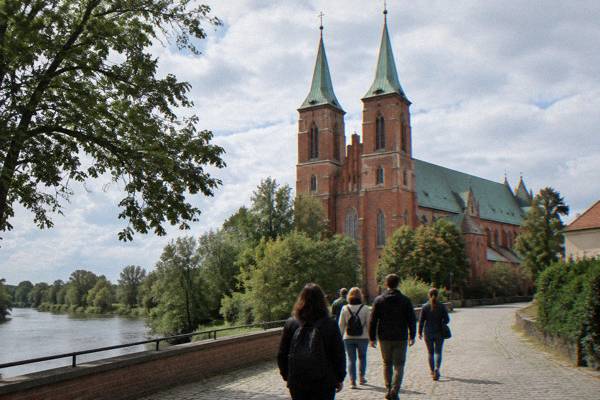
Lake Lednica And Ostrow Lednicki Day Trip From Poznan
Lake Lednica and its island Ostrow Lednicki sit within day-trip range of Poznan, the capital of the Wielkopolskie voivodeship in western Poland. The Museum of the First Piasts at Lednica runs the site, and its own 2026 price list is the backbone of this guide.

Short answer
The Museum of the First Piasts at Lednica charges 30 zl normal and 20 zl reduced for the museum seat, and 25 zl normal and 17 zl reduced for Ostrow Lednicki, rising to 35 zl and 20 zl with an audio guide. Children up to 7 enter free and parking is free. The island is reached by a crossing whose season dates are not published, so the museum's own page settles the practical questions.
Lake Lednica and its island, Ostrow Lednicki, give Poznan, the capital of the Wielkopolskie voivodeship in western Poland on the Warta river, one of its most evocative day trips. The Museum of the First Piasts at Lednica runs the site, and its pricing is unusually plain: a museum seat, a separate island ticket, an optional audio guide, free parking and free entry for the youngest visitors. This guide sets out what the museum's own 2026 price list and the region's official pages actually say, and how to build the day around them without guessing at anything the sources leave open.
Where Is Lake Lednica And Ostrow Lednicki?
Lake Lednica and its island Ostrow Lednicki make one of the quieter day trips out of Poznan, the capital of the Wielkopolskie voivodeship in western Poland. The Museum of the First Piasts at Lednica administers the whole site: its 2026 price list treats the museum seat on the mainland and the island as two separate tickets, parking is free, and children up to 7 enter free of charge. The island itself is the draw, reached across the water from the shore.
The site belongs to the same Piast story that runs through the wider region. The museum's name says it plainly: this is the Museum of the First Piasts, and the island is its headline exhibit. Travellers who want the same thread inside Poznan itself can continue it at Poznan Cathedral on Ostrow Tumski, whose crypts hold the relics of the tombs of Mieszko I and Boleslaw Chrobry alongside a 10th-century baptismal bowl, with the crypts open to tourists from 1 March to 15 November.
What the sources do not say matters just as much. The driving distance from Poznan is not published in any official page this site works from, so it is not printed here. The opening date of the museum's new building is likewise unconfirmed, and the season for the boat crossing is not published, which is why every practical question about the island circles back to the museum's own page on the day you plan to go.
The lake country around Lednica is part of its appeal. Wielkopolska is a region of low hills, farmland and small lakes, and a day here feels distinctly different from a city day in Poznan, where 534,239 people lived according to the Statistical Office in Poznan. Pack for open air rather than museum corridors, at least for the shore part of the day.

What Does Ostrow Lednicki Cost To Visit?
The Museum of the First Piasts at Lednica prices its 2026 list at 30 zl normal and 20 zl reduced for the museum seat, while Ostrow Lednicki costs 25 zl normal and 17 zl reduced, rising to 35 zl and 20 zl with an audio guide. Children up to 7 pay nothing and parking is free. The island and the museum seat are ticketed separately, so a full visit means buying both.
The split is the detail that catches people out. A visitor who buys only the island ticket sees the crossing and the island; a visitor who buys only the seat sees the museum building. The audio guide is sold as an upgrade on the island ticket, at 35 zl normal and 20 zl reduced against the plain island prices, and the museum's price list is the authority on all of it.
| Ticket | Normal | Reduced |
|---|---|---|
| Museum seat | 30 zl | 20 zl |
| Ostrow Lednicki island | 25 zl | 17 zl |
| Island with audio guide | 35 zl | 20 zl |
Two more lines from the same price list shape the family maths. Children up to 7 are free across the site, and the car park is free, so the only certain costs for a family with small children are the adult and reduced tickets. Poland uses the zloty, never the euro, and card acceptance at rural museum ticket desks is not something this site's sources confirm either way, so carrying some cash in zl is the sensible default for a day outside the city.
For visitors who prefer someone else to handle the logistics of a day out of Poznan, the tour options below are the bookable alternatives this site carries, with the operator's live listing carrying every price and availability detail.
How Do You Get From Poznan To Lake Lednica?
No train serves the lake directly, so the practical route from Poznan runs by car, with free parking at the museum. The nearest railhead is Gniezno, about 25 to 45 minutes from Poznan on the Koleje Wielkopolskie line according to its timetable, and the onward leg from there needs wheels of your own. The museum's own page is the place to confirm the crossing schedule before setting out.
Driving is the straightforward answer. The museum's price list confirms free parking on site, which removes the usual rural-attraction friction, and a hire car lets the day stretch to Gniezno or beyond. Visitors who want wheels for the day can compare options through car hire for the Poznan area and pick up in the city.
The rail-plus-road hybrid works too. Gniezno station is the closest confirmed rail point, about 25 to 45 minutes from Poznan by train, and the town itself deserves a stop: its Museum of the Origins of the Polish State is open daily and free on Sundays, and the full Gniezno case is laid out in the Gniezno day-trip guide. What no source in this site's pack gives is a bus line, a fare or a driving time for the final leg to the lake, so none is invented here.
One planning note belongs to anyone combining the lake with a longer loop: the region rewards slow routes. The seven days in Poland via Poznan itinerary shows how Lednica-style stops slot into a wider Wielkopolska route, and the same logic applies in miniature to a single day.

If a self-driven day feels like more logistics than you want, a guided option removes the planning entirely.
What Is There To See On Ostrow Lednicki?
Ostrow Lednicki is the island reserve of the Museum of the First Piasts, and the visit has two halves: the mainland museum seat with its displays, and the island itself, reached by a crossing and explained by an optional audio guide at 35 zl normal or 20 zl reduced. The museum's own page is the only reliable source for what is open on the island on a given day, and it settles the crossing question too.
The island is the reason the museum exists where it does. The name on the tickets, Museum of the First Piasts, frames what the site presents, and the island ticket is the one that puts a visitor on the water and the ground the story is attached to. The audio guide upgrade exists precisely because the island is an open-air experience rather than a gallery walk, and the upgrade prices come straight from the 2026 list.
What this site's sources do not carry, and therefore what this page will not claim, is any date, ruler or building phase for the island's remains. Plenty of competing guides fill that gap from memory. This one sticks to what the museum itself publishes and points the reader there for the interpretive layer, which the audio guide delivers on site.
For visitors who like a narrated layer elsewhere in the region too, self-paced audio tours cover a number of Polish destinations, Poznan included, and pair well with a Lednica day spent partly on the road.

When Is The Best Time To Visit Lake Lednica?
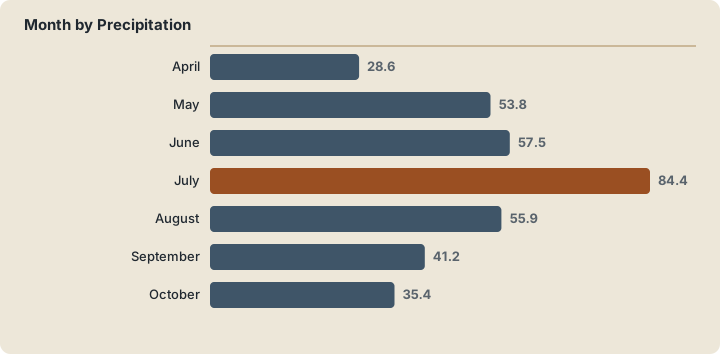
WMO's 1991-2020 climate normals for the Poznan station put May at a 19.8 C mean daily high against July's 25.2 C, and July is also the wettest month at 84.4 mm. April, at 28.6 mm, is the driest. The island crossing runs in the warmer months, but its season dates are not published, so the museum's page settles when the island can actually be visited.
The climate table below is the planning backbone. It comes from the World Meteorological Organization's 1991-2020 normals for station 12330, Poznan, the closest long-run record this site treats as authoritative, and it says two useful things: summer is warm but July carries the most rain, and the shoulders are drier than high summer. More of these guides are collected on Poznan Travel Guide.
| Month | Mean daily high | Mean daily low | Precipitation |
|---|---|---|---|
| April | 15.0 C | 4.0 C | 28.6 mm |
| May | 19.8 C | 8.4 C | 53.8 mm |
| June | 23.1 C | 11.9 C | 57.5 mm |
| July | 25.2 C | 14.1 C | 84.4 mm |
| August | 24.9 C | 13.7 C | 55.9 mm |
| September | 19.5 C | 9.6 C | 41.2 mm |
| October | 13.3 C | 5.4 C | 35.4 mm |
The seasonal caveat matters more here than at a city museum. The boat crossing to the island is a warm-month operation whose dates the museum does not publish in advance in the sources available, so a winter visit risks finding an island that cannot be reached. Biskupin, by contrast, publishes winter hours of 9:00-16:00 November to March, which makes it the more reliable cold-weather Piast stop.
Rain is the other planning variable. A wet day at a lake is a short day, and Poznan's own indoor fallbacks are covered in the rainy day guide. The PRL museum entry below is one of the indoor options this site carries for exactly that kind of day.
Can You Combine Lednica With Gniezno Or Biskupin?
Gniezno and Biskupin are the two natural pairings. Gniezno lies about 25 to 45 minutes from Poznan by train; its Museum of the Origins of the Polish State opens daily 9:00-16:00 from October to April with free Sunday admission, though on Sundays the cathedral hill closes to tourists. Biskupin opens 9:00-18:00 from May to September at 28 zl normal and 19 zl reduced, and children up to 7 enter free.
Gniezno first, because it is the railhead. The Museum of the Origins of the Polish State, ul. Kostrzewskiego 1, is open daily, 9:00-18:00 May to September and 9:00-16:00 October to April, with Sunday as its free-admission day. The twist is on the hill above it: at Wzgorze Lecha, from 1 May to 31 October the cathedral, museum and viewing terrace open Monday to Saturday 9:00-17:00, but on Sundays the cathedral and museum close to tourists entirely and only the terrace opens, at 13:00-15:00 and 16:00-17:30. Sunday is therefore free-museum day and closed-cathedral day at once, which is worth knowing before you build an itinerary around it.
| Gniezno hill ticket | Normal | Reduced |
|---|---|---|
| Gniezno Doors | 16 zl | 14 zl |
| Cathedral vaults | 14 zl | 12 zl |
| Viewing terrace | 12 zl | 10 zl |
| Museum of the Archdiocese | 18 zl | 16 zl |
| All-inclusive pass with audio guide | 48 zl | 42 zl |
Biskupin is the second pairing and the most family-friendly of the region's Piast sites. The Archaeological Museum opens 9:00-18:00 May to September, 9:00-17:00 in April and October, and 9:00-16:00 November to March, closing only on 1 January, Easter Sunday, 1 November and 25 December. Tickets are 28 zl normal and 19 zl reduced, children up to 7 are free, and a family ticket for two adults and two children is 75 zl. Its XXXI Archaeological Festival ran from 12 to 16 September 2026, a reminder that the site has a living events calendar worth checking before a visit.
| Season at Biskupin | Hours | Normal | Reduced |
|---|---|---|---|
| May to September | 9:00-18:00 | 28 zl | 19 zl |
| April and October | 9:00-17:00 | 28 zl | 19 zl |
| November to March | 9:00-16:00 | 28 zl | 19 zl |
The honest answer on combining all three in one day is: do not. The sources give no driving times between them, and a rushed lake crossing plus two museums serves nobody. Two sites is the realistic ceiling, with Lednica and Gniezno the natural pair given the rail link, or Lednica and Biskupin for a full Piast day by car. The Biskupin day-trip guide carries that site in depth.

What Other Day Trips Work From Poznan?
Kornik Castle and Rogalin Palace are the two headline alternatives. Kornik opens Tuesday to Sunday at 40 zl normal and 20 zl reduced, with low-season hours of 10:00-15:15 and last entry 14:30, and its 2026 tourist season closes on 14 December. Rogalin's palace museum opens Tuesday to Sunday 9:00-16:00 at 20 zl normal and 13 zl reduced, and Tuesday is its free day.
Kornik is the grandest of them. The castle's low season runs 14 February to 30 April and 1 October to 30 November, opening 10:00-15:15 with last entry at 14:30; high season, 1 May to 30 September, runs 10:00-17:00 with last entry 16:15, and Thursdays in May and June stay open until 20:00. Guides cost 150 zl in Polish and 200 zl in English or German, and an audio guide rents for 15 zl. The 2026 season closes on 14 December, the castle is closed on 4-5 April and 1 November, and on 11 November it opens 10:00-15:00. The adjacent arboretum is a separate attraction open every day, 10:00-16:00 from November to March, at 10 zl adult, 7 zl reduced and 25 zl family, holding about 3,000 species and varieties.
| Kornik Castle season | Hours | Last entry | Normal | Reduced |
|---|---|---|---|---|
| High, 1 May to 30 Sep | 10:00-17:00 | 16:15 | 40 zl | 20 zl |
| Low, 14 Feb to 30 Apr | 10:00-15:15 | 14:30 | 40 zl | 20 zl |
| Low, 1 Oct to 30 Nov | 10:00-15:15 | 14:30 | 40 zl | 20 zl |
Rogalin is the gentler half-day. The palace museum, a branch of the National Museum in Poznan, opens Tuesday to Sunday 9:00-16:00 at 20 zl normal and 13 zl reduced, with learners aged 7-26 paying 1 zl and Tuesday free. Its park keeps longer hours, 9:00-16:30 from November to February. The full detail sits in the Rogalin Palace guide, and the castle has its own page at Kornik Castle.
For visitors who would rather not drive, the palace-and-castle pairing is exactly what the guided tour below covers, and its live listing carries the current price, dates and availability. The tour is this site's featured day-trip product for the region, and it suits travellers who want the two headline sites without a hire car.
The wider region holds more, from the Greater Poland National Park, whose entry terms this site's sources do not confirm, to the steam-hauled excursions described in the Wolsztyn steam trains guide. The comparison table below puts the confirmed headline figures side by side.
| Day trip from Poznan | Open days | Normal ticket | Free or special terms |
|---|---|---|---|
| Lednica, museum seat | hours not published | 30 zl | children up to 7 free, parking free |
| Biskupin | daily by season | 28 zl | closed 1 Jan, Easter Sunday, 1 Nov, 25 Dec |
| Gniezno origins museum | daily | not published | Sunday free admission |
| Kornik Castle | Tue-Sun | 40 zl | 2026 season closes 14 Dec |
| Rogalin Palace | Tue-Sun | 20 zl | Tuesday free |

What Should You Budget For A Lednica Day Trip?
A full Lednica day prices out at 55 zl per adult in museum tickets alone, 30 zl for the seat and 25 zl for the island, or 65 zl with the island audio guide at 35 zl. Parking is free and children up to 7 pay nothing, so a family's certain costs are the adult and reduced tickets plus fuel or a hire car. Poland uses the zloty, never the euro.
The table keeps it honest: every figure below is the museum's own, from its 2026 price list, with nothing added and no rounding. The only costs the sources cannot fix are the road ones, because no fuel price, hire rate or taxi fare for this route appears in any official page this site uses, and quoting one would be invention.
| Cost item | Figure |
|---|---|
| Museum seat, adult | 30 zl |
| Museum seat, reduced | 20 zl |
| Ostrow Lednicki, adult | 25 zl |
| Ostrow Lednicki, reduced | 17 zl |
| Island with audio guide, adult | 35 zl |
| Island with audio guide, reduced | 20 zl |
| Children up to 7 | free |
| Parking | free |
For context on daily spending in Poland more broadly, the money-per-day question is answered elsewhere on this site, and it frames the same principle this page keeps repeating: print the sourced figure, stay silent on the rest. A lake day is a cheap day by city-trip standards once the tickets are this small and the parking is free; the variable cost is the road.
Food is the open variable. No restaurant or milk-bar price for the Lednica area appears in this site's sources, so no figure is offered. Visitors who want Poznan's food scene as part of the trip can look at the traditional food tour below, whose listing carries every price detail, or the wider eating options covered in the city's own guides.

Common Questions About Lake Lednica And Ostrow Lednicki
How far is Lake Lednica from Poznan?
No driving distance for the route appears in the official sources this site works from, so none is printed. By rail, the nearest confirmed station is Gniezno, about 25 to 45 minutes from Poznan according to the Koleje Wielkopolskie timetable, with the onward leg to the lake needing a car. The museum's own page is the place to check directions and access on the day.
Is Ostrow Lednicki suitable for children?
The pricing says yes. Children up to 7 enter the Museum of the First Piasts free, parking is free, and the island visit is an open-air crossing rather than a long gallery walk. Reduced tickets at 17 zl for the island and 20 zl for the museum seat cover older children where the concession applies. The crossing schedule is the one thing to confirm with the museum before promising children a boat.
Do you need to book the Ostrow Lednicki crossing in advance?
The sources this site uses do not publish booking rules or season dates for the crossing, so no answer is invented here. The Museum of the First Piasts' own page is where the crossing schedule, capacity and any booking requirement are settled, and checking it before a long drive is the only advice this guide can honestly give.
What is the difference between the museum seat and Ostrow Lednicki?
They are two separate tickets. The museum seat costs 30 zl normal and 20 zl reduced and covers the mainland museum building. Ostrow Lednicki costs 25 zl normal and 17 zl reduced for the island, or 35 zl and 20 zl with an audio guide. A full visit means both tickets, and children up to 7 are free across the site.
When is Ostrow Lednicki closed?
The island's season dates are not published in the sources available to this site, so no closing calendar is claimed. What is confirmed is the pattern of the region: Biskupin runs reduced winter hours of 9:00-16:00 November to March, and Kornik Castle closes its 2026 season on 14 December. Treat the Lednica crossing as a warm-month operation and confirm with the museum.
Can you visit Lake Lednica in winter?
The mainland museum seat can be bought year-round in principle, but the island crossing is a seasonal operation whose winter status is not published, so a winter visit cannot be promised. For a reliable cold-season Piast stop, Biskupin publishes winter hours of 9:00-16:00 November to March, and the Museum of the Origins of the Polish State in Gniezno is open daily through the winter at 9:00-16:00.

A Lednica day rewards the traveller who checks the museum's page the night before and lets the confirmed numbers do the rest. The tickets are small, the parking is free, the under-7s pay nothing, and the island is the kind of place that makes the Piast story feel like geography rather than a textbook. Pair it with Gniezno by rail or Biskupin by car, carry zloty rather than euros, and the lake will do the rest.