Poznan Old Town
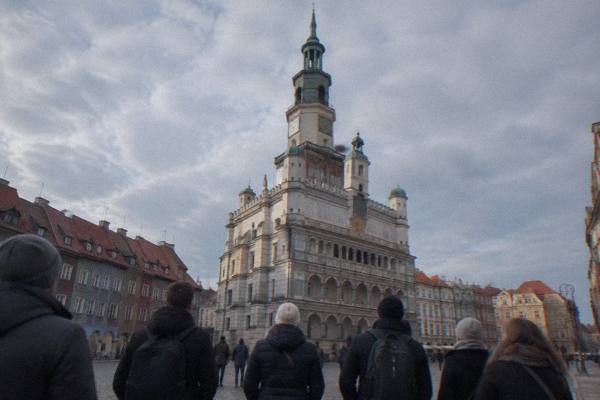
The Old Town of Poznan, the capital of the Wielkopolskie voivodeship in western Poland, centres on Stary Rynek, one of the grandest market squares in the country, watched over by a Renaissance Town Hall whose two metal goats face off every day at noon.

Short answer
The Poznan Old Town is the historic core around Stary Rynek, the Old Market Square, on the left bank of the Warta river in the city centre. It covers the square itself, the Town Hall, the merchant houses, the Fara parish church a short walk away, and the Croissant Museum, with the cathedral island of Ostrow Tumski just across the river.
Poznan, the capital of the Wielkopolskie voivodeship (Greater Poland) in western Poland, keeps its history concentrated in a compact Old Town on the left bank of the Warta river. The centrepiece is Stary Rynek, the Old Market Square, a broad rectangle of merchant houses anchored by a Renaissance Town Hall that the National Museum in Poznan dates to the early 14th century, conserved between 1910 and 1913, with a tower that collapsed in 1945 and was rebuilt. Two metal goats emerge from a door in the facade every day at noon, and, the museum's own page notes, since recently also at 3 pm, to lock horns above the clock. This guide walks the whole district: the square, its museums, the Croissant Museum, the Fara church, the eating streets, the transport links and the sleeping options, all drawn from what the venues and the city's own pages publish.
Where Is The Old Town In Poznan?
The Poznan Old Town is the historic core around Stary Rynek, the Old Market Square, on the left bank of the Warta river in the centre of Poznan, a city of 534,239 residents, the capital of the Wielkopolskie voivodeship in western Poland. It sits within easy walking distance of the cathedral island of Ostrow Tumski across the river and of the main shopping streets heading south towards the Imperial Castle.
The district is small enough to cover on foot. Stary Rynek forms the heart, with the streets of Wrocławska, Wodna and Zamkowa radiating away from it towards the Warta, and Świętosławska running from the square's north-western corner up to the Fara, the Collegiate Basilica of Our Lady of Perpetual Help, whose own page lists it open daily from 6:00 to 19:30, with visits free and no sightseeing during Mass.
Cross the Chwaliszewo embankment or the Przemysła bridge and the ground rises to Ostrow Tumski, where the cathedral, Porta Posnania and the Genius Loci archaeological reserve sit together. A full guide to that island is at Ostrow Tumski in Poznan, and the small district of Srodka on the far bank, with its 2015 mural on the tenement at ul. Srodka 3, is covered in Srodka, Poznan's Left Bank District. For the square itself in more depth, see the Old Market Square guide.
A guided walk is the most efficient way to absorb the district in a single morning, and the operator's live listing carries current times and prices: Check availability.
What Can You See On Stary Rynek In Poznan?
Stary Rynek delivers the Town Hall with its famous goats, three branch museums of the National Museum and the Independence Museum network in the surrounding merchant houses, a row of painted facades, and the Croissant Museum at number 41, all within a few minutes' walk of one another, with the Fara basilica at the top of Świętosławska. The Town Hall museum interior is closed for renovation, but the square itself, the facade and the museums around it are open as usual.
The Town Hall, at Stary Rynek 1, has housed the Museum of the History of the City of Poznan, a branch of the National Museum, since 1954. Its interior is closed: the museum's visit page lists every weekday as closed, and no reopening date is published, so the honest advice is to enjoy the building from outside and check the museum's own site before planning a visit inside. The facade, the square and the goats are separate matters, and the square is a public space open at all hours.
Around the square, three museums carry regular hours. The Greater Poland Military Museum at Stary Rynek 9 is open Tuesday to Sunday 10:00-17:00, closed Mondays, at 15 zl normal and 10 zl reduced. The Museum of Musical Instruments at Stary Rynek 45 keeps longer hours on some days, Thursday to 18:00 and Friday to 20:00, same prices. The Museum of the Wielkopolska Uprising 1918-1919 occupies the Odwach guardhouse at Stary Rynek 3, at 15/10 zl, open Tuesday to Sunday 10:00-16:00 from November to February. Tuesday is the free day at all of them.

| Museum | Address | Hours | Tickets |
|---|---|---|---|
| Greater Poland Military Museum | Stary Rynek 9 | Tue-Sun 10:00-17:00, Mon closed | 15 zl normal, 10 zl reduced, Tue free |
| Museum of Musical Instruments | Stary Rynek 45 | Tue-Wed 10:00-16:00, Thu to 18:00, Fri to 20:00, Sat-Sun to 17:00 | 15 zl normal, 10 zl reduced, Tue free |
| Museum of the Wielkopolska Uprising (Odwach) | Stary Rynek 3 | Nov-Feb Tue-Sun 10:00-16:00, Mon closed | 15 zl normal, 10 zl reduced, Tue free |
| Town Hall, Museum of the History of the City | Stary Rynek 1 | Interior closed for renovation, no reopening date | Prices when open: 20 zl normal, 13 zl reduced |
The goats deserve their own audience, and the full story of the clock is in the Town Hall and goats guide. A clock with goats was first installed in September 1551 by the clockmaker Bartel Wolff of Gubin; a new clock followed in 1913 and the goats reappeared on 25 August 1922 after a repair. Whether the goats perform during the current facade works is not stated on any official page, so check on the day rather than planning the trip around the show.
For visitors who prefer a narrated route, the district's guided walk in English covers the square, the facades and the stories behind them, and the listing shows current availability:
What Do The Old Town Museums Cost, And When Are They Open?
The three open museums around Stary Rynek each charge 15 zl normal and 10 zl reduced, with Tuesday as the free day, and all are closed on Mondays; the Town Hall museum interior is closed with no reopening date, and the Croissant Museum runs ticketed shows rather than open visiting, with English performances at 14:00 on weekends all year and daily in July and August.
That makes Tuesday the value day and Monday the day to avoid for museum visiting. The Croissant Museum at Stary Rynek 41/2, entered from Klasztorna Street 23, works differently: it is a show, not a gallery. Polish-language performances run at 11:00, 12:30, 14:00 and 15:30, plus 17:00 on Saturdays. The English "croissant and goat show" lasts about 65 minutes and runs at 14:00 daily in July and August, on Saturdays and Sundays all year, and on other days listed in the booking calendar. A 15:30 English show, about 60 minutes, opens only when the 14:00 performance is fully booked. Tasting is included, and the museum asks visitors to arrive 10 minutes early. Ticket prices appear only in the booking widget, so check there rather than expecting a printed price list.

| Croissant Museum show | Language | Times | Notes |
|---|---|---|---|
| Croissant and goat show | English | 14:00 | About 65 min, daily Jul-Aug, Sat-Sun all year, other days per calendar |
| Extra croissant show | English | 15:30 | About 60 min, opens only when 14:00 is full |
| Croissant show | Polish | 11:00, 12:30, 14:00, 15:30 | Plus 17:00 on Saturdays |
| Goat shows | Polish | From 11:00 or 14:00 | End with a view of the Town Hall goats from the windows |
The St Martin's croissant that the museum celebrates, the rogal swietomarcinski, is a Protected Geographical Indication registered by Commission Regulation (EC) No 1070/2008 of 30 October 2008, a status the Polish agricultural ministry calls the sweetest symbol of Poznan. The croissant's own history is covered in the St Martin croissant guide, and a private tour combining the Old Town walk with the croissant experience is bookable through the operator's live listing:
When Do The Town Hall Goats Come Out In Poznan?
The two metal goats appear on the Town Hall facade every day at noon and, as the National Museum's page puts it, since recently also at 3 pm, when they lean out of a small door above the clock and face off, horns locking, while the crowd below looks up. Whether they perform during the current facade works is not confirmed on any official page, so the safe plan is to be on the square shortly before noon and check on the day.
The goats are the city's best-loved piece of theatre and the reason many visitors time their arrival for midday. The first clock with goats was installed in September 1551 by Bartel Wolff of Gubin, and the current arrangement dates from a new clock installed in 1913, with the goats returning on 25 August 1922 after a repair. The National Museum's page on the goats is the primary source for both the times and the history, and it is the page to trust over any folklore about medieval origins.
Two viewing spots work well. The square directly in front of the Town Hall gives the classic view of the door above the clock, and the Croissant Museum's goat shows end with a view of the goats from the museum's own windows, which puts the spectacle behind glass with a tasting in hand. The Croissant Museum guide has the full show schedule.

Where To Eat And Drink Around The Poznan Old Town?
The Old Town's eating scene runs from the square's terrace restaurants, where the rogal swietomarcinski and pyry z gzikiem, potatoes with cottage cheese, anchor the local menu, to the milk bars and modern kitchens of the side streets, and the Michelin Guide Poland 2026 lists 25 restaurants from Poznan and its surroundings, including one-starred Muga and Bib Gourmand entries Fromazeria, POSTO, SPOT. and TU. REStAURANT.
Local dishes are the point of eating here. The St Martin's croissant, a PGI-registered product since Commission Regulation (EC) No 1070/2008, appears in bakeries all over the city from late October onwards, and the Croissant Museum's shows explain how it is made, with tasting included. Pyry z gzikiem, the region's potatoes with twarog cheese, is the other classic, covered in the pyry z gzikiem guide. For the wider scene, from milk bars to fine dining, see the Poznan food guide and the best restaurants in Poznan.
The Michelin presence matters because it confirms the city's food reputation is current rather than nostalgic. The 2026 selection, published by the city portal, gives Muga one star and hands Bib Gourmand awards to Fromazeria, POSTO, SPOT., TU. REStAURANT and the Skorzewo newcomer Farmer and Sons. None of these figures is a promise of a table: book ahead for the starred and Bib venues, especially on weekends when the Old Town fills with visitors from across the region.

| Local speciality | What it is | Where to try it |
|---|---|---|
| Rogal swietomarcinski | St Martin's croissant, a PGI product since 2008 | Bakeries citywide from late October, and the Croissant Museum show with tasting |
| Pyry z gzikiem | Potatoes with cottage cheese and spring onion | Milk bars and traditional restaurants around the Old Town |
| Local beers | Poznan lager from the city's breweries | Bars around Stary Rynek and the side streets |
For a food-adjacent family stop, the chocolate museum just off the square runs entry and workshop sessions, bookable on the operator's live listing:
How Do You Get To The Poznan Old Town?
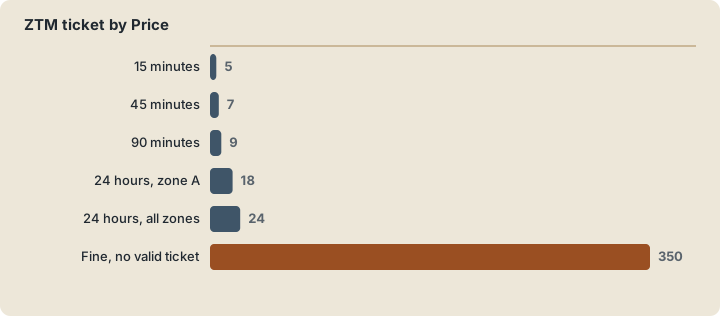
The Old Town is a short tram or bus ride from Poznan Glowny station and the city centre: ZTM timed tickets cover all zones, with a 15-minute ticket at 5 zl, 45 minutes at 7 zl and 90 minutes at 9 zl, while a 24-hour zone A ticket costs 18 zl and 24 hours in all zones 24 zl, and the same tickets apply on airport buses 148 and 159 from Poznan Glowny.
The ticket system is simpler than it looks. Timed tickets are valid in all zones, transfers included, and real travel time counts, so a 45-minute ticket usually covers a ride from the station plus a wander. The fine for travelling without a valid ticket is 350 zl, or 175 zl if paid within 7 days. Contactless bank-card payment on trams and buses is not yet available: ZTM signed the PEKA modernisation contract in 2026, with contactless payment expected in 2028, so today the options are tickets from machines, apps or a PEKA card. There is no city bike system to recommend either; the previous scheme ran from 2012 to 2022 and has not returned. The full detail is in the Poznan public transport guide.
| ZTM ticket | Price | Notes |
|---|---|---|
| 15 minutes | 5 zl (reduced 2.50) | All zones, transfers allowed |
| 45 minutes | 7 zl (3.50) | All zones, transfers allowed |
| 90 minutes | 9 zl (4.50) | All zones, transfers allowed |
| 24 hours, zone A | 18 zl (9) | Weekend promo: validate Fri 20:00 to Sat 24:00, valid to Sun 24:00 |
| 24 hours, all zones | 24 zl (12) | Covers Poznan County lines |
| Fine, no valid ticket | 350 zl | 175 zl if paid within 7 days |
Arriving from farther away, the airport buses 148 and 159 link Poznan Glowny with Lawica airport, each running every 15 minutes at peak and every 20 minutes off-peak, which the ZTM notice says gives a departure every 7 to 8 minutes at peak from the stops between the station and the airport. Standard ZTM tickets apply. Train travellers should use "about" ranges only and check the PKP Intercity planner for the day: Warsaw is about 2 h 20 to 3 h 20, Berlin about 4 h 30 to 5 h 30. Poland has temporary border controls on its land borders with Germany and Lithuania from 2 October 2026 to 30 March 2027, so carry a passport or national ID on the Berlin train. The airport to city centre guide covers the arrival in full.

Where To Stay Near The Poznan Old Town?
The Old Town itself offers a small set of hotels and guesthouses on and just off Stary Rynek, with the widest choice a short walk south in the city centre, and flexible-stay apartments around the square suit visitors who want to self-cater, while the immediate district is compact enough that almost any central bed is within a 15-minute walk of the goats.
The trade-off is character against space. Beds inside the historic streets tend to be smaller and quieter at night, since the square's restaurant terraces run late in summer, while the centre and the station district offer larger hotels and better prices. The full neighbourhood breakdown is in where to stay in Poznan, and the Old Town-specific options, including the historic Hotel Kolegiacki and the PURO Poznan, are listed in the Old Town hotels guide. Bookable options with current rates on the operators' live listings include Hotel Kolegiacki Poznan, PURO Poznan and the Opera Hostel.
For travellers who have not fixed their dates, flexible-cancellation stays in Poznan and midrange hotels near the Old Town are both worth a search, and hostels in Poznan cover the budget end.
What Is The Old Town Like At Christmas?
Betlejem Poznanskie, the city's Christmas market, runs from 14 November 2026 to 6 January 2027, with the MTP grounds open 14 to 20 November, Plac Wolnosci from 20 November and Stary Rynek itself from 21 November, so the Old Town square becomes a market of stalls and food cabins for the second half of the season, and the POZnan Ice Festival follows on 11 to 13 December 2026.
Christmas is the Old Town's second high season. The market operator's own dates are the ones to trust: the MTP fair grounds open first, on 14 November 2026, running to 20 December, then Plac Wolnosci joins on 20 November and Stary Rynek on 21 November, both to 6 January 2027. The square's stalls sit among the merchant houses, with the Town Hall tower lit above them, and the St Martin's croissant is in every bakery for the name-day season.
| Betlejem Poznanskie 2026/27 site | Opens | Closes |
|---|---|---|
| MTP grounds | 14 Nov 2026 | 20 Dec 2026 |
| Plac Wolnosci | 20 Nov 2026 | 6 Jan 2027 |
| Stary Rynek | 21 Nov 2026 | 6 Jan 2027 |
The Ice Festival, in its 20th edition, brings ice sculpture to the city on 11 December 2026 from 16:00, 12 December from 11:00 and 13 December from 9:00 to 17:00, with children's workshops from 12:00 to 15:00 on the final day. Earlier in the season, 11 November brings St Martin Street's name day, organised by CK Zamek, alongside Independence Day. The 2025 edition replaced the traditional parade with an all-day "Miasteczko Imieninowe", so check the CK Zamek programme rather than expecting a parade. The full seasonal picture is in the Poznan Christmas market guide and St Martin's Day in Poznan.

For a second tour band as the visit takes shape, these are the three experiences most booked for the Old Town:
Which Streets Lead Out Of The Old Town?
Świętosławska runs north-west from the square to the Fara basilica, Zamkowa and Wodna drop towards the Warta and the crossing to Ostrow Tumski, Wrocławska runs south-west towards the railway station, and Św. Marcin continues the axis south to the Imperial Castle, so every exit from the Old Town leads somewhere worth the walk, and the districts beyond each have their own character.
The Fara, at ul. Golebia 1, is the first detour. The basilica's own page gives daily opening from 6:00 to 19:30, free entry and no sightseeing during Mass, and Saturday organ concerts at 12:15 with a guided tour after, as the parish's site reports. The full church guide is at the Fara church in Poznan.
South of the square, the axis continues along Św. Marcin to the Imperial Castle, whose own page lists visiting daily from 12:00 to 19:00, with tickets at 10 zl normal and 7 zl reduced for a map, or 20 zl and 15 zl with an audio guide. The castle, the Enigma Cipher Centre at number 78 and the shopping of Stary Browar make a natural second half-day, covered in the Imperial Castle guide and the Stary Browar guide.
| Direction from Stary Rynek | Street | Leads to |
|---|---|---|
| North-west | Świętosławska | The Fara basilica, open daily 6:00-19:30 |
| North-east | Zamkowa, then the bridge | Ostrow Tumski, the cathedral and Porta Posnania |
| South-west | Wrocławska | Towards Poznan Glowny station |
| South | Św. Marcin | The Imperial Castle, open daily 12:00-19:00, and Stary Browar |
Across the river, Srodka's mural and restaurant row reward the short walk, and the districts of Jezyce, with its market hall trading Monday to Saturday 6:00-20:00, Lazarz and Wilda sit further out along the tram lines. Each has its own guide: Jezyce, Lazarz, Wilda and the city centre.

For visitors who want the district's stories at their own pace, audio tours of Poznan are an alternative to a live guide, and this Poznan Travel Guide article set covers every street and sight mentioned here in more depth.
Common Questions About The Poznan Old Town
Where is the Old Town in Poznan?
The Old Town is the historic core around Stary Rynek, the Old Market Square, on the left bank of the Warta river in central Poznan, the capital of the Wielkopolskie voivodeship in western Poland. The square, the Town Hall, the Croissant Museum and the Fara basilica are all within a short walk of one another, with Ostrow Tumski across the river.
Is the Town Hall in Poznan open to visitors?
The museum interior of the Town Hall, home of the Museum of the History of the City of Poznan, is closed for renovation and no reopening date is published. The facade, the square and the goats are separate, and the museums around the square, at numbers 3, 9 and 45, keep their normal Tuesday to Sunday hours with Monday closures.
What time do the goats come out on the Town Hall?
The National Museum's page states the goats appear every day at noon, and since recently also at 3 pm. Whether they perform during the current facade works is not confirmed on an official page, so check on the day. The Croissant Museum's goat shows end with a view of the goats from the museum's windows.
How much do Old Town museums in Poznan cost?
The Greater Poland Military Museum, the Museum of Musical Instruments and the Museum of the Wielkopolska Uprising each charge 15 zl normal and 10 zl reduced, and Tuesday is the free day at all three. The Croissant Museum sells show tickets through its booking widget, and no printed price list exists.
How do I get to the Old Town from Poznan airport?
Bus lines 148 and 159 run between Poznan Glowny station and the airport, each every 15 minutes at peak and every 20 minutes off-peak, giving a departure every 7 to 8 minutes at peak along the route. Standard ZTM tickets apply, from 5 zl for 15 minutes to 24 zl for 24 hours in all zones.
When is the Christmas market on Stary Rynek?
Betlejem Poznanskie 2026/27 opens on 14 November 2026 at the MTP grounds, with Plac Wolnosci joining on 20 November and Stary Rynek on 21 November, and all sites except the MTP grounds running to 6 January 2027.