Poznan To Gdansk Train
The Poznan to Gdansk train links western Poland with the Baltic coast, and this guide covers the journey, the stations, and how the route fits into a wider Polish rail itinerary.

Short answer
Direct trains between Poznan and Gdansk typically take about 3 h 40 to 5 h, with times varying by departure; check the PKP Intercity planner for your travel day.
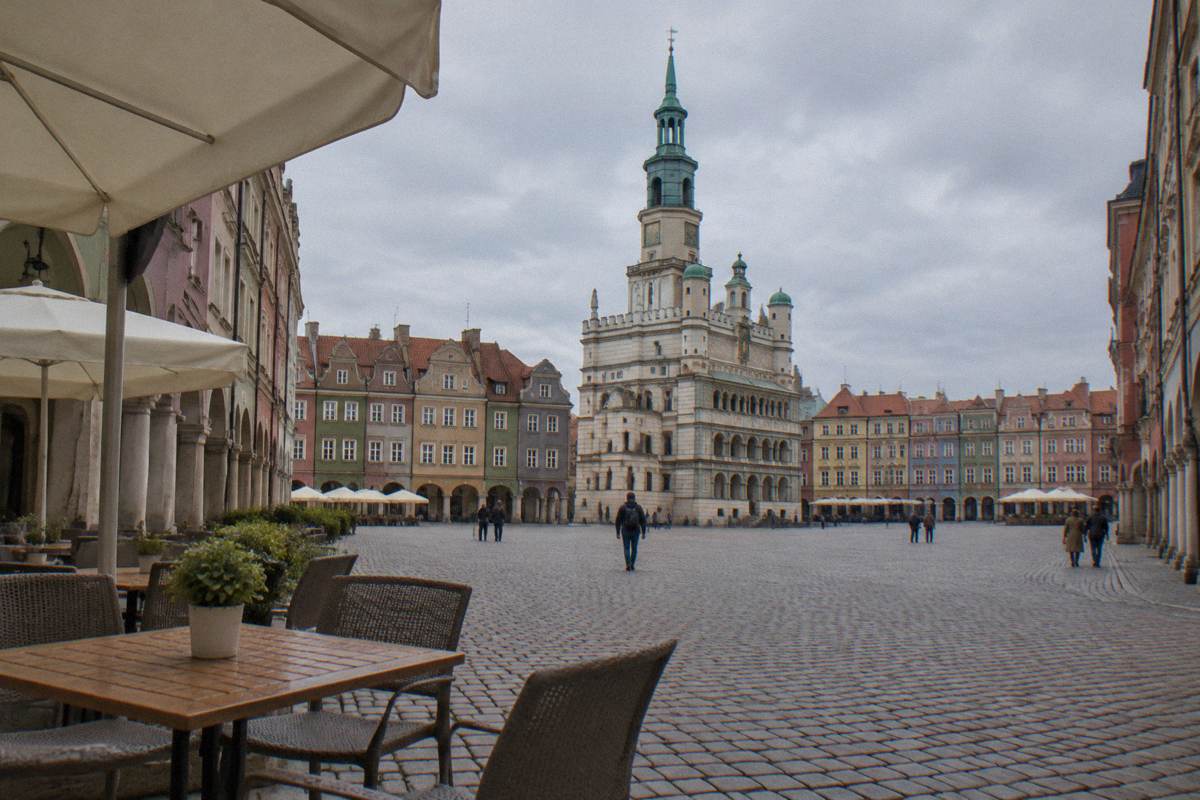
Poznan, the capital of the Wielkopolskie voivodeship (Greater Poland) in western Poland, sits on the Warta river some distance inland from the Baltic coast, and the rail line east to Gdansk connects two very different halves of the country. One end is a trade-fair city of 534,239 residents with a merchant square and a cathedral island; the other is a port city on the Motlawa. This guide from the Poznan Travel Guide editorial desk covers the train between them: how long it takes, where it leaves from, what to book, and how to fold the trip into a wider itinerary built around Poznan Glowny, the city's main station.
How Far Is It From Gdansk To Poznan?
The rail journey between Gdansk and Poznan typically takes about 3 h 40 to 5 h for a direct train, according to the PKP Intercity timetables as reported for late 2026, and the route crosses the middle of northern Poland from the Baltic coast into Greater Poland. The desk has no verified road distance for the pair, so no kilometre figure is printed here; the honest planning number is the time on the rails, and that varies by departure. Times shift with the timetable cycle, so treat the range as a planning band rather than a promise, and check the PKP Intercity planner for the specific day.
Direction barely matters for planning. Whether the ticket reads Gdansk to Poznan or Poznan to Gdansk, the same corridor is involved, and the same band of roughly four to five hours applies. What changes is the scenery order: leaving Gdansk you trade the coast for lake country and then the flat fields of Wielkopolska; leaving Poznan you do it in reverse.
The practical difference is what you do at each end. Gdansk visitors arrive into Poznan Glowny and are a short hop from the Old Market Square. Poznan visitors arrive into Gdansk's city-centre stations and walk toward the historic core. Neither end requires a car, which is the quiet argument for the train over driving.

How Long Does The Poznan To Gdansk Train Take?
A direct train from Poznan Glowny to Gdansk typically takes about 3 h 40 to 5 h, based on PKP Intercity timetable documents as reported for late August to late October 2026. Slower connections with a change of train can run longer, and the only reliable number for a given departure is the one in the PKP Intercity planner on the day you book. These are the weakest figures in the research pack behind this site, and the desk treats them accordingly: they are ranges, printed with "about", never a minute-exact promise. Slower connections with a change of train can run longer, and the only reliable number for a given departure is the one in the PKP Intercity planner on the day you book.
The reason for the spread is the shape of the corridor. Trains between the two cities run through the middle of the country, and different services take different paths and make different numbers of stops. A fast morning departure and a midday one stopping at every provincial town can differ by well over an hour even though both are "direct".
For planning a day trip out of Poznan, the honest arithmetic is this: budget roughly eight to ten hours of rail time in total, plus whatever the visit itself needs. That makes Gdansk a full, long day rather than a casual afternoon, and an overnight stay or a shorter destination such as Torun may suit better, which is also covered by a day tour from Poznan if the rail logistics feel heavy.
| Route from Poznan Glowny | Typical direct journey time (reported range) | How to treat it |
|---|---|---|
| Gdansk | about 3 h 40 to 5 h | Planning band; check the PKP Intercity planner for the day |
| Warsaw | about 2 h 20 to 3 h 20 | Same caveat, shorter corridor |
| Wroclaw | about 2 h 20 to 3 h 30 | Same caveat |
| Berlin | about 4 h 30 to 5 h 30 | Cross-border; carry a passport or national ID |
| Gniezno | about 25 to 45 minutes | Short regional hop |
The same honesty applies to fares. Pricing depends on operator, class, how early you book and the timetable cycle, and the fare belongs to the booking page, not to a guide. The desk's standing advice is simple: price the exact departure you want in the operator's own planner, and read what is and is not included in the ticket class before paying.
Where Does The Train Leave From In Poznan?
Trains between Poznan and Gdansk use Poznan Glowny, the city's main station, which also serves the Warsaw, Wroclaw and Berlin corridors, and the station is the natural hub for almost every long-distance rail move in and out of the city. The desk has no verified street address for Poznan Glowny, so none is printed; every Poznan mapping application resolves the name instantly, and the station is a major landmark in its own right. What matters for a visitor is the practical layer: ticket machines and staffed windows, platform displays, and the connection into the city's ZTM tram and bus network, which is covered in detail by the Poznan main station guide.
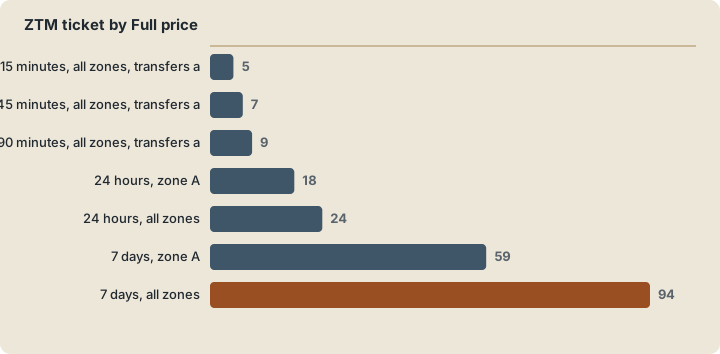
Getting to the station from the Old Town is a short tram ride on the ZTM network. Timed tickets cover all zones and allow transfers: 15 minutes costs 5 zl, 45 minutes 7 zl, and 90 minutes 9 zl, per the ZTM price list. A 24-hour ticket for zone A is 18 zl, or 24 zl for all zones. One caution that catches visitors out: there is no contactless bank-card payment on Poznan trams and buses yet. The PEKA modernisation contract that will enable it was signed in 2026, with effects expected in 2028, but today you buy a timed ticket from a machine or an app, or carry a PEKA card.

| ZTM ticket | Full price | Reduced |
|---|---|---|
| 15 minutes, all zones, transfers allowed | 5 zl | 2.50 zl |
| 45 minutes, all zones, transfers allowed | 7 zl | 3.50 zl |
| 90 minutes, all zones, transfers allowed | 9 zl | 4.50 zl |
| 24 hours, zone A | 18 zl | 9 zl |
| 24 hours, all zones | 24 zl | 12 zl |
| 7 days, zone A | 59 zl | 29.50 zl |
| 7 days, all zones | 94 zl | 47 zl |
The fine for travelling without a valid ticket is 350 zl, or 175 zl if paid within 7 days, per ZTM's own schedule of charges, so a machine at the stop is cheaper than an inspector mid-journey. A weekend quirk worth knowing: a 24-hour ticket validated between 20:00 Friday and 24:00 Saturday stays valid until 24:00 Sunday.
If you are arriving in Poznan by air and connecting straight to the rail network, the same logic applies in reverse. The airport is linked to Poznan Glowny by bus lines 148 and 159, each running every 15 minutes at peak and every 20 minutes off-peak, which works out to a departure every 7 to 8 minutes at peak and every 10 minutes off-peak and at weekends; standard ZTM tickets apply. The Poznan airport guide and the airport to city centre guide cover that side of the trip, and a private door-to-door transfer is the alternative worth knowing about.
What Should You Book, And What Should You Check First?
Book the specific departure, not a generic "Poznan to Gdansk ticket", because journey times in the reported band vary by more than an hour between services, and the seat reservation, the bicycle space and the luggage rules all belong to the individual train rather than to the route. The desk does not quote fares for this journey because none is verified, and it does not name booking platforms in prose. What the desk does say, plainly, is that the operator's own planner is the source of truth for the timetable, the rolling stock and the price on the day.
Three checks make the booking better than a coin flip. First, the departure time against the day you want in Gdansk: with roughly four to five hours each way, a mid-morning start gives you an afternoon on the coast, while a very early train buys a full day at the cost of a dawn alarm. Second, whether the service is genuinely direct or involves a change; both exist on this corridor, and a missed connection in an unfamiliar station is a poor way to start a holiday. Third, what the ticket class includes, because luggage allowances and seat selection differ by operator and class.
For travellers building a wider Polish rail trip, the practical questions are already answered on this site: how do you pay for trains in Poland, is train travel expensive in Poland, and are there toilets on Polish trains. Read all three before a multi-city itinerary; they cover the payment methods, the cost picture and the on-board basics that a route page cannot.
A walking tour of the Old Town on the day before a long rail day is a good use of a Poznan afternoon, and the desk's view is that the square, the goats at noon and the croissant story deserve more than a hurried glance from a departing platform. The Old Market Square guide and the Town Hall and goats guide cover both in depth, including the honest status of the Town Hall museum interior, which the National Museum's own visit page lists as closed for renovation.
Is The Train Ride Itself Worth The Hours?
The corridor between Poznan and Gdansk is a genuine cross-section of northern Poland, moving from Wielkopolska farmland through lake districts toward the Baltic lowlands, and the window view rewards a left-hand or right-hand seat depending on direction, even though the desk prints no kilometre figures because none are verified. Scenery is a matter of taste, and no competing guide's "beautiful ride" claim is reproduced here. What can be said honestly is what the train passes: agricultural Wielkopolska first, then the forest-and-lake belt that characterises the middle of the corridor, then the flatter, damper land as the coast nears.
The practical advice follows from the length. Four to five hours is long enough that the seat matters more than the view: pick a reserved seat over an unreserved one where the operator offers the choice, and prefer a table seat if you plan to work or eat. Charge devices before boarding if the rolling stock is older, and treat the timetable's food offering as unknown until you see it, because the desk has no verified catering details for any specific service on this route.
Travellers who find the hours heavy can split the journey. Torun sits roughly on the way east, and a stop there breaks the corridor into two gentler legs while adding one of Poland's most photographed old towns. The desk's Torun coverage includes both the independent rail approach and a sightseeing day tour from Poznan for travellers who would rather not manage the connections themselves.

When Is The Best Time Of Year To Make This Trip?
WMO's 1991-2020 climate normals for the Poznan station show the warmest months as July (mean daily high 25.2 C) and August (24.9 C), with July also the wettest month at 84.4 mm, and April the driest at 28.6 mm, so late spring through early autumn gives the most comfortable conditions for a coast-bound day trip. The Baltic adds its own layer: coastal weather in summer is milder than inland, and the desk does not print Gdansk-specific normals because none are in the verified pack. For the Poznan end of the journey, the table below is the honest planning basis.
| Month | Mean daily high | Mean daily low | Precipitation | Days with 1 mm+ |
|---|---|---|---|---|
| March | 8.1 C | 0.0 C | 39.9 mm | 8.6 |
| May | 19.8 C | 8.4 C | 53.8 mm | 8.3 |
| July | 25.2 C | 14.1 C | 84.4 mm | 9.5 |
| September | 19.5 C | 9.6 C | 41.2 mm | 7.4 |
| November | 7.1 C | 1.8 C | 33.6 mm | 7.3 |
| December | 3.2 C | -1.4 C | 40.1 mm | 9.1 |
Two seasonal notes from the same normals. January's mean low of -2.9 C with 19.7 frost days makes midwinter a serious proposition for a long rail day, though the trains themselves run year-round and the desk has no verified winter disruption data for this corridor, so no claim is made either way. And summer's warmth comes with July's rain: nearly ten days a month with a millimetre or more, which is a packing consideration, not a reason to stay home.
The month-by-month detail, including what each season does to the Poznan end of the trip, is in the Poznan weather by month guide and the best time to visit Poznan guide. For a winter trip built around the Christmas market rather than the coast, the Poznan in winter guide and the Poznan Christmas market guide cover the Betlejem Poznanskie markets, which run from 14 November 2026 to 6 January 2027 across the MTP grounds, Plac Wolnosci and Stary Rynek.

What Can You Do With A Stop Back In Poznan?
Poznan Glowny sits a short tram ride from the Old Market Square, and the museums around it have published hours and prices that make an evening or a next-morning visit easy to plan, with Tuesdays free at the National Museum and Independence Museum branches. The honest caveat is that the Town Hall museum itself is closed for renovation, with the National Museum's visit page listing every weekday as closed and no reopening date published, so the facade, the square and the famous noon goats are the Town Hall experience for now.
| Museum | Hours | Tickets (normal / reduced) | Free day |
|---|---|---|---|
| Imperial Castle (CK Zamek) | daily 12:00-19:00, tickets until 18:00 | 10 / 7 zl with map, 20 / 15 zl with audio guide | none listed |
| Museum of Musical Instruments, Stary Rynek 45 | Tue-Wed 10:00-16:00, Thu 10:00-18:00, Fri 10:00-20:00, Sat-Sun 10:00-17:00 | 15 / 10 zl | Tuesday |
| Greater Poland Military Museum, Stary Rynek 9 | Tue-Sun 10:00-17:00 | 15 / 10 zl | Tuesday |
| Museum of the Wielkopolska Uprising, Stary Rynek 3 | Nov-Feb Tue-Sun 10:00-16:00 | 15 / 10 zl | Tuesday |
| Royal Castle (Museum of Applied Arts) | Tue-Wed 10:00-16:00, Thu 10:00-18:00, Fri 10:00-20:00, Sat-Sun 10:00-17:00 | 20 / 13 zl | Tuesday |
The goats deserve their own sentence because they are the city's signature. The National Museum's page on the goats states the two metal animals appear every day at noon, and since recently also at 3 pm; a clock with goats was first installed in September 1551 by the clockmaker Bartel Wolff of Gubin, and the current tradition was restored with a new clock in 1913. Whether the goats run during the current facade works is not stated on any official page, so the desk does not promise the show on a given day; check the museum's own channels before building an itinerary around it.
For a longer stay, the where to stay in Poznan guide covers the districts, and the Poznan City Card guide explains what the card does and does not include. The card's own price list is 65 zl for 24 hours with transport (59 zl without), 83 zl for 48 hours (72 zl), and 98 zl for 72 hours (83 zl), with reduced versions cheaper; it gives free entry to most museums but only discounts at partners such as the Enigma Cipher Centre (21 / 17 zl for card holders) and Porta Posnania (21 zl), so read the inclusions before deciding.

How Does This Route Fit A Wider Polish Rail Trip?
Poznan Glowny works well as a rail hub because the same station serves Warsaw (about 2 h 20 to 3 h 20), Wroclaw (about 2 h 20 to 3 h 30), Berlin (about 4 h 30 to 5 h 30) and Gdansk (about 3 h 40 to 5 h), which makes a multi-city Poland trip possible without a car. All of those figures are reported ranges from PKP Intercity timetables, printed with "about" and never minute-exact, and the desk's standing instruction to readers is to check the planner for the travel day. The dedicated route guides carry the detail: Warsaw to Poznan, Poznan to Wroclaw, Poznan to Krakow, Poznan to Prague and Berlin to Poznan.
One border note that matters for anyone combining Gdansk with Germany. Poland notified temporary internal border controls at its land borders with Germany and Lithuania, running from 2 October 2026 to 30 March 2027, so on a train from Berlin toward Poznan you should carry a passport or national ID, because checks can happen on board or at the station. This is a Schengen-internal measure, not a visa change, but a traveller with no document on them can end a holiday early in a way no one wants.
For visitors flying in and out, the flights to Poznan guide covers the air side, and the Poznan car rental guide helps with the decision of whether rails alone are enough; for a Gdansk-plus-Poznan itinerary, the desk's view is that they usually are. Travellers with children should read the Poznan with kids guide before committing to a long train day, and the practical basics guide covers time zones, currency and the small things that catch visitors out.
What About Entry Rules For Visitors From Outside The EU?
Visitors from the UK can stay visa-free for up to 90 days in any 180-day period in the Schengen area, with a passport issued less than 10 years before arrival and valid at least 3 months past departure, and the Entry/Exit System has been fully operational at all external Schengen borders since 10 April 2026, meaning fingerprints and a photo may be registered at entry. Those are the UK Foreign Office's own stated requirements, and the desk reports them rather than paraphrasing them loosely. US visitors fall under the same Schengen short-stay and EES rules as other visa-exempt non-EU nationals.
The one entry topic the desk refuses to date is ETIAS. The start date and the fee are unsourced in the verified pack, with official pages unreadable to the research process and two reported readings disagreeing, so no date or price appears here. The honest instruction is to check the EU's official ETIAS site before you travel, and to treat any third-party page quoting a launch date with suspicion.
None of this affects the domestic Poznan to Gdansk journey, which stays inside Poland. It matters for the wider itinerary: a trip that starts in Berlin or ends in Prague crosses Schengen's external border if you are a non-EU national, and EES registration happens there, not on a domestic Polish train. The Berlin to Poznan train guide covers the cross-border practicalities in detail, and if that leg is on your list, the rail booking desk that handles it is worth a look: check Berlin rail options.

Should You Do The Trip In One Day Or Stay Overnight?
A day return from Poznan to Gdansk is possible but punishing, with roughly eight to ten hours of rail time against a visit that deserves more, so the desk's honest recommendation is an overnight stay, or a nearer destination such as Gniezno (about 25 to 45 minutes by train) or Torun for a single day. The arithmetic is not glamorous: leave Poznan early, arrive on the coast around midday, see the old town and the waterfront, and catch an evening train back. Some travellers love exactly that pace. Most, in the desk's reporting experience of how itineraries actually go, prefer a bed.
The alternative worth naming is the day-tour model. Torun sits on the corridor east, and a guided sightseeing day tour from Poznan removes the connection risk entirely while keeping the destination. Gniezno, closer to home, is a short reported hop of about 25 to 45 minutes by train, with the Museum of the Origins of the Polish State open daily 9:00-16:00 from October to April and free admission on Sundays, per the museum's own page. The Gniezno guide covers the cathedral hill, including the Sunday restriction that catches visitors out: from May to October the cathedral and museum are closed to tourists on Sundays, with only the viewing terrace opening in two afternoon windows.
For travellers who do commit to Gdansk, the planning questions are the ones already answered above: which departure, what the ticket class includes, and how the hours are spent. The rest, honestly, is weather and appetite, and neither can be booked in advance.

Common Questions About The Poznan To Gdansk Train
How far is it from Gdańsk to Poznań?
The rail journey typically takes about 3 h 40 to 5 h on a direct train, per PKP Intercity timetables as reported for late 2026. The desk prints no road distance because none is verified in the facts behind this site; the honest planning figure is the time on the rails, checked against the operator's planner for your travel day.
How long does the Poznan to Gdansk train take?
About 3 h 40 to 5 h for a direct service, with slower connections involving a change running longer. Times vary by departure, so treat the range as a band and confirm the specific train in the PKP Intercity planner before booking.
How much does the train cost?
No fare for this route is verified in the facts behind this site, so the desk does not print one, not even rounded. Price depends on operator, class and booking timing, and the reliable number is the one in the operator's own planner for your chosen departure.
Where does the train leave from in Poznan?
Poznan Glowny, the city's main station and the hub for the Warsaw, Wroclaw, Berlin and Gdansk corridors. The station connects to the ZTM tram and bus network, with a 15-minute ticket at 5 zl and a 45-minute ticket at 7 zl covering all zones with transfers allowed.
Can you do Poznan to Gdansk as a day trip?
It is possible but long: roughly eight to ten hours of rail time in total plus the visit itself. The desk's honest recommendation is an overnight stay, or a nearer day trip such as Gniezno (about 25 to 45 minutes by train) or Torun, which is also served by a guided sightseeing day tour from Poznan.
Do you need ID on the train?
Not on the domestic Poznan to Gdansk journey. On cross-border legs, yes: Poland has temporary internal border controls at its land borders with Germany and Lithuania from 2 October 2026 to 30 March 2027, so carry a passport or national ID on any train from Berlin.
The train between Poznan and Gdansk is, in the desk's honest summary, a four-to-five-hour window onto the middle of northern Poland, best booked by the specific departure, best enjoyed with a reserved seat, and best paired with an overnight on the coast unless your appetite for early alarms is stronger than most. Check the PKP Intercity planner for your day, carry ID if Berlin is anywhere in the itinerary, and leave room in Poznan for the square, the goats at noon, and a croissant whose protected status is a story the St Martin croissant guide tells in full.