Where Should I Go For My First Time In Poland?
A first-time Poland itinerary answer: why Poznan, the capital of Wielkopolskie in western Poland, is a strong first city, with a one-day plan, day trips, transport and money basics.
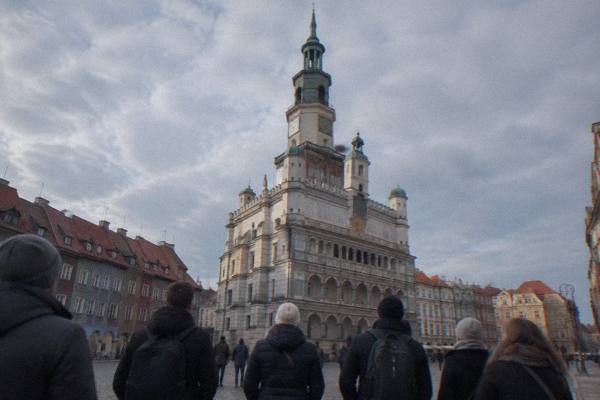
Poland rewards a first visit, and the question is only where to start. This site argues for one answer: Poznan, the capital of the Wielkopolskie voivodeship (Greater Poland) in western Poland, a city of 534,239 residents on the Warta river that packs a royal cathedral island, a Renaissance town hall, an old town, a food tradition with its own protected pastry and a full set of day trips into a walkable centre. The Statistical Office in Poznan (GUS) counts the population at 534,239, which makes it one of Poland's largest cities without any of the overwhelm of the biggest. The city portal and the museum network publish everything a first-timer needs in English, and the distances between the sights are short enough that a first day rarely feels rushed.

Where Should I Go For My First Time In Poland?
For a first trip to Poland, start in Poznan, then add either Krakow or Warsaw as a second city: Poznan gives you the old town square, a royal cathedral island, a castle, a protected regional pastry and easy day trips to Gniezno and Biskupin, all in a compact centre where the sights sit within walking distance of each other, and it sits on the main Berlin to Warsaw rail line so the big cities are a direct train away.
The honest framing is that Poland has several good first cities. Krakow sells the postcard Poland, Warsaw carries the museums and the big-city energy, and Gdansk has the Baltic skyline. What Poznan offers a first-timer is density without fatigue. Ostrow Tumski, the cathedral island, is a short walk from the Old Market Square. The Imperial Castle stands on Sw. Marcin street a little further west. The Citadel, the largest park in the city per the visitor board's own page, is a 15-minute walk from the square. A visitor can see the core of the city in two days on foot, without ever learning a bus route.
There is also the argument of scale. Poznan is big enough to have an opera, a Michelin-starred restaurant in Muga, and a zoo split across two sites, yet small enough that the first-day landmarks stay clustered. The city's own tourism materials lean on exactly this: a compact historic core with the cathedral, the square and the castle all within one afternoon's walk. For a first impression of what Poland looks like, that is hard to beat.
If the trip is longer than a weekend, the standard pattern works well: two or three nights in Poznan, a day trip to Gniezno or Biskupin, then a direct train onward. The PKP Intercity planner shows the connections; typical direct trains run about 2 h 20 to 3 h 20 to Warsaw and about 4 h 30 to 5 h 30 to Berlin, though those are reported ranges and the planner for the specific day is the source that counts.
Why Poznan Works As An Easy First City In Poland
Poznan works for first-timers because the historic core is walkable, the entry cost is low: the Old Market Square and the cathedral island cost nothing to wander, museum tickets start at 10 zl at the Imperial Castle, the tram system sells a 15-minute ticket for 5 zl, and the city sits on the Berlin to Warsaw rail axis, so it doubles as a base for the rest of the country.
The money side is gentle. Poland uses the zloty (PLN), not the euro, and the prices a first-timer actually pays in Poznan are small by the standards of Western Europe: a 90-minute tram ticket is 9 zl, the Imperial Castle charges 10 zl normal with a map, and the crypts of Poznan Cathedral are 10 zl normal and 8 zl reduced. The cathedral's own page for visitors lists the tower at 14 zl normal and 12 zl reduced, open 1 March to 15 November, weekdays 9:00-16:00 and Sundays 14:00-18:00. None of that requires planning around a budget the way a first trip to Zurich does.
Language is not a barrier. Museum pages, the ZTM transport authority and the city portal all publish in English, and the visitor infrastructure assumes foreign guests. The Croissant Museum runs an English-language show at 14:00, daily in July and August and on weekends all year, with other days shown in its booking calendar. A first-timer who speaks no Polish can book it, ride the tram to it and order food near it without friction.

| Stop | What the venue's page says | Cost |
|---|---|---|
| Old Market Square (Stary Rynek) | Open public space, merchant houses and the Town Hall facade | Free |
| Town Hall goats | The museum's page: every day at noon, and since recently also at 3 pm | Free |
| Poznan Cathedral crypts | Open 1 March to 15 November, weekdays 9:00-16:00, Sundays 14:00-18:00 | 10 zl normal, 8 zl reduced |
| Cathedral viewing tower | Same season, same hours as the crypts | 14 zl normal, 12 zl reduced |
| Imperial Castle (CK Zamek) | Daily 12:00-19:00, tickets sold until 18:00 | 10 zl normal, 7 zl reduced, with a map |
| Porta Posnania | Tue-Fri 9:00-18:00, Sat-Sun 10:00-19:00, Monday closed | 35 zl normal, 29 zl reduced |
Two cautions belong in any first-day plan. The Town Hall's museum interior is closed for renovation and the National Museum's visit page lists no reopening date, so plan for the facade, the square and the goats rather than the inside. And whether the goats perform during the current facade works is not stated on any official page, so treat the noon and 3 pm appearances as the norm rather than a guarantee. The story of the goats and the 1551 clock is covered in its own answer page.
A guided walk is the other spine worth considering on day one. The private walking city tour covers the square, the cathedral island and the connective tissue between them, and a guide answers the questions a first-timer actually has, in English, at walking pace. Check availability if that sounds like a better use of the first afternoon than finding the way alone.
What Should A First Visit To Poznan Actually Include?
A first visit should include the Old Market Square with the goats at noon, Ostrow Tumski with the cathedral crypts and tower, Porta Posnania for the island's history, the Imperial Castle on Sw. Marcin, a tasting of the St Martin's croissant, and one viewpoint or museum to taste the city's depth, all doable in two days on foot with a tram ride or two thrown in.
The square first. Stary Rynek is the postcard: merchant houses in saturated colours, the Town Hall tower, and the two metal goats that appear on the facade every day at noon and, since recently, also at 3 pm. The museum's own page records that a clock with goats was first installed in September 1551 by the clockmaker Bartel Wolff of Gubin, and the current tradition was restored with a new clock in 1913. Around the square sit three museums from the national and regional networks: the Museum of Musical Instruments at Stary Rynek 45 (normal 15 zl, reduced 10 zl, Tuesday free), the Greater Poland Military Museum at Stary Rynek 9 (15 / 10 zl, Tuesday free) and the Museum of the Wielkopolska Uprising 1918-1919 at Odwach, Stary Rynek 3 (15 / 10 zl, Tuesday free). Tuesday is the free day across these branches, a fact worth building a week around. More of these guides are collected on Poznan Travel Guide.
Then the island. Ostrow Tumski is the oldest part of the city, and Poznan Cathedral holds the tombs of Mieszko I and Boleslaw Chrobry plus a 10th-century baptismal bowl in its crypts. Porta Posnania, the interpretation centre at ul. Gdanska 2, tells the island's story with an audio guide; its page lists Tue-Fri 9:00-18:00 and Sat-Sun 10:00-19:00, closed Monday, with entries every 20 minutes in groups of up to 30. The Enigma Cipher Centre on Sw. Marcin 78 is the surprise hit for many first-timers: the three Polish codebreakers, Marian Rejewski, Jerzy Rozycki and Henryk Zygalski, are named on its timeline, and the centre's page lists tickets at 35 zl normal and 29 zl reduced, Monday closed. The question of whether Poland cracked Enigma first has its own answer page.
Food is not an afterthought here. The St Martin's croissant, a protected regional pastry, is registered in the EU as a Protected Geographical Indication under Commission Regulation (EC) No 1070/2008 of 30 October 2008, and the Croissant Museum on the square runs its English "croissant and goat show" at 14:00, about 65 minutes, daily in July and August and on weekends all year, with a 15:30 English show added when the 14:00 one fills. The full story of the croissant and its rules sits in the dedicated answer.
How Many Days Should A First Trip To Poland Take?
For a first trip anchored on Poznan, plan four to five days total: two days for Poznan's core (square, cathedral island, castle, one or two museums), one day for a single day trip such as Gniezno or Biskupin, and one flex day for weather, the zoo or the spa, which is enough to see Poland's core without the fatigue that a two-week grand tour produces.
The dedicated answer on how many days in Poznan is enough breaks this down in detail, but the shape is simple. Day one: the square, the goats at noon, the cathedral island, Porta Posnania. Day two: the Imperial Castle, the Enigma Cipher Centre, the Citadel park and its Museum of Armaments (15 / 10 zl, Tuesday free, Nov-Feb Tue-Sun 10:00-16:00). Day three: a day trip. Day four: the New Zoo (45 zl weekdays March to October, 55 zl Saturdays and holidays, 20 zl for everyone November to February) or Termy Maltanskie, whose own price page lists the aquapark daily rate at 46 zl for one hour and 109 zl for the day, with the aquapark open daily 9:00-23:00.
Season matters more than length. The best time to visit Poznan depends on what a first-timer wants: WMO's 1991-2020 normals for the Poznan station put July as both the warmest and the wettest month (mean daily high 25.2 C, precipitation 84.4 mm) and April as the driest (28.6 mm), with January's mean daily low at -2.9 C. A winter first trip trades green parks for the Christmas market, which in the 2026/27 edition runs 14 November 2026 to 6 January 2027, with Stary Rynek hosting from 21 November 2026.
What Day Trips Should A First Trip Include?
The strongest day trips from Poznan are Gniezno, Poland's first royal seat, reachable in about 25 to 45 minutes by train; Biskupin, the archaeological reserve with reconstructed Iron Age settlement; and Kornik Castle with its arboretum, all within an hour or so of the city, each with published hours and ticket prices that make planning straightforward.
The train figure is a reported range, so check the Koleje Wielkopolskie or PKP planner for the day. What is firmly sourced is what waits at the other end. The Museum of the Origins of the Polish State in Gniezno is open daily 9:00-16:00 from October to April, and Sunday is its free-admission day. On Gniezno's cathedral hill, the 1 May to 31 October schedule has the cathedral, museum and terrace open Mon-Sat 9:00-17:00, but on Sundays the cathedral and museum close to tourists and only the viewing terrace opens, 13:00-15:00 and 16:00-17:30, so a Sunday visit needs planning. The question of which city was Poland's first capital has its own page.
| Day trip | Hours from the venue's page | Tickets |
|---|---|---|
| Gniezno, Museum of the Origins of the Polish State | Daily, Oct-Apr 9:00-16:00 | Sunday free; prices not published |
| Biskupin Archaeological Museum | Nov-Mar 9:00-16:00; closed 1 Jan, Easter Sunday, 1 Nov, 25 Dec | 28 zl normal, 19 zl reduced, family 2+2 75 zl |
| Kornik Castle | Tue-Sun, low season 10:00-15:15, last entry 14:30; Monday closed | 40 zl normal, 20 zl reduced |
| Kornik Arboretum | Daily, Nov-Mar 10:00-16:00 | 10 zl adult, 7 zl reduced, family 25 zl |
| Rogalin Palace Museum | Tue-Sun 9:00-16:00; Monday closed | 20 zl normal, 13 zl reduced, Tuesday free |
Kornik deserves the pairing: the castle closes its 2026 tourist season on 14 December, and the arboretum next door stays open daily through winter, 10:00-16:00 from November to March, with about 3,000 species and varieties across its collection. Rogalin, the palace branch of the National Museum, keeps Tue-Sun 9:00-16:00 in the standard schedule and is free on Tuesdays, the same pattern as the city museums.
What Should First-Timers Know About Money, Transport And Entry?
Poland uses the zloty (PLN), not the euro; trams and buses take timed tickets (5 zl for 15 minutes, 7 zl for 45, 9 zl for 90) bought in apps, machines or on a PEKA card, since contactless bank-card payment on board is not available yet; and visa-exempt visitors from the UK and US should expect EES fingerprint and photo registration at the border and carry ID on trains from Germany through March 2027.
The transport detail trips people up. There is no tap-a-bank-card option on Poznan vehicles today: the ZTM signed the PEKA modernisation contract in 2026 and expects contactless effects in 2028. Until then it is timed tickets, apps, machines or the PEKA card, which costs 27 zl with 12 zl of that a refundable deposit and 15 zl travel credit. The full fare table:
| ZTM ticket | Normal | Reduced |
|---|---|---|
| 15 minutes | 5 zl | 2.50 zl |
| 45 minutes | 7 zl | 3.50 zl |
| 90 minutes | 9 zl | 4.50 zl |
| 24 hours, zone A | 18 zl | 9 zl |
| 24 hours, all zones | 24 zl | 12 zl |
| 7 days, zone A | 59 zl | 29.50 zl |
The fine for travelling without a valid ticket is 350 zl, or 175 zl if paid within 7 days, so validation is worth the ten seconds. Airport buses 148 and 159 link Poznan Glowny with Lawica airport, each running every 15 minutes at peak and every 20 minutes off-peak, which works out to a departure every 7 to 8 minutes at peak; the journey time is not published, so plan generously. The airport to centre guide covers the whole arrival.
On entry: the EU Entry/Exit System has been fully operational at all external Schengen border crossing points since 10 April 2026, so UK and US visitors may have fingerprints and a photo registered, with no cost for registration. UK passports must have been issued less than 10 years before arrival and be valid at least 3 months after departure, with visa-free stays of 90 days in any 180. ETIAS, the separate travel authorisation, has no confirmed start date or fee in this site's sources, so check the EU's official ETIAS site before you travel. One more current item: Poland has temporary internal border controls at its land borders with Germany and Lithuania from 2 October 2026 to 30 March 2027, so carry a passport or ID on the train from Berlin.
A private walk on day one answers the orientation questions in one morning, and the rest of the trip runs on the tram table above.
Common Questions About A First Trip To Poland
Where should I go for my first time in Poland?
Start in Poznan, the capital of the Wielkopolskie voivodeship in western Poland: it offers a walkable historic core, a royal cathedral island, a protected regional pastry, easy day trips to Gniezno and Biskupin, and direct trains to Warsaw and Berlin for the second leg of the trip.
Is Poznan expensive for a first trip?
By Western European standards, no. Museum tickets run from 10 zl at the Imperial Castle to 35 zl at Porta Posnania, a 90-minute tram ticket is 9 zl, and the cathedral crypts are 10 zl. Poland uses the zloty (PLN), not the euro. The dedicated answer on whether Poznan is expensive goes further into daily costs.
How many days do I need in Poznan?
Two days covers the square, the cathedral island, the castle and a museum or two; add a third for a day trip such as Gniezno or Biskupin, and a fourth for the zoo or the thermal baths. Four to five days total is a comfortable first trip.
Do I need Polish to visit Poznan?
No. The museum network, the transport authority and the city portal all publish in English, the Croissant Museum runs an English show at 14:00 on weekends all year, and visitor infrastructure assumes foreign guests.
What is the best month for a first visit?
WMO's 1991-2020 normals for the Poznan station put July as the warmest month (mean daily high 25.2 C) but also the wettest (84.4 mm), and April as the driest (28.6 mm). For a winter trip, the Christmas market runs 14 November 2026 to 6 January 2027.
Can I pay by card on Poznan trams?
Not yet. Contactless bank-card payment on vehicles is expected in 2028 under the PEKA modernisation. Today you buy timed tickets in apps, from machines or on a PEKA card: 5 zl for 15 minutes, 7 zl for 45, 9 zl for 90.
A first trip built this way, two days in the city, one day trip, one flex day, with the goats at noon and a croissant tasting somewhere in the middle, is the version of Poland that leaves room for a second trip rather than exhausting the first.