What Was The Old Name Of Poland?
Poland's old names explained, from Latin Polonia to the Polish People's Republic, and how Poznan, the capital of the Wielkopolskie voivodeship in western Poland, fits into the story.
Poznan, the capital of the Wielkopolskie voivodeship (Greater Poland) in western Poland, on the Warta river, is one of the best places in the country to see why people ask about Poland's old names in the first place. The city's cathedral island, Ostrow Tumski, holds the tombs of Mieszko I and Boleslaw Chrobry in its crypts, the very rulers whose state medieval chroniclers wrote about in Latin. This page answers the question directly, in the sense most searchers mean it, and then traces the names Poland has carried, because "the old name of Poland" is really three different questions depending on who is asking.

What Was The Old Name Of Poland?
The old name most people mean is the Polish People's Republic, Polska Rzeczpospolita Ludowa or PRL, the official name of the Polish state during the communist era, before the country returned to the name Republic of Poland, Rzeczpospolita Polska. Beyond that, Poland's oldest external name was the Latin Polonia, the form used across medieval Europe, while the Polish people have called their country Polska for as long as the language has been written down.
The reason the question is ambiguous is that Poland never had a single "old name" the way a renamed city does. The state kept a recognisable Polish identity across centuries of borders shifting around it. When an older relative says "the old Poland", they usually mean the PRL period, when Poland was a socialist state within the Soviet bloc, with a command economy, state-run shops and travel restrictions. When a historian says it, they may mean the Latin Polonia of medieval chronicles, the name foreign courts used for the realm ruled from cities that included Gniezno and Poznan.
The "old name" question also reaches Poznan through geography. The Wielkopolska region, Greater Poland, around Poznan is the historic heartland of the early Polish state, which is why the region's very name distinguishes it from "Lesser Poland" around Krakow. The Wielkopolska Uprising of 1918-1919, commemorated by a museum at Odwach, Stary Rynek 3, on Poznan's Old Market Square, was part of the period when Poland was reconstituting itself after more than a century of partition, when there was no Polish state at all to carry a name.
For visitors, the practical takeaway is simple: nobody in Poznan will be confused by any of these names, but knowing them unlocks the labels you will see on museums, monuments and plaques around the city.
Why Did Medieval Europe Call Poland Polonia?
Polonia is the Latin name for Poland, the form medieval scribes, chroniclers and the wider European chancellery culture used when writing about the Polish realm, and it is the root of the names used for the country in most Western European languages today, including Poland in English. The Polish word Polska, by contrast, is the country's own name for itself, descended from the name of the Polanie, the west Slavic tribe at the core of the early state.
Latin was the written language of church and diplomacy in early medieval Europe, so the state that formed around the Polanie entered the written record as Polonia. That Latin root explains why the country's name looks similar across so many modern languages: the spelling shifted with each language's own habits, but the skeleton stayed.
Poznan's monuments carry this layered naming visibly. The Museum of the Origins of the Polish State stands not in Poznan but in nearby Gniezno, and it is open daily from 9:00 to 16:00 in the October-to-April season, with Sunday free admission, according to the museum's own opening page. Gniezno and Poznan together anchor the region where that early polity formed, which is why so many "origins of Poland" questions point travellers toward Wielkopolska.
The distinction matters when reading older maps or museum labels. A Latin inscription reading Polonia is not a different country; it is the same country seen through the scholarly Latin of its time.
| Name | Language and era | Where a visitor encounters it today |
|---|---|---|
| Polonia | Latin, medieval and early modern written record | Historic inscriptions, museum labels, chronicle excerpts |
| Polska | Polish, the country's own continuous name | Everyday use across Poland, signage, publications |
| Polanie | The west Slavic tribe underlying the name Polska | Origins-of-the-state museums in Gniezno and Poznan |
| Rzeczpospolita Polska | Republic of Poland, the modern official name | Passports, government buildings, official notices |
| Polska Rzeczpospolita Ludowa (PRL) | Polish People's Republic, the communist-era official name | History exhibitions, period signage, archival photographs |
A related question travellers ask is which city came first, Poznan or Gniezno, and how the early state was organised. The first capital question is answered separately on this site, because the honest answer depends on what "capital" meant in a medieval realm of dukes and bishops.
What Was Poland Called During The Communist Era?
During the communist era Poland's official name was the Polish People's Republic, in Polish Polska Rzeczpospolita Ludowa, abbreviated PRL, and this is the "old name" most living memory refers to. The name Republic of Poland, Rzeczpospolita Polska, was restored after the fall of the communist system, and it remains the official name on Polish passports and government documents today.
The PRL name still surfaces in Poznan in concrete ways. The city's post-war architecture, its sports halls and exhibition grounds, and the fair complex at MTP all carry the imprint of that period. The June 1956 events, when Poznan workers rose in protest against the communist authorities, are marked by a monument in the city and remain one of the defining moments in the Polish understanding of that era; a dedicated page on this site covers Poznan and wartime destruction for the years immediately before it.
Collectors and curious visitors will notice PRL-era branding on signage, packaging reproductions and café interiors themed around the period. The name is part of the historical texture of the city rather than a living political label.

Seeing the layers of Polish history in Poznan is easiest on foot, and the city's Old Town squares, Ostrow Tumski and the cathedral district sit close enough to walk between with a guide. One popular option is a guided walk that includes a tram ride and a traditional snack, a format that pairs the historic core with the everyday Poland of today; you can Check availability on the operator's live listing.
If you prefer to explore at your own pace, self-guided audio tours cover the same ground and let you linger where the story interests you most: browse audio tour options here.
What Did Foreign Powers Call Polish Lands?
During the era of partitions there was no Polish state to name, because Polish territory had been absorbed by other empires, and the cities carried the administrative names those empires imposed, which is why Poznan's German name belongs to a specific historical chapter rather than to the city's identity today. The restored Polish state, once independent again, used Rzeczpospolita Polska, the name it still holds.
This is the part of the answer where Poznan itself becomes the example. The German name for Poznan is a recognised historical fact, tied to the Prussian and German administrations that governed the city in the partition era and the two world wars, but modern copy for travellers uses the Polish name. This site covers the German name question in full, with its historical context, on a dedicated page about the German name for Poznan, and the question of whether Poznan is more Polish or German gets its own treatment too.
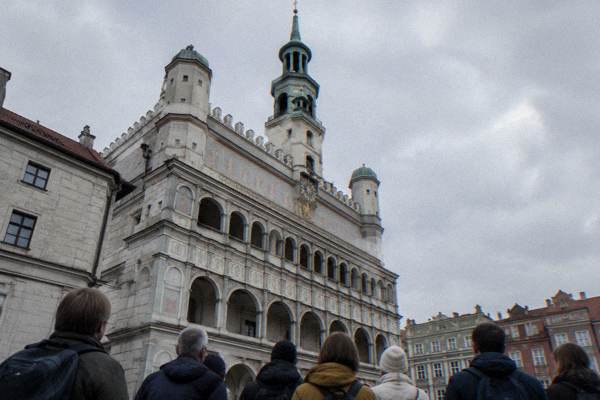
The Wielkopolska Uprising 1918-1919 museum at Stary Rynek 3, on the Old Market Square, tells the Poznan side of the partitions' end. The museum's price list shows a normal ticket of 15 zl and a reduced ticket of 10 zl, with free admission on Tuesdays, and the network's hours page lists November-to-February opening as Tuesday to Sunday, 10:00 to 16:00, closed Mondays. Walking from there across the square, past the Town Hall whose museum interior is currently closed for renovation with no published reopening date, gives a compact picture of how many states and administrations this one square has outlived. More of these guides are collected on Poznan Travel Guide.
The linguistic afterlife of the partitions is the reason English and German name the country differently at all. Each neighbouring language borrowed or adapted the name of Poland in its own era of contact, and the Latin Polonia remained the shared scholarly anchor across all of them.
How Does The Name Wielkopolska Connect To Poland's Old Names?
Wielkopolska, Greater Poland, is the historic region around Poznan whose name literally means "Great Poland" in Polish, distinguishing it from Malopolska, Lesser Poland, around Krakow, and it is the region modern readers meet under the English name Greater Poland in the voivodeship that Poznan serves as capital. The name is not a modern invention but a continuous regional identity tied to the earliest heartland of the Polish state.
For travellers, the name shows up immediately: Poznan's full administrative identity is the capital of the Wielkopolskie voivodeship, and the regional statistical office for Wielkopolskie sits in the city. The Statistical Office in Poznan gives the city's population as 534,239, a figure that helps size the modern city against its historic weight.
Day trips from Poznan make the naming story physical. Gniezno, about 25 to 45 minutes away by regional train according to reported timetables, holds the Museum of the Origins of the Polish State, free on Sundays and open 9:00 to 16:00 in the winter season. Kornik Castle, whose 2026 season closes on 14 December and whose low-season hours run 10:00 to 15:15 with last entry at 14:30, Tuesday to Sunday, shows the aristocratic layer of the same history. Biskupin's archaeological museum, open 9:00 to 16:00 from November to March and closed on 1 January, Easter Sunday, 1 November and 25 December, with tickets at 28 and 19 zl, reaches back past written names entirely.
| Historic name or term | What it refers to | Where to see it from Poznan |
|---|---|---|
| Wielkopolska (Greater Poland) | The historic region around Poznan, the early heartland | The whole city and its voivodeship |
| Polonia | Latin name for the Polish realm in medieval records | Museum inscriptions in Gniezno and Poznan |
| Polska Rzeczpospolita Ludowa (PRL) | The communist-era official name of the state | Post-war architecture and history exhibitions in Poznan |
| Rzeczpospolita Polska | The restored and current official name | All modern official signage |
| Partitions-era administrative names | Names imposed by partitioning empires on Polish cities | Historical museums, including the uprising museum at Stary Rynek 3 |
A good first stop for orientation is the Old Market Square, where the Town Hall, dated to the early 14th century according to the National Museum's page on the building, anchors the city's public life.
Is Polska Just The Polish Word For Poland?
Yes, Polska is simply the Polish-language name of the country, the one Poles use every day, and it has been the country's own name for itself across the whole span of Polish writing, so it is not an "old" name at all but the continuous one. The apparent puzzle is only that English speakers encounter Polska on jerseys, shopfronts and food labels and read it as a distinct historical name, when it is the same name in the local language.
Sports shirts are the usual first encounter: Polish national teams play with POLSKA across the chest, in the country's own language, exactly as other nations wear theirs. In Poznan, match days around the city's football clubs fill the streets with the name, and the city also carries everyday Polska branding on bakeries, delis and the milk-bar canteens that serve traditional food at traditional prices.
The name's stability is the point worth taking away. Empires renamed cities, partitions abolished the state, and the communist era gave the country a different official long form, but Polska itself never stopped being what the people called their country. That continuity is why a question like "what was the old name of Poland" has a shorter true answer than it seems: in Polish, the country's name barely changed, and what changed were the official titles of the states that ruled it.
Common Questions About Poland's Old Names
What was the old name of Poland?
In the sense most people mean it, the Polish People's Republic, Polska Rzeczpospolita Ludowa (PRL), was the official name of the Polish state in the communist era, before the country returned to the name Republic of Poland, Rzeczpospolita Polska. Historically, the oldest external name was the Latin Polonia, while the country's own name for itself, Polska, has been continuous.
Is Polonia the same country as Poland?
Yes. Polonia is the Latin form of Poland's name, the one used in medieval chronicles and across European scholarship, and it is the root of the country's name in English and most other Western European languages. It is not a separate or vanished country.
What does PRL stand for?
PRL stands for Polska Rzeczpospolita Ludowa, the Polish People's Republic, the official name of Poland during the communist era. You will see the abbreviation in history museums and on period signage and reproductions in Poznan.
Why is the region around Poznan called Greater Poland?
Wielkopolska, rendered in English as Greater Poland, is the historic region around Poznan, named in contrast to Malopolska, Lesser Poland, around Krakow. It is the region identified with the earliest heartland of the Polish state, and Poznan is its capital and largest city.
Did Poznan have a different name too?
Poznan carried a German name during the periods when German-speaking administrations governed the city, but the city's own continuous name is the Polish one, and modern travel copy uses it. The full story of the German name and its context has its own page on this site.
What is Poland's official name today?
Poland's official name today is Rzeczpospolita Polska, the Republic of Poland, the name that appears on passports, government documents and official signage, and the country uses the zloty (PLN) as its currency rather than the euro.
Whether the old name you had in mind was Polonia, the PRL or the partitions-era labels, Poznan is the city where all of those stories remain visible in one walk, from the cathedral crypts on Ostrow Tumski to the uprising museum on the Old Market Square.