Was Poznan Destroyed In WWII?
Was Poznan destroyed in WWII? A sourced answer to what the war did to Poznan, which landmarks were hit, and where to explore the city's military and WWII heritage today.
Poznan, the capital of the Wielkopolskie voivodeship (Greater Poland) in western Poland, sits on the Warta river and carries its past openly in its streets and museums. Visitors often arrive with one question: how much of what they will see is original, and how much was rebuilt after 1945? The honest answer sits in the documented record, and this page walks through it, landmark by landmark, using only what the city's own museum pages and official portals state. The short version: the war damaged Poznan badly in places, but the city was not razed, and its most famous square still carries its medieval silhouette.

Was Poznan Destroyed In WWII?
Poznan, in western Poland, was damaged in WWII but not destroyed outright. The clearest documented loss is the Town Hall tower on the Old Market Square, which collapsed in 1945, yet the Town Hall itself survived and has housed the Museum of the History of the City of Poznan since 1954. The Citadel, a relic of a 19th-century fortress, still defines a whole district, so the city you visit today is a mix of original fabric, careful reconstruction and postwar rebuilding.
That is the summary the primary sources support. The National Museum's own page on the Town Hall states the building is dated to the early 14th century, was conserved between 1910 and 1913, and that its tower collapsed in 1945. Those three dates tell the story in miniature: a medieval building, an early restoration, and a wartime loss. What the museum's page does not do is quantify the destruction across the whole city, and no figure does either. So this page sticks to what is documented per landmark.
One thing worth knowing before walking the Old Market Square: the Town Hall's museum interior is currently closed for renovation, and the National Museum's visit page lists every weekday as closed with no published reopening date. The square itself, the facade and the famous goats are separate from the museum interior, and the goats still appear daily at noon and, since recently, also at 3 pm, though whether they run during the current facade works is not stated anywhere official, so check on the day. For the fuller picture of the square, the Old Market Square guide covers what stands there now.
What War Damage Is Still Visible In Poznan Today?
The most visible wartime loss is the rebuilt Town Hall tower, which collapsed in 1945 and was later reconstructed. Beyond the square, the Citadel park preserves the footprint of a 19th-century fortress described as the largest artillery fort in Europe at the time, and its museums now display the military hardware and army history of the region.
The June 1956 monument marks the postwar uprising that followed the war, and the Enigma Cipher Centre tells the story of the Polish codebreakers who attacked the German cipher machine before the war began.
Start on the Old Market Square. The Town Hall you photograph today is the survivor of that 1945 tower collapse, and the National Museum's page records the building's long timeline plainly: early 14th-century origins, conservation in 1910-1913, the tower loss in 1945, and the museum branch installed in 1954. Standing in front of it, you are looking at a building that has been repaired more than once, which is the honest frame for almost every historic facade in this part of Europe.
The Citadel is the second stop for anyone tracing the city's military past. The city's own visitor portal describes Citadel Park as the largest park in Poznan, a 15-minute walk from the Old Market Square, and a relic of a 19th-century fortress that was described as the largest artillery fort in Europe at the time it was built. Two museums now occupy the site. The Museum of Armaments is open Tuesday to Sunday (closed Monday), with tickets at 15 zl normal and 10 zl reduced, free on Tuesdays, and the museum itself estimates a visit takes 45 to 90 minutes. The Museum of the "Poznan" Army next door charges 10 zl normal and 6 zl reduced, also free on Tuesdays, and a combined ticket for both costs 20 zl normal and 12 zl reduced.

| Museum | Address / Location | Hours | Tickets (zl) |
|---|---|---|---|
| Museum of Armaments | Park Cytadela | Nov-Feb Tue-Sun 10:00-16:00; Mar-Oct Tue-Sat 10:00-17:00, Sun 10:00-16:00; Monday closed | 15 normal, 10 reduced, combined 20/12, Tuesday free |
| Museum of the "Poznan" Army | Park Cytadela | Tuesday free; check the network page for current days | 10 normal, 6 reduced, combined 20/12 |
| Enigma Cipher Centre | ul. Sw. Marcin 78 | Tue-Fri 9:00-18:00, Sat-Sun 10:00-19:00, Monday closed | 35 normal, 29 reduced, family 75, with Poznan City Card 21/17 |
| Museum of the Wielkopolska Uprising 1918-1919 | Stary Rynek 3 (Odwach) | Nov-Feb Tue-Sun 10:00-16:00, Monday closed | 15 normal, 10 reduced, Tuesday free |
The Enigma Cipher Centre deserves its own paragraph, because it reframes the war story from destruction to intelligence. The centre's own timeline names the three Polish codebreakers, Marian Rejewski, Jerzy Rozycki and Henryk Zygalski, who broke into the German Enigma cipher before the war. The exhibition and its audio guides run in Polish, English, German, Russian and Ukrainian, and the centre sits on ul. Sw. Marcin 78, a short walk from the Imperial Castle, which is open daily from 12:00 to 19:00 with tickets at 10 zl normal and 7 zl reduced with a map, or 20 zl and 15 zl with an audio guide. For a deeper route through these sites, the WWII sites guide lays out a full day.
Where Can You Explore Poznan's WWII Heritage With A Guide?
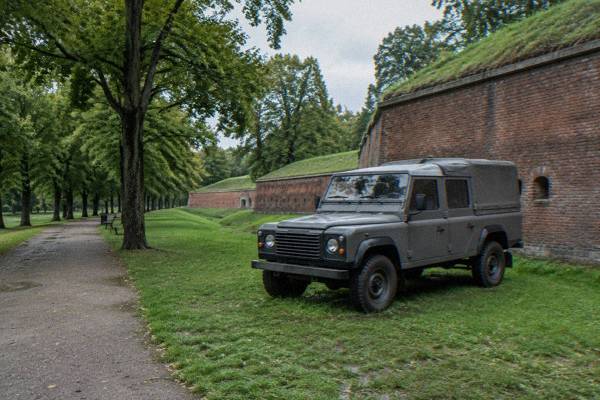
The most direct option is a WWII heritage tour by army car, which pairs a vintage military vehicle with the Poznan tank museum, and it can be booked through the operator's live listing. Beyond that, the Citadel museums and the Enigma Cipher Centre are walkable and well signed, and a general highlights tour with a local guide covers the Old Market Square, the Town Hall story and the postwar monuments in one loop.
The tank museum trip is the one product on this site built specifically around the war. It runs by army car, which means the vehicle itself is part of the military heritage story, and the listing carries the current price, duration and rating, so check the live listing rather than any secondhand figure. You can Check availability on the operator's page. If you would rather move at your own pace, the self-guided walking tour covers the same central ground on foot.
Curious about the tank museum ride? Book a WWII heritage army car tour here.
For travellers who want the whole city story rather than only the war years, a highlights tour with a local guide is the efficient choice, and families often pair it with the chocolate museum workshop, which is the lighter half of a history-heavy day. The trio below covers both.
Booking early in a visit makes sense for this one, because the army car runs with limited seats and the tank museum sits outside the walkable centre. The operator's listing shows the live calendar, and free cancellation up to 24 hours before the start is standard on this kind of product, so there is little risk in reserving ahead.
How Does Poznan's Wartime Past Compare With Its Other History?
Poznan's war years are one chapter of a much longer record, not the whole book. The Town Hall is an early 14th-century building whose tower collapsed in 1945, the Citadel is a relic of a 19th-century fortress, and the goat clock, a tradition begun in 1551, interrupted and restored, is a fair one-line summary of the whole city.
Ostrow Tumski, the cathedral island east of the centre, is where that older record is most tangible. The Poznan Cathedral page states that the crypts, holding the relics of the tombs of Mieszko I and Boleslaw Chrobry and a 10th-century baptismal bowl, plus the viewing tower, are open to tourists from 1 March to 15 November, weekdays 9:00-16:00 and Sundays 14:00-18:00. Crypt tickets are 10 zl normal and 8 zl reduced, the tower 14 zl and 12 zl. The neighbouring Porta Posnania interpretation centre, closed Mondays, charges 35 zl normal and 29 zl reduced, with a discounted 21 zl price for Poznan City Card holders. The Ostrow Tumski guide covers the island in full.
The 1551 goat clock is a detail that is easy to miss. The National Museum's goats page records that a clock with goats was first installed in September 1551, made by Bartel Wolff of Gubin, that a new clock came in 1913, and that the goats reappeared on 25 August 1922 after a repair. So the two goats that face off above the square's crowds every day at noon are the current chapter of a tradition nearly five centuries old, interrupted and restored, which is a fair one-line summary of the whole city.
| Landmark | Documented fact | Source basis |
|---|---|---|
| Town Hall (Stary Rynek 1) | Early 14th-century building, conserved 1910-1913, tower collapsed 1945, museum branch since 1954 | National Museum page |
| Goat clock | First installed September 1551 by Bartel Wolff of Gubin; new clock 1913; goats reappeared 25 August 1922 | National Museum goats page |
| Cathedral crypts | Tombs of Mieszko I and Boleslaw Chrobry, a 10th-century baptismal bowl | Cathedral page |
| Enigma codebreakers | Marian Rejewski, Jerzy Rozycki, Henryk Zygalski named on the centre's timeline | Enigma Cipher Centre |
| Citadel | Relic of a 19th-century fortress, described as the largest artillery fort in Europe at the time | City visitor portal |
Is Poznan Worth Visiting For Its History?
Yes, and the reasons are concrete rather than sentimental. The city pairs a documented medieval core with a fortress park, two armaments museums, an Enigma codebreaking centre and a tank museum reachable by vintage army car, all inside a walkable city of 534,239 residents. Tuesday is the budget day: the National Museum branches and the Independence Museum branches, including the Citadel museums, are free on Tuesdays, and the Gniezno Origins museum is free on Sundays.
Planning around the free days is the single best money move. The Stary Rynek museums, the Greater Poland Military Museum at number 9, the Museum of Musical Instruments at number 45 and the Wielkopolska Uprising museum at the Odwach, all charge 15 zl normal and 10 zl reduced, and all are free on Tuesdays. The Enigma Cipher Centre is not free on any day, but the Poznan City Card brings its ticket down to 21 zl normal and 17 zl reduced, and the card itself costs 65 zl for 24 hours with transport or 59 zl without, per the city's own card page.
How long to give the city depends on depth. A weekend covers the square, the Citadel and the Enigma centre; a third day opens up Ostrow Tumski and the tank museum trip. The how many days question has a fuller breakdown, and the is Poznan worth visiting answer weighs the whole case. For the practical layer, Poznan Travel Guide collects the transport, ticket and museum details in one place.
Common Questions About Poznan In WWII
Was Poznan destroyed in WWII?
No, not destroyed, but genuinely damaged. The documented record shows the Town Hall tower collapsed in 1945, while the Town Hall building itself survived and has housed the city history museum since 1954. The city's medieval square, cathedral island and fortress Citadel all remain standing today.
Can you visit the Town Hall museum in Poznan?
Not at present. The National Museum's visit page lists the Town Hall museum interior as closed every day, with no published reopening date. The square, the facade and the noon goat show remain accessible, and the other Stary Rynek museums are open Tuesday to Sunday.
Where can you see military hardware in Poznan?
The Museum of Armaments in Citadel Park displays the collection and estimates a visit of 45 to 90 minutes. Tickets are 15 zl normal and 10 zl reduced, free on Tuesdays. The tank museum outside the centre is reachable on the WWII heritage tour by army car.
What do the Enigma Cipher Centre and the war have to do with each other?
The centre's timeline names Marian Rejewski, Jerzy Rozycki and Henryk Zygalski, the Polish codebreakers who attacked the German Enigma cipher before the war. The exhibition and audio guides run in Polish, English, German, Russian and Ukrainian, and the centre is closed on Mondays.
Is Poznan safe for tourists today?
Yes, Poznan is a walkable regional capital of 534,239 residents with normal European city precautions. The is Poznan safe page covers the details, including the 112 emergency number, which is free to call across the EU.
Poznan's answer to its own wartime question is the one its buildings give every day: damaged in 1945, rebuilt after, and open for visitors now, from the goats on the Town Hall facade to the tanks on the Citadel.