Enigma Cipher Centre Poznan
The Enigma Cipher Centre in Poznan tells the story of the three Polish mathematicians who first broke the German Enigma cipher, in the city where they studied and worked. This guide covers the verified hours, ticket prices and how to fit the centre into a day in Poznan.
Short answer
The Enigma Cipher Centre stands at ul. Sw. Marcin 78 in central Poznan, closed Mondays, open Tue-Fri 9:00-18:00 and Sat-Sun 10:00-19:00, with last admission one hour before closing. Standard tickets cost 35 zl, reduced 29 zl, and the family ticket 75 zl.
The Enigma Cipher Centre in Poznan, the capital of the Wielkopolskie voivodeship in western Poland, is the city's museum dedicated to codebreaking: to the Enigma machine itself, to the mathematics behind it, and above all to the three Poznan-trained mathematicians who first worked out how to read encrypted German messages. The centre's own pages name Marian Rejewski, Jerzy Rozycki and Henryk Zygalski on its timeline, and the whole exhibition is built around their story and the machines they beat. This guide sets out what the venue's own site publishes about hours, prices and practicalities, what you actually see inside, and how to combine the visit with the Imperial Castle, the Old Market Square and the rest of Sw. Marcin street. Nothing here is first-hand reportage: every figure comes from the operator's published pages, and where a detail is not published, this page says so rather than guessing.
What Is The Enigma Cipher Centre In Poznan?
The Enigma Cipher Centre is a permanent museum exhibition at ul. Sw. Marcin 78 in Poznan, Poland, devoted to the history of the Enigma cipher machine and the Polish mathematicians who first broke it, presenting original machines, interactive displays and audio guides in five languages. The centre's own site names the three codebreakers on its timeline: Marian Rejewski, Jerzy Rozycki and Henryk Zygalski. All three studied mathematics at Poznan University in the interwar years, which is why Poznan, not London or Washington, tells this story first.
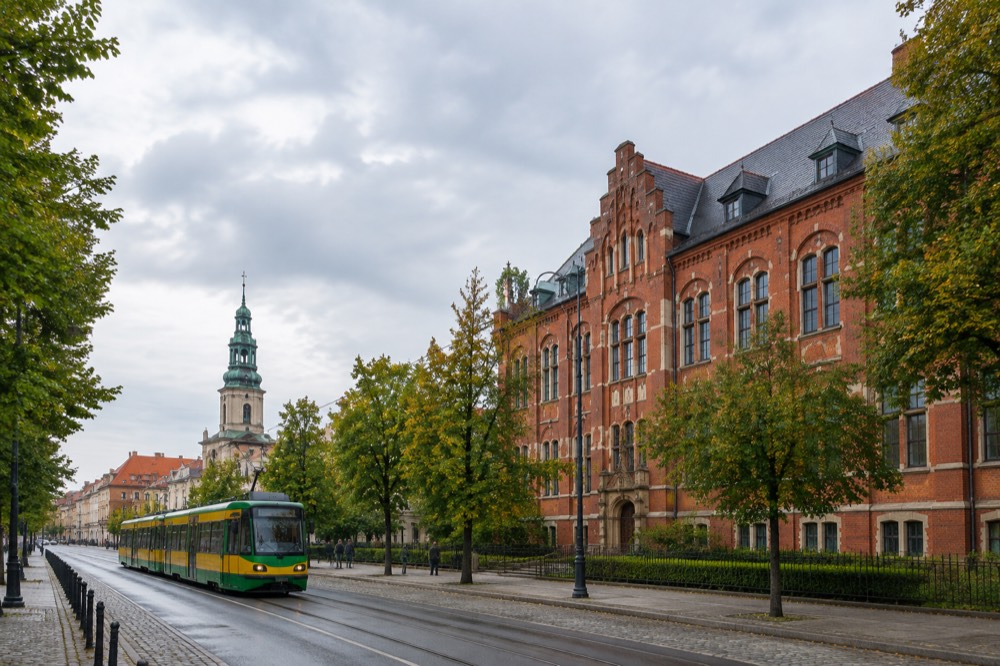
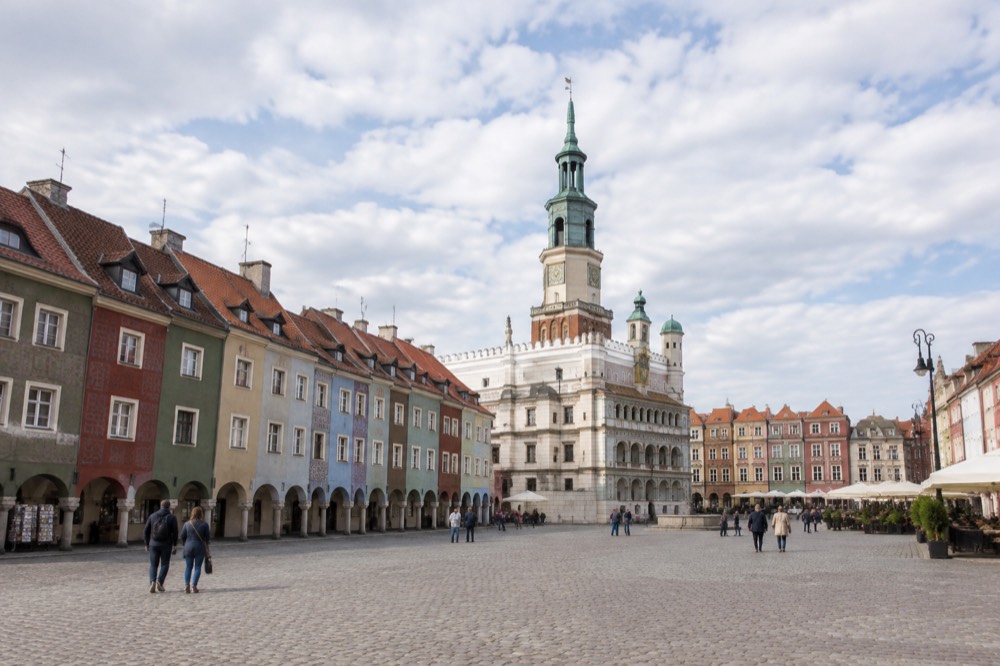
The building itself sits on Sw. Marcin, one of the city's main central streets, a few doors from the Imperial Castle at number 80/82. That makes the centre an easy pairing with the castle and a short walk down to the Old Market Square, which is a natural route to take through central Poznan.
The exhibition covers both the technical side, how the machine worked and how the mathematics defeated it, and the human side, the biographies of the three men and the Poznan university environment that produced them. It is one of the few museums in the city built around a single, specific intellectual achievement, and it is a genuinely good fit for visitors who want more than the standard old-town circuit. For a wider look at what the city offers, the Poznan Travel Guide homepage collects the main sights, itineraries and tours in one place.
Where Is The Enigma Cipher Centre And How Do You Get There?
The Enigma Cipher Centre stands at ul. Sw. Marcin 78, 61-809 Poznan, on the main central street between the Old Market Square and the Imperial Castle, reachable by tram or bus on a standard ZTM timed ticket of 5 zl for up to 15 minutes or 7 zl for up to 45 minutes. The address is published on the centre's own visit page, and the street is one of the city's principal axes, so nearly every tram crossing the centre passes within a short walk of the door.
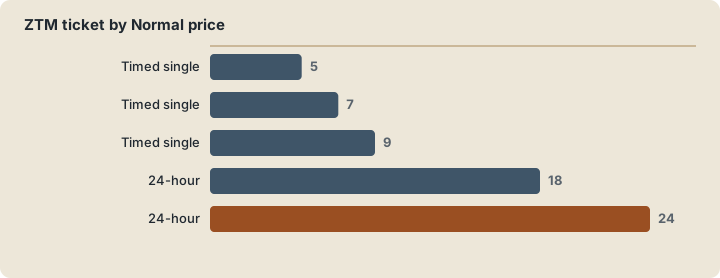
Poznan's public transport runs on timed tickets valid in all zones with transfers allowed, and the ZTM price list currently prices them at 5 zl for 15 minutes, 7 zl for 45 minutes and 9 zl for 90 minutes, with a zone A ticket at 18 zl. There is no contactless bank-card payment on the vehicles yet: the ZTM signed the PEKA modernisation contract in 2026 and expects the effects in 2028, so today you buy from machines, apps or a PEKA card. The fine for travelling without a valid ticket is 350 zl, reduced to 175 zl if paid within 7 days.
If you are arriving by air, the airport guide covers the bus options into the centre, and the transfer options are laid out in the Poznan airport to city centre guide, including the practical question of how much is a taxi from Poznan airport to city centre.
| ZTM ticket | Validity | Normal price | Reduced price |
|---|---|---|---|
| Timed single | Up to 15 minutes, all zones | 5 zl | 2.50 zl |
| Timed single | Up to 45 minutes, all zones | 7 zl | 3.50 zl |
| Timed single | Up to 90 minutes, all zones | 9 zl | 4.50 zl |
| 24-hour | Zone A | 18 zl | 9 zl |
| 24-hour | All zones | 24 zl | 12 zl |
On foot, the centre is a level walk from the Old Market Square along Sw. Marcin, passing the Imperial Castle on the way. Visitors combining several districts in one day often use the 24-hour ticket and treat the centre as the midpoint between the castle and the old town.
How Much Do Enigma Cipher Centre Tickets Cost?
The Enigma Cipher Centre's visit page lists the standard ticket at 35 zl, the reduced ticket at 29 zl, the family ticket, covering two adults and three children, at 75 zl, and the group rate at 25 zl per person, while Poznan City Card holders pay a discounted 21 zl normal or 17 zl reduced rather than free entry. The card discount is worth knowing in advance: the City Card's own page promises free entry to most museums, but the Enigma Cipher Centre is one of the partners, like Porta Posnania, that gives a discount instead.
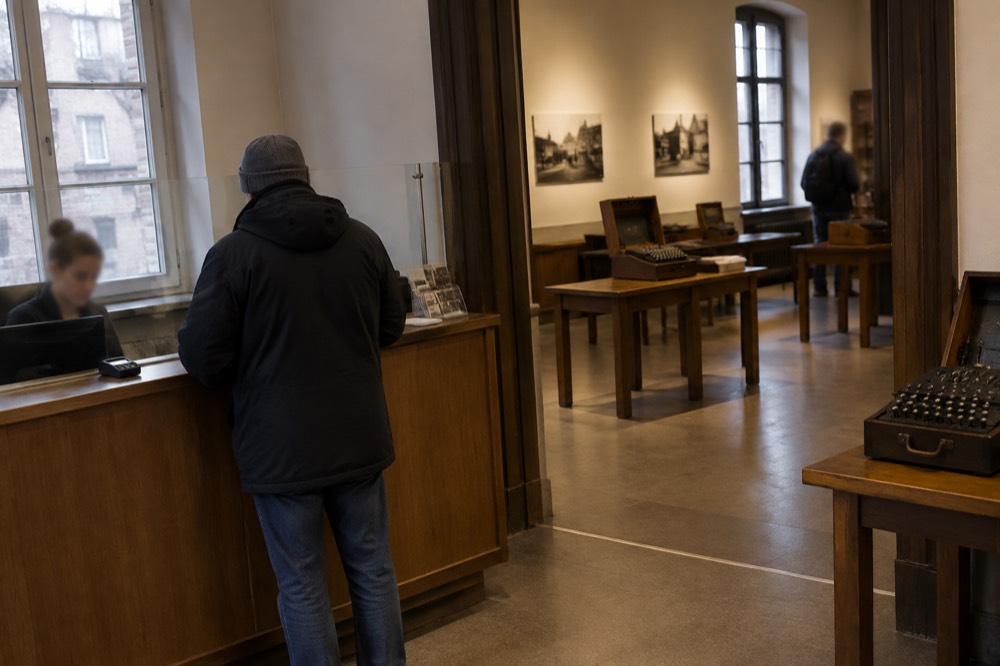
The City Card itself is sold with or without public transport: 24 hours costs 65 zl with transport or 59 zl without, rising to 83 zl and 72 zl for 48 hours and 98 zl and 83 zl for 72 hours. Whether the card pays off depends on how many museums you stack into the window; the centre's 21 zl card price versus the 35 zl standard price is one of the larger single discounts on the list, so a museum-heavy two days usually justifies it.
| Ticket type | Standard price | With Poznan City Card |
|---|---|---|
| Normal adult | 35 zl | 21 zl |
| Reduced | 29 zl | 17 zl |
| Family (2 adults + 3 children) | 75 zl | not published |
| Group, per person | 25 zl | not published |
The related tour below, an entry ticket to the interactive PRL museum, covers a different chapter of the same modern story, daily life under communist Poland, and can be booked ahead while you plan the rest of the day.
The centre is closed on Mondays, open Tuesday to Friday from 9:00 to 18:00 and Saturday to Sunday from 10:00 to 19:00, with last admission one hour before closing in each case. Those published hours matter for planning: a weekday morning visit is the quiet window most guides miss, because the centre shares its street with the Imperial Castle, whose own visiting hours run 12:00 to 19:00 daily, so the two do not naturally stack on a tight morning.
What Will You See Inside The Enigma Cipher Centre?
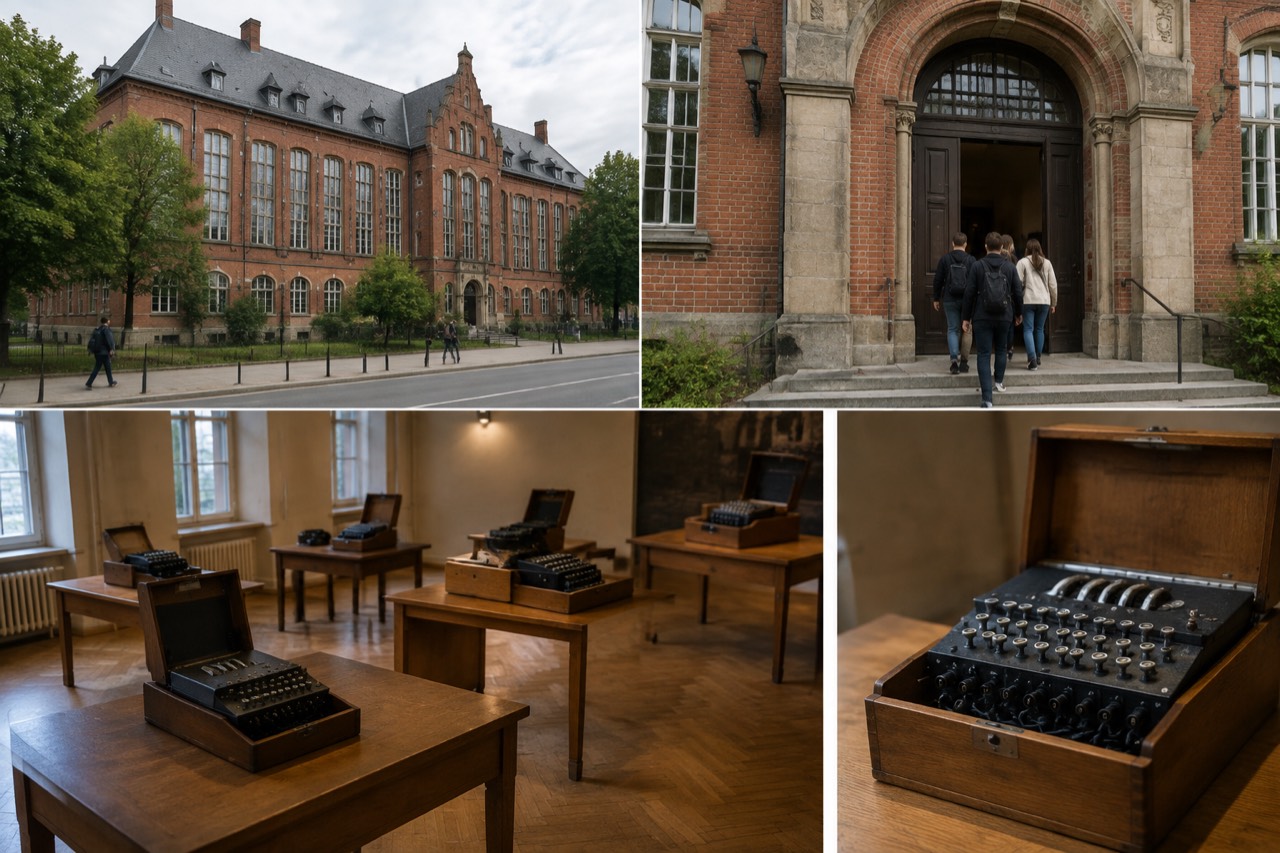
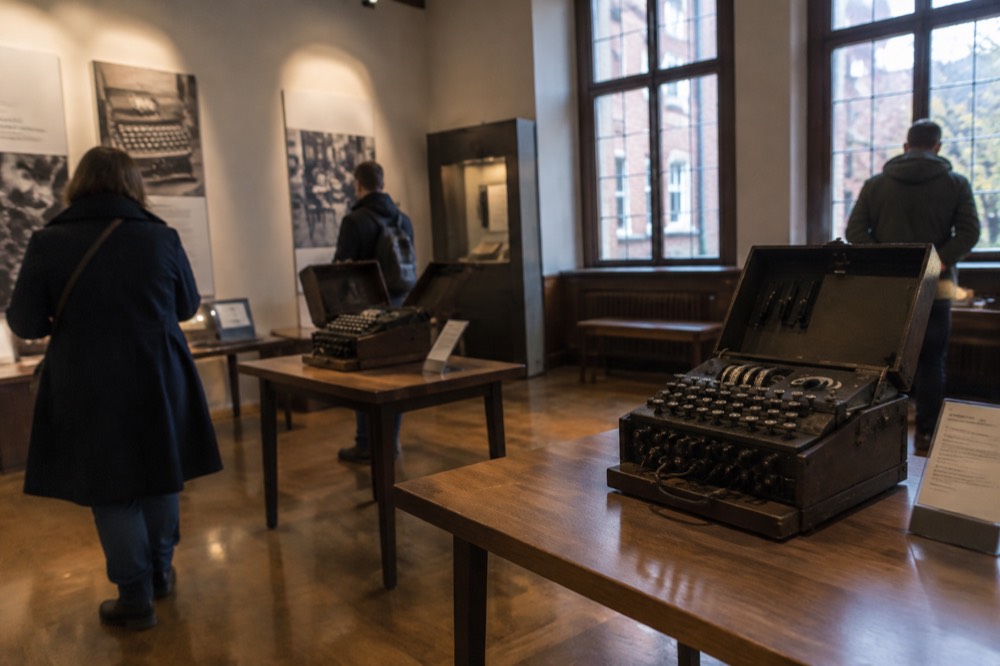
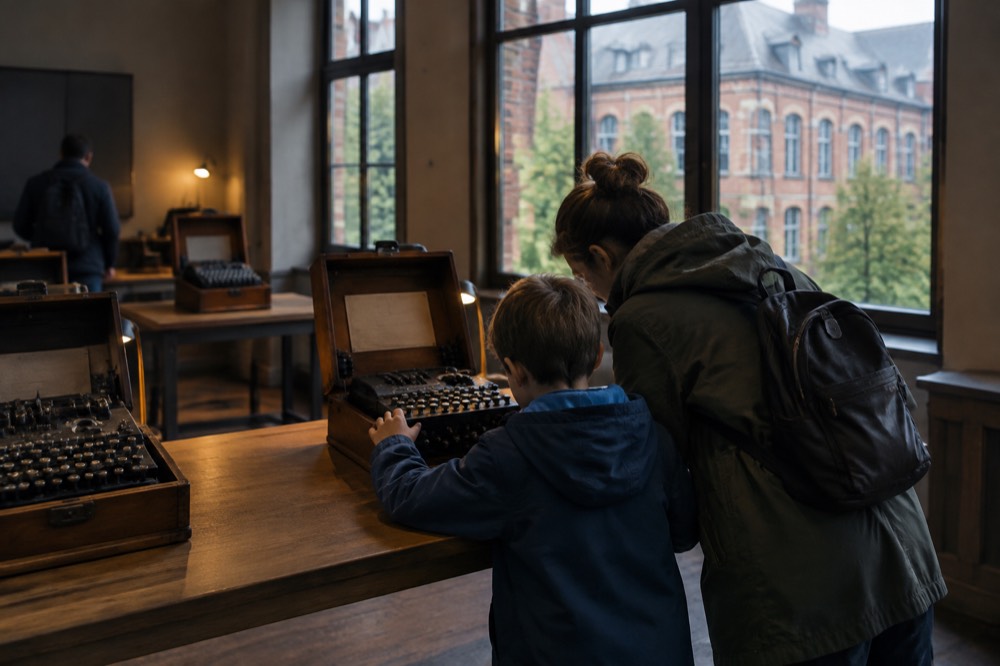
The exhibition presents the Enigma cipher machine and the story of its defeat through original and replica hardware, hands-on cipher stations where visitors try encoding and breaking messages themselves, and biographical displays on Rejewski, Rozycki and Zygalski, with audio guides in Polish, English, German, Russian and Ukrainian. The five-language offer is published on the centre's plan-your-visit page, and it is the strongest practical argument for international visitors: nothing in the core exhibition depends on reading Polish.
The narrative arc runs from the machine itself, a commercial cipher device the German military adapted, through the mathematical insight that exposed its weakness, to the handover of Polish methods and replica machines to French and British colleagues, a story the exhibition tells in full. The centre's timeline names all three codebreakers, and the displays reconstruct the Poznan university context that trained them. Visitors who want the fuller background on who got there first will find the did Poland crack Enigma first answer useful reading before or after a visit.
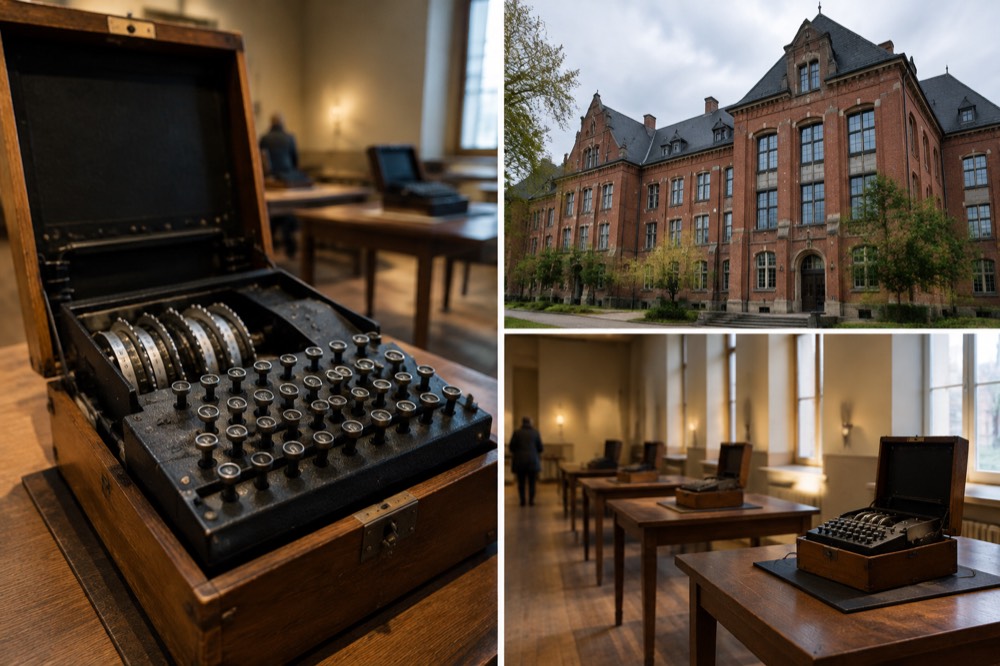
The interactive stations are what distinguish the centre from a glass-case museum. You can attempt the kind of logical puzzles the Polish cryptologists systematised, which gives the visit a genuine hour-plus of engagement for adults and a workable half-day for families with patient children. Published details about room counts or exhibit numbers are not given on the operator's page, so this guide does not invent them.
If you prefer a guided structure over self-guiding, Poznan also has bookable guided formats, and an audio-guide app can cover the streets between the sights in the same languages many visitors need inside the centre, through the self-guided audio tour options.
Who Were Rejewski, Rozycki And Zygalski?
Marian Rejewski, Jerzy Rozycki and Henryk Zygalski are the three Polish mathematicians named on the Enigma Cipher Centre's own timeline: Poznan-trained cryptologists who, working from Polish military intelligence material, reconstructed the Enigma machine's internal wiring and read its traffic years before the better-known Allied codebreaking effort at Bletchley Park began. The centre's site carries their names; the deeper historical record is presented inside the exhibition itself.
All three passed through Poznan University, which ran a cryptology course for selected mathematics students in cooperation with Polish military intelligence. That local root is why the museum is here and not in Warsaw: the city was effectively the recruiting ground for the team. Rejewski's reconstruction of the machine's rotor wiring is the mathematical core of the story, and Zygalski's perforated-sheet method and Rozycki's contributions built on it.
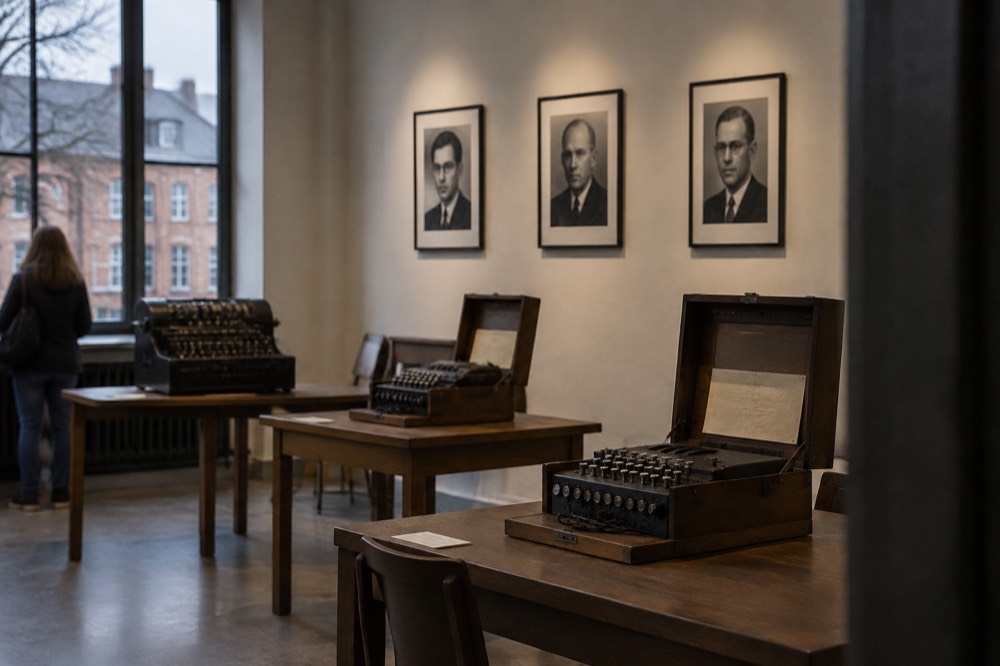
For visitors, the biographical thread is the emotional centre of the museum: three young academics, war, exile and a story that was suppressed for decades under the communist regime that followed. That thread connects naturally to Poznan's other modern-history sites, from the Wielkopolska Uprising 1918-1919 museum on the Old Market Square to the monuments to June 1956. For a fuller sweep of the city's past, see the history of Poznan and WW2 sites in Poznan guides.
How Long Does A Visit Take And When Is The Best Time To Go?
Plan on roughly 90 minutes to two hours for the Enigma Cipher Centre, arriving after the 9:00 weekday opening or before the late-morning weekend rush, and remember that last admission is one hour before closing: 17:00 on weekdays and 18:00 on weekends, so a late arrival costs you the visit. The centre's page publishes the last-admission rule explicitly, and it is the single most common way visitors lose an hour of their day.
The quietest windows follow from the published hours. Tuesday to Friday the doors open at 9:00, which is earlier than most Poznan museums and earlier than the Imperial Castle's 12:00 start, so a 9:00 arrival at the centre followed by a walk to the castle for its midday opening is the most efficient pairing on the street. Weekends open at 10:00 and close at 19:00, giving a longer but busier day.
| Day | Opening hours | Last admission |
|---|---|---|
| Monday | Closed | Closed |
| Tuesday to Friday | 9:00-18:00 | 17:00 |
| Saturday and Sunday | 10:00-19:00 | 18:00 |
Weather rarely drives the schedule in Poznan, but it can: WMO's 1991-2020 normals for the Poznan station put July, the warmest month with a mean daily high of 25.2 C, also as the wettest at 84.4 mm, while April is the driest at 28.6 mm. A wet afternoon is well spent here, and the centre makes a reliable anchor for the rainy day in Poznan plan.
What Else Can You See Near The Enigma Cipher Centre?
The Imperial Castle sits a few doors up Sw. Marcin at number 80/82, open daily 12:00 to 19:00 with tickets at 10 zl normal or 7 zl reduced including a map, and the walk from the castle down to the Old Market Square passes the whole central stretch of the street in under twenty minutes on the flat. The castle's own page gives those hours and prices, making it the natural half-two of any Enigma-centre visit.
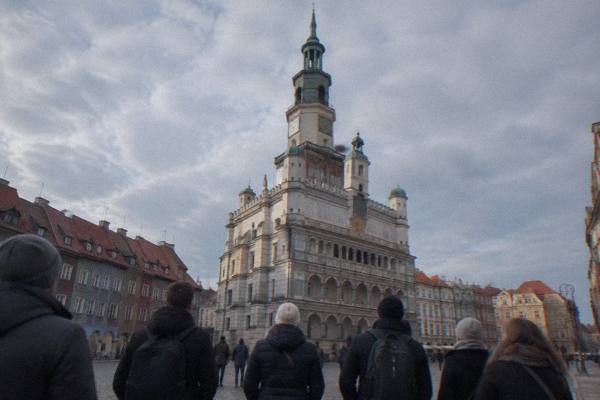
The Old Market Square end of that walk delivers the Town Hall and its famous goats, which the National Museum's page says appear every day at noon and, since recently, also at 3 pm, though whether they run during the current facade works is not officially confirmed, so check on the day. The Town Hall's museum interior itself is closed every weekday with no published reopening date, but the square, the facade and the goats are separate from that closure, and the surrounding museum row is fully open.
| Nearby site | Distance character | Published hours | Standard ticket |
|---|---|---|---|
| Imperial Castle | Same street, Sw. Marcin 80/82 | Daily 12:00-19:00 | 10 zl with map, 20 zl with audio guide |
| Old Market Square and Town Hall goats | Short walk down Sw. Marcin | Square always open; goats at noon and 3 pm | Free |
| Royal Castle, Museum of Applied Arts | Gora Przemysla 1 | Tue-Sun, Mon closed; Tue 10:00-16:00, Fri to 20:00 | 20 zl, Tuesday free |
| Museum of Musical Instruments | Stary Rynek 45 | Tue-Sun, Thu to 18:00, Fri to 20:00 | 15 zl, Tuesday free |
| Greater Poland Military Museum | Stary Rynek 9 | Tue-Sun 10:00-17:00 | 15 zl, Tuesday free |
Tuesday is the budget day: the National Museum branches and Independence Museum branches, including the Old Market Square museum row above, are free on Tuesdays, so a Tuesday combining the Enigma centre with the free museums is the cheapest museum day the city offers. The one caution is that the Enigma centre itself is not on the free-Tuesday list, and its City Card price is a discount, not free entry.
Is The Enigma Cipher Centre Good For Families And Kids?
The family ticket, 75 zl for two adults and three children, and the hands-on cipher stations make the centre a solid family visit for children roughly ten and up, while the under-tens will manage the machines but not the mathematics, so most families spend an hour to ninety minutes inside. The interactive design is the reason: children can physically encode messages and try simple breaking exercises rather than only reading panels.
For younger children or a lighter mood, the city offers easier alternatives on the same trip planning sheet. The chocolate museum entry with workshop is a bookable sweet-tooth option that sits at the opposite end of the historical spectrum, and the four-hour guided private walking tour of Poznan's best-known sights can be paced around children's attention spans.
Families staying longer in the city can balance the codebreaking morning with the zoos: the Old Zoo on ul. Zwierzyniecka is free and open daily, and the New Zoo across town is ticketed, with winter pricing of 20 zl for every visitor from November to the end of February. The Poznan with kids guide covers the full range.
Common Questions About The Enigma Cipher Centre
Is the Enigma Cipher Centre open on Mondays?
No. The centre's visit page lists Monday as closed, with Tuesday to Friday 9:00-18:00 and Saturday to Sunday 10:00-19:00, and last admission one hour before closing.
How much are Enigma Cipher Centre tickets?
The standard adult ticket is 35 zl, reduced 29 zl, family 75 zl for two adults and three children, and groups pay 25 zl per person. Poznan City Card holders pay a discounted 21 zl normal or 17 zl reduced.
Is the Enigma Cipher Centre included in the Poznan City Card?
Partly. The card gives a discount here, 21 zl instead of 35 zl, rather than free entry, which the partner's own price list confirms. Most other city museums are free with the card.
Are English-language exhibits and audio guides available?
Yes. The centre's page states that the exhibition and audio guides are available in Polish, English, German, Russian and Ukrainian.
How long should I spend at the Enigma Cipher Centre?
Visitors typically need 90 minutes to two hours, longer if you work through the interactive cipher stations. Arrive at least two hours before closing, since last admission is one hour before the published closing time.
What else is near the Enigma Cipher Centre?
The Imperial Castle at Sw. Marcin 80/82, open daily 12:00-19:00, is a few doors away, and the walk down Sw. Marcin leads to the Old Market Square, the Town Hall goats at noon and 3 pm, and the free-on-Tuesday museum row around the square.
Poznan keeps its codebreaking story in the centre of the city, an hour of mathematics and machines wedged between a royal castle and a Renaissance square, and the Enigma Cipher Centre is the one museum in town where the exhibits explain how three local students quietly changed the course of a war.