What Does Poznan Mean?
The meaning and origin of the name Poznan, capital of the Wielkopolskie voivodeship in western Poland, explained from the Polish language, the city's geography and its recorded history.
Poznan, the capital of the Wielkopolskie voivodeship (Greater Poland) in western Poland, on the Warta river, takes its name from an old Slavic personal name. It is one of those European city names that looks mysterious in an airport departure board but becomes simple the moment you know a single Polish verb. The standard account among Polish linguists reads the name as a possessive: the settlement of a man called Poznan, a name formed from the verb "poznac", which means "to know" or "to recognise".

What Does Poznan Mean?
Poznan is, on the standard account of Polish linguists, a possessive place name: it means "the settlement belonging to Poznan", a man whose personal name came from the old Slavic verb "poznac", to know or to recognise. The city's name is therefore not a description of the place but a person's name turned into an address, the same way many European towns are named after an early landholder or founder.
That possessive grammar is the part English speakers miss. Polish forms place names from personal names with a suffix that marks ownership, so "Poznan" reads to a Polish speaker as "Poznan's", the town of Poznan, in exactly the way the pattern works across the Slavic language family. The verb behind the personal name, "poznac", is ordinary modern Polish: you use it every day to say you got to know someone or recognised something. So the buried meaning of the city's name is something close to "known" or "recognised", carried by a man whose name became a town.
No founding charter or dated first record of the name appears in this site's verified sources, and this desk does not invent dates. What the sources do carry is the city's modern profile: 534,239 residents, on the Warta river, at the heart of the Wielkopolskie voivodeship. The name, the river and the region belong together, and the section below unpacks why.
Where Does The Name Poznan Come From In Polish?
The name comes from a Slavic personal name, Poznan, built on the verb "poznac" (to know, to recognise), and it entered the city's name as a possessive form meaning "Poznan's settlement". Polish linguists present this as the standard etymology, and the same word-building pattern produced many other place names across Poland and the wider Slavic world.
The verb is the anchor. "Poznac" means to come to know, to recognise or to get acquainted with, and old Slavic naming practice turned such verbs into personal names freely. A man named Poznan would have carried a name his neighbours understood as pointing to knowing or being known. When his settlement needed a name, the possessive form did the job: this is Poznan's place.
Three layers sit inside the name, and the table below separates them so the grammar is visible.
| Layer | What it is | Example |
|---|---|---|
| The verb | "poznac", to know or recognise | modern everyday Polish |
| The personal name | Poznan, a man's name derived from the verb | old Slavic naming practice |
| The place name | possessive form: the settlement of Poznan | the city's name today |
English has a close cousin of the verb, because "know" and the Slavic root descend from the same ancient family, though the sounds travelled differently. That is a happy accident rather than a borrowing: no English speaker influenced the name, and the resemblance is a footnote, not an explanation.
If the linguistic angle appeals to you, the sound of the name is a separate question with its own page, and it is one visitors ask constantly: how to pronounce Poznan correctly.
Is The Name Connected To The River Or The Region?
The name Poznan belongs to a person, not to the Warta river or to the Greater Poland region, but the city grew at a place where the river and the island of Ostrow Tumski made settlement natural, and the region's Polish name, Wielkopolska, simply means "Greater Poland". The city name and the region name answer different questions: one records a founder, the other records size and standing.
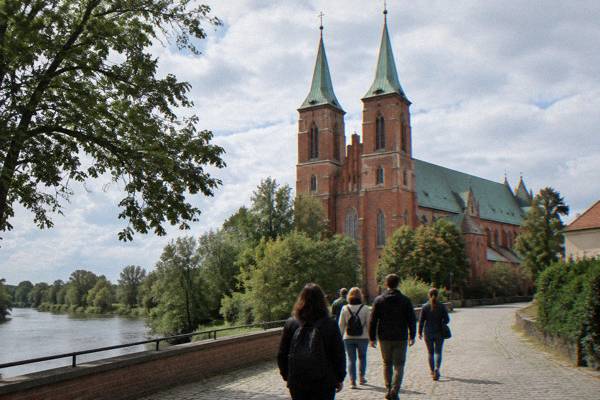
Ostrow Tumski, the cathedral island, is where the name has lived longest in the physical city. The cathedral there holds the crypts with the tombs of Mieszko I and Boleslaw Chrobry, figures central to Poland's early recorded history, and a 10th-century baptismal bowl, all listed on the cathedral's own visitor page. The name of the island is itself plain Polish: "ostrow" is the old word for river island, and "tumski" refers to the cathedral (tum). So the city's most historic ground carries transparent names all the way down. More of these guides are collected on Poznan Travel Guide.
The river's name, Warta, is ancient and its own etymology is not carried in this site's verified sources, so this desk stays quiet on it. What the sources do say is precise about the modern city, and the table below collects the verified basics.
| Fact | Value | Note |
|---|---|---|
| Population | 534,239 | , Statistical Office in Poznan |
| Region | Wielkopolskie voivodeship | the city is its capital |
| Region's Polish name | Wielkopolska | means Greater Poland |
| River | the Warta | the official IMGW gauge sits at Most Rocha |
| Country | Poland | western Poland, EU and Schengen member |
| Currency | zloty (PLN) | not the euro |
A guided walk is a good way to hear these names spoken aloud where they live. The Old Town walking tour of Poznan covers the square and the streets in the following guide-style pages, and the featured Check availability link for the guided walking tour sits beside this paragraph because hearing a local guide say "poznac" in a sentence is worth more than any table.
Does The Name Appear In Other Forms?
Yes, the name appears in other languages and in older records, and the question of the city's German name has its own dedicated page on this site, but in modern English-language use the plain ASCII spelling "Poznan" is standard, and this site writes it that way everywhere, including in Polish place names like Ostrow Tumski and Srodka.
The spelling question is practical, not pedantic. Polish writes the city's name with a marked n, and that letter has no plain English equivalent, so English-language publications, flight boards and this site use the plain form. The name you type into a search box, read on a train ticket and hear from a guide is the same word in all of them.
The historical layer is real too. The city's past includes long periods when other languages were dominant in official use, and the German name for Poznan is a question with a full answer on its own page, including the historical reasons the city carried it. What matters for the meaning is that none of the alternative forms changes the etymology: they are adaptations of one Slavic name, not separate names.
For travellers who like to go deeper than a name, audio commentary is a natural companion to this kind of question, and self-guided audio tours of Poznan let you hear the pronunciations at your own pace.
Why Does A Name's Meaning Matter When You Visit?
A name like Poznan, "the settlement of the one who is known", turns the whole city into a sentence you can read as you walk: the square, the cathedral island and the street names all carry the same old language, and knowing the etymology turns signage from noise into a running commentary on Greater Poland's history.
Start on the Old Market Square. The Town Hall there, at Stary Rynek 1, houses the Museum of the History of the City of Poznan, a branch of the National Museum, since 1954, and the building is dated to the early 14th century on the museum's own page, with conservation work in 1910-1913 and a tower collapse in 1945. The museum interior is currently closed for renovation and no reopening date has been published, but the facade and the square remain the city's living room. The famous goats on the facade appear every day at noon, and, in the museum's own wording, "since recently also at 3 pm"; a clock with goats was first installed in September 1551 by Bartel Wolff of Gubin, and a new clock came in 1913.
The streets around the square keep the linguistic thread. Srodka, the small district just off Ostrow Tumski, carries a tenement mural at ul. Srodka 3 that the city marked as ten years old in October 2025, a modern layer on an old name. Jezyce and Lazarz, the neighbouring districts, are names of the same old kind: personal or family names that became districts, exactly as Poznan became a city. The pattern is the region's signature.
| Name in the city | What kind of name it is | Where it is confirmed |
|---|---|---|
| Poznan | possessive personal name, from "poznac" | standard linguistic account |
| Ostrow Tumski | "ostrow", river island; "tumski", of the cathedral | plain Polish place-name elements |
| Stary Rynek | "old market", the square's own name | city usage |
| Srodka, Jezyce, Lazarz | old settlement and family names turned districts | city districts today |
If the name question has made you curious about the place itself, the natural next stops on this site are where Poznan sits in Poland and whether Poznan is worth visiting, both of which answer the follow-up questions this page tends to raise.
Common Questions About The Poznan Name
What does Poznan mean?
On the standard linguistic account, Poznan is a possessive form of an old Slavic personal name, Poznan, derived from the verb "poznac", to know or to recognise. The city's name therefore means "Poznan's settlement", the town belonging to a man called Poznan.
Is Poznan a Polish name?
Yes. The name is Slavic in origin and its root verb, "poznac", is ordinary everyday Polish today. Other language communities have used adapted forms of the same name historically, but the name itself is Polish in origin and form.
Does the name relate to the word "to know"?
It does. The personal name Poznan is built on the old Slavic verb for knowing or recognising, which survives in modern Polish as "poznac". So the buried sense of the city's name is close to "known" or "recognised".
Why is the spelling sometimes different?
Polish writes the name with a marked letter that English has no equivalent for, so English-language use, including this site, adopts the plain ASCII spelling "Poznan". It is the same name, the same word and the same pronunciation in every case.
Does the name mean anything in German or English?
No. The name is not German or English in origin, and its meaning lives entirely in the Slavic verb behind it. The separate question of what the city was called under German official use has its own page on this site.

A name that means "the settlement of the one who is known" fits a city that has spent centuries being exactly that: known, on the Warta, at the heart of Greater Poland. Say the verb once, "poznac", and the city signs its own name.