Is Warsaw Or Poznań Better?
Warsaw or Poznan? A side-by-side comparison of Poland's capital and its western metropolis, with verified prices, train times and what each city does best.
Poznan, the capital of the Wielkopolskie voivodeship (Greater Poland) in western Poland, sits on the Warta river about 300 kilometres west of Warsaw, and the two cities could hardly feel more different. Warsaw is the national capital, a metropolis of government, skyscrapers and rebuilt Old Town. Poznan, with a population of 534,239 according to the Statistical Office in Poznan, is smaller, more walkable and, on several measures, cheaper. This page compares the two honestly: what each city does better, what it costs on the ground, and how to choose between them, using only figures verified on official pages.

Is Warsaw Or Poznań Better?
Neither city is simply better: Warsaw wins on museums, nightlife scale and international connections, while Poznan wins on compactness, walkability and day-trip access to Kornik, Gniezno and Biskupin. Travellers with two or three days who want a historic core they can cross on foot should pick Poznan; travellers with four or more days who want big-city museums and non-stop energy should pick Warsaw. The two are about 2 h 20 to 3 h 20 apart by direct train, so many visitors do both.
That verdict comes from the shape of the two cities, not from taste. Poznan's Old Market Square, its cathedral island of Ostrow Tumski and its Croissant Museum all sit within a short walk of each other, and the city's own listings frame it as a place you experience at street level. Warsaw's headline attractions, its rebuilt Old Town, its national museums and its modern high-rise quarter, are spread across a capital that demands metro rides and longer days. If you are planning a first trip to Poland and can only choose one, the honest answer depends on how many days you have and what kind of trip you want. For a deeper look at the western contender, start with what Poznan is famous for.
Which City Is Easier To Reach And Get Around?
Poznan is easier to reach from Berlin, about 4 h 30 to 5 h 30 by direct train, and easier to walk once you arrive, while Warsaw has the larger flight network and a metro system. Poznan-Lawica airport sits close to the city, linked to Poznan Glowny station by bus lines 148 and 159, each running every 15 minutes at peak times. Warsaw's Chopin airport serves far more routes, but the capital itself is bigger and slower to cross on the ground.
The train between the two is the natural way to compare them. Direct journeys from Poznan Glowny to Warsaw take about 2 h 20 to 3 h 20 according to the PKP Intercity timetables, and the advice on this desk is always the same: check the PKP Intercity planner for your exact day, because times vary by service. Travellers arriving from Germany should carry a passport or national ID, since Poland notified temporary controls at its land borders with Germany from 02/10/2026 to 30/03/2027. The wider set of guides lives on Poznan Travel Guide.
Inside Poznan, transport is simple. ZTM timed tickets cover all zones with transfers allowed: 5 zl for up to 15 minutes, 7 zl for 45 minutes, 9 zl for 90 minutes, and a zone A ticket is 18 zl. There is no contactless bank-card payment on Poznan trams yet, that is expected with the PEKA modernisation in 2028, so buy tickets from machines, apps or a PEKA card. Warsaw, by contrast, runs a metro as well as buses and trams, which is a genuine advantage in a capital-sized city. The guide to the Warsaw to Poznan train covers the rail link in detail.
Which City Is Cheaper To Visit?
Poznan is generally the cheaper city of the two, with museum tickets at 10 to 35 zl, free entry on Tuesdays at National Museum and Independence Museum branches, and a 24-hour transport ticket at 18 zl. Warsaw's headline museums and hotels cost more, though street food in the capital stays affordable. Neither city uses the euro: both price everything in the Polish zloty, so budget in PLN rather than euros when you plan either trip.
The verified Poznan figures make the point. The Imperial Castle's own page lists entry at 10 zl with a map or 20 zl with an audio guide. The Royal Castle charges 20 zl normal and 13 zl reduced, with free admission on Tuesdays. The Enigma Cipher Centre is 35 zl normal and 29 zl reduced. The Old Zoo is free every day, and the New Zoo drops to 20 zl for every visitor from November to the end of February. The Poznan City Card, 65 zl for 24 hours with transport included, bundles most of the museums with unlimited rides. Warsaw has no equivalent Tuesday free day across its national institutions, and its flagship museums price higher than Poznan's branches. For the full budget picture, see is Poznan expensive.
| Cost item | Poznan | Notes |
|---|---|---|
| Single tram/bus ticket, 45 minutes | 7 zl | All zones, transfers allowed |
| 24-hour transport ticket, zone A | 18 zl | Valid until midnight next day at weekend rates |
| Imperial Castle entry with map | 10 zl | Reduced 7 zl, open daily 12:00-19:00 |
| Royal Castle entry | 20 zl | Reduced 13 zl, Tuesday free |
| Enigma Cipher Centre | 35 zl | Reduced 29 zl, Monday closed |
| Old Zoo | Free | Open daily, Nov-Feb 9:00-16:00 |
| Poznan City Card, 24 h with transport | 65 zl | 59 zl without transport |
Which City Has The Better Old Town Atmosphere?
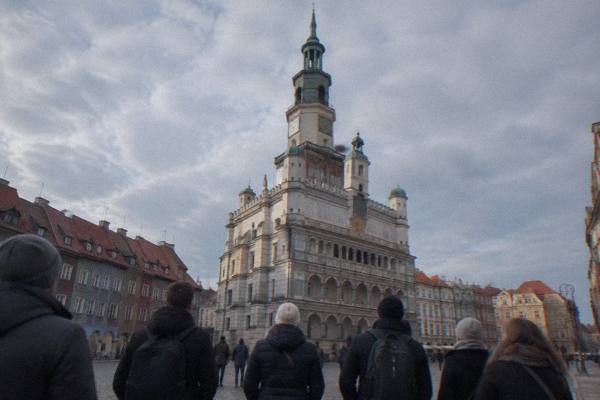
Poznan has the more authentic-feeling historic square, because the Old Market Square's merchant houses and the Town Hall with its famous goats are the working heart of a compact city centre, while Warsaw's Old Town is a meticulous post-war reconstruction. The Poznan square is walkable in minutes and surrounded by museums, croissant shows and cafes. Warsaw's Old Town is beautiful but larger, busier and further from most hotels.
The Poznan goats are the detail everyone remembers. Two metal goats appear on the Town Hall facade every day at noon and, since recently, also at 3 pm, a tradition the National Museum traces to a clock first installed in September 1551 by Bartel Wolff of Gubin. The Town Hall museum interior is currently closed for renovation, with no reopening date published, but the facade, the square and the goats are separate from that closure. The Croissant Museum on the square runs an English show at 14:00, daily in July and August and at weekends the rest of the year, and its goat shows end with a view of the Town Hall from the museum windows. If the goats are why you are choosing Poznan, read what time the goats come out in Poznan.
Warsaw's counter-argument is scale: its Old Town, castle and royal route form a longer, grander ensemble, and its museum scene, from the POLIN Museum to the National Museum, is unmatched anywhere else in Poland. But scale costs days. Poznan delivers its core in one well-paced day, which is why the two-hour Poznan highlights tour works so well as a first orientation, and why many fair visitors build a whole trip around it.

Which City Has Better Day Trips?
Poznan has the stronger day-trip radius: Gniezno is about 25 to 45 minutes away by train, Kornik Castle and its arboretum sit south-east of the city, and Biskupin's archaeological reserve is a manageable excursion, while Warsaw's best trips, to Krakow or Gdansk, are long-distance rail journeys. For a trip built around day excursions rather than one big city, Poznan wins clearly.
The verified day-trip facts back this up. Kornik Castle is open Tuesday to Sunday, closed Mondays, with tickets at 40 zl normal and 20 zl reduced, and the adjacent Kornik Arboretum, about 3,000 species and varieties on the institute's own page, is open daily 10:00-16:00 from November to March at 10 zl adult entry. Gniezno's Museum of the Origins of the Polish State is open daily 9:00-16:00 from October to April with free admission on Sundays, and the cathedral hill's viewing terrace is open even on Sundays, when the cathedral itself closes to tourists from May to October. Biskupin charges 28 zl normal and 19 zl reduced and closes only on 1 January, Easter Sunday, 1 November and 25 December. A half-day private tour pairing Kornik Castle with Rogalin Palace is one of the most popular booked excursions from Poznan, and the Kornik Castle guide covers the castle on its own.
| Day trip from Poznan | Entry (normal / reduced) | Key opening rule |
|---|---|---|
| Kornik Castle | 40 / 20 zl | Closed Mondays; 2026 season ends 14 December |
| Kornik Arboretum | 10 / 7 zl | Open daily, Nov-Mar 10:00-16:00 |
| Biskupin | 28 / 19 zl | Nov-Mar 9:00-16:00; closed 1 Nov and 25 Dec |
| Gniezno Origins museum | Free on Sundays | Daily 9:00-16:00 Oct-Apr |
| Rogalin Palace | 20 / 13 zl | Closed Mondays; Tue-Sun 9:00-16:00 |
Which City Should You Visit In Winter?
Poznan is the better short winter city, because Betlejem Poznanskie runs from 14 November 2026 to 6 January 2027 across three central sites and the POZnan Ice Festival fills a December weekend, while Warsaw's winter programme is bigger but spread across a colder, larger city. WMO's 1991-2020 normals for the Poznan station put January's mean low at -2.9 C, so pack for real cold in either city.
The Christmas market dates are official: the MTP grounds host from 14 November to 20 December 2026, Plac Wolnosci from 20 November 2026 to 6 January 2027, and Stary Rynek from 21 November 2026 to 6 January 2027. The 20th POZnan Ice Festival runs 11 to 13 December 2026 with a speed ice-carving contest and children's workshops. St Martin Street celebrates its name day around 11 November, organised by CK Zamek, though the 2025 edition replaced the traditional parade with an all-day street programme, so check the CK Zamek programme rather than expecting a parade. Warsaw also runs major Christmas markets and a large New Year event, and its indoor museum scene is deeper for the coldest days. One Poznan indoor warning: the Palm House is closed for rebuilding, with part due back towards the end of 2028, so do not plan around it.
So Which Should You Choose: Warsaw Or Poznan?
Choose Poznan for a trip of one to three days built around a walkable old core, the goat clock, croissant culture and easy day trips, and choose Warsaw for a longer trip that needs national museums, big nightlife and the widest flight choice. If your dates fall in late November or December, Poznan's compact Christmas market circuit is easier to enjoy end to end than the capital's. And if you have a week, the train makes both possible.
The two cities are not rivals so much as different answers to different trips. Warsaw is Poland's stage; Poznan is its workshop, closer, cheaper and easier to hold in your head after a single visit. If this comparison has settled it for Poznan, the next planning questions are how many days in Poznan is enough and whether Poznan is worth visiting at all.
If Poznan sounds like your kind of city, book a hotel here.
Common Questions About Warsaw Or Poznan
Is Warsaw or Poznań better?
Neither is simply better. Warsaw suits longer trips built on national museums, nightlife and flight connections; Poznan suits one-to-three-day trips built on a walkable Old Market Square, the Town Hall goats and day trips to Kornik, Gniezno and Biskupin. The two are about 2 h 20 to 3 h 20 apart by direct train, so many visitors combine them.
Is Poznan Cheaper Than Warsaw?
Generally yes. Verified Poznan museum tickets run 10 to 35 zl, Tuesdays are free at National Museum and Independence Museum branches, the Old Zoo is free, and a 24-hour zone A transport ticket is 18 zl. Warsaw's flagship museums and hotels price higher, though both cities use the Polish zloty, not the euro.
How Far Is Poznan From Warsaw By Train?
Direct trains from Poznan Glowny to Warsaw take about 2 h 20 to 3 h 20 according to the PKP Intercity timetables. Times vary by service and day, so check the PKP Intercity planner for your travel date rather than relying on a fixed journey time.
Is Poznan Walkable Compared With Warsaw?
Yes, far more so. Poznan's Old Market Square, Ostrow Tumski, the Croissant Museum and the Imperial Castle on Sw. Marcin all lie within an easy walk of the centre. Warsaw's attractions are spread across a capital-sized city and usually need metro or tram rides between them.
Which City Has Better Day Trips?
Poznan. Gniezno is about 25 to 45 minutes away by train, Kornik Castle is a short drive with 40 zl entry, and Biskupin charges 28 zl. Warsaw's headline excursions, to Krakow or Gdansk, are long-distance rail journeys of several hours each way.
Do Both Cities Have Christmas Markets?
Yes. Poznan's Betlejem Poznanskie runs 14 November 2026 to 6 January 2027 across the MTP grounds, Plac Wolnosci and Stary Rynek, plus the POZnan Ice Festival on 11 to 13 December. Warsaw also runs large Christmas markets, but Poznan's compact circuit is easier to cover on foot in a short visit.