Are Prussians German Or Polish?
The word Prussian covers three different peoples and states, and only one of them was German. A clear answer for visitors to Poznan and Greater Poland.
Poznan, the capital of the Wielkopolskie voivodeship (Greater Poland) in western Poland, on the Warta river, is a city where the question "are Prussians German or Polish?" is not abstract. The region changed hands between Polish and German-speaking states more than once, and the buildings visitors photograph today carry the marks of both. The short answer is that "Prussian" is not one thing: it names a Baltic people who were neither German nor Polish, a state that became the core of a German empire, and an adjective that ordinary Germans used for themselves until 1945. Untangling those three is what this page does.

Are Prussians German Or Polish?
Neither, and both, depending on which "Prussians" you mean: the original Prussians were a Baltic-speaking pagan people on the southeastern Baltic coast, related by language and culture to Lithuanians and Latvians, not to Germans or Poles at all. Later the name was taken over by a German-ruled state, and "Prussian" came to describe its German-speaking ruling class and citizens. So the ancient Prussians were neither, while the modern usage of the word is overwhelmingly German.
That layered answer matters in Poznan more than in most Polish cities. Greater Poland, the region around Poznan, was the heart of the early Polish state, and the cathedral on Ostrow Tumski holds the tombs of Mieszko I and Boleslaw Chrobry in its crypts, relics the cathedral's own visitor page points to as its central draw. Yet the city also spent long stretches under Prussian administration, and the Wielkopolska Uprising of 1918-1919, commemorated by a museum at Stary Rynek 3, was fought precisely over that German-Prussian rule. A visitor who understands what "Prussian" actually means will read the city's architecture and museums very differently.
The distinction also explains a common confusion on travel forums. People ask whether Poznan was "German" or "Prussian", as if the two were rivals. In practice, from the era when the name mattered politically, Prussia was a German-led state, and its Prussian identity was a regional flavour of Germanness, much as Bavarian is. The question that actually divides historians and locals is a different one, and this site covers it separately in is Poznan more Polish or German.
Who Were The Original Prussians?
The original Prussians, sometimes called Old Prussians or Baltic Prussians, were a Baltic people who lived on the southeastern shore of the Baltic Sea, in what is now northeastern Poland and the Russian Kaliningrad exclave. Their language belonged to the Baltic family, making it a distant relative of Lithuanian and Latvian, and they had their own gods, social order and coastal economy. They were conquered, Christianised and gradually absorbed over the medieval period, and their language eventually disappeared.
They were not Slavs, which is to say not Poles by language or ancestry, and they were not Germans either. Their name, though, outlived them spectacularly. The conquering power that took their lands adopted "Prussia" as its own territorial title, so a label that once belonged to a Baltic people ended up on a German great power. That handover of the name is the root of every confusion that follows.
In Poznan you will not see Old Prussian culture anywhere in the streets; their homeland lay far to the northeast. What you will see, in the National Museum's branches and in the city's historical museums, is the later story: a Wielkopolska region pulled between Polish statehood and German-speaking Prussian administration. The Enigma Cipher Centre, for its part, tells a newer chapter of Polish-German entanglement, the interwar codebreaking work of Marian Rejewski, Jerzy Rozycki and Henryk Zygalski, whom the centre's own timeline names.
Why Did Prussia Become A German State?
Because the state that called itself Prussia was ruled for centuries by a German-speaking dynasty and aristocracy, and it eventually led the unification of Germany, with the Prussian king becoming German emperor. From that point "Prussian" and "German" overlapped heavily: Prussia was the largest and most powerful German state, and its values, militarism, orderliness, thrift, became stereotypes about Germans in general. After 1945 the state of Prussia was formally abolished and the name stopped existing as a political reality.
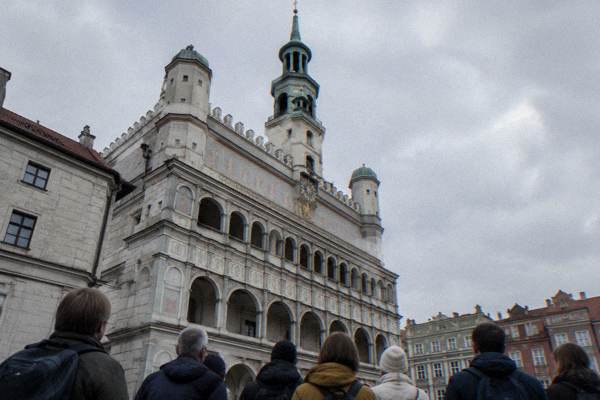
No date in that abolition is printed here because this desk's verified pack does not carry it, and the house rule is to state only what a primary source confirms. The Town Hall on the Old Market Square, a building the museum dates to the early 14th century, was conserved in 1910-1913, and its tower collapsed in 1945, in the final months of the war that ended Prussia as a state. Since 1954 the building has housed the Museum of the History of the City of Poznan.
The goats on the Town Hall facade tell the same layered story. A clock with goats was first installed in September 1551 by the clockmaker Bartel Wolff of Gubin, a new clock followed in 1913, and today the animals appear every day at noon and, since recently, also at 3 pm, according to the National Museum's own goats page. Whether they run during the current facade works is not officially confirmed, so check on the day rather than promising yourself the show. A German clockmaker, an Italian-style Renaissance square, a Polish city: the facade itself answers the question of whether this history splits neatly into "German" and "Polish" boxes. It does not.
What Does Prussia Have To Do With Poznan?
A great deal: Poznan and the surrounding Wielkopolska region spent long periods inside the Prussian-ruled German sphere, and the local Polish population resisted that rule politically and, in 1918-1919, militarily. The Wielkopolska Uprising, whose museum sits directly on the Old Market Square at Stary Rynek 3, was one of the most successful Polish uprisings, and it shaped the interwar Polish state. That is why the German-Prussian legacy in Poznan is not a footnote but a live part of the city's museums and memory culture.
The uprising museum is small but pointed: the Independence Museum network lists it at Odwach, Stary Rynek 3, with tickets at 15 zl normal and 10 zl reduced, open Tuesday to Sunday and free on Tuesdays, with November-February hours of 10:00-16:00. Two doors of the square away, the story continues. The Greater Poland Military Museum at Stary Rynek 9 (Tue-Sun 10:00-17:00, 15/10 zl) and the Museum of Musical Instruments at Stary Rynek 45 (Thu to 18:00, Fri to 20:00, 15/10 zl) round out a single square that holds three museums, all closed Mondays, all free on Tuesdays.
| Museum | Address | Hours | Tickets (zl) |
|---|---|---|---|
| Museum of the Wielkopolska Uprising 1918-1919 | Stary Rynek 3 (Odwach) | Tue-Sun, Nov-Feb 10:00-16:00 | 15 / 10, Tuesday free |
| Greater Poland Military Museum | Stary Rynek 9 | Tue-Sun 10:00-17:00 | 15 / 10, Tuesday free |
| Museum of Musical Instruments | Stary Rynek 45 | Tue-Wed 10:00-16:00, Thu 10:00-18:00, Fri 10:00-20:00, Sat-Sun 10:00-17:00 | 15 / 10, Tuesday free |
Visitors who want the deeper regional frame can read where Poznan sits in Poland and the separate discussion of the German name for Poznan. For touring the square with context rather than alone, the private Old Town walking tour can be booked through the operator's live listing: Check availability.

Are Modern Germans Still Called Prussians?
No. Prussia ceased to exist as a political entity after the Second World War, its territory split among Poland, the Soviet Union and East Germany, and nobody today holds Prussian citizenship or lives in a Prussian state. Some Germans have Prussian family roots or regional traditions, and the old Prussian heartland in Germany is now Brandenburg, around Berlin, but "Prussian" today is a historical label, used by genealogists, historians and nostalgic cooks, not a living national identity that anyone can claim.
For travellers, this means a family story of "Prussian ancestors" almost always means German-speaking ancestors from the former eastern territories, many of which are now Polish or Russian. Poznan and Wielkopolska are full of exactly that archaeology: German inscriptions under Polish ones, rebuilt townhouses, and museum displays explaining who lived here when. The honest framing, which Poznan's own museums use, is that the region was multi-layered, not that one side owned it.
This is also why the question is Poznan worth visiting has an easy answer for history-minded travellers. The city of 534,239 residents preserves the Polish-German frontier story better than most, in walkable form, with a cathedral island, a Renaissance square and a fortified citadel park all within reach. The Poznan Travel Guide covers each of those in depth.
How Should Visitors Use The Word Prussian In Poznan?
Carefully, and mostly as a historical term: in Poznan, "Prussian" refers to the era of Prussian-German administration over Wielkopolska, ended locally by the uprising of 1918-1919, and locals will read it as history rather than as a live identity. It is safe and accurate in phrases like "the Prussian period" or "Prussian-era fortifications", misleading as a label for people, and wrong for the original Baltic Prussians. If unsure, say "German-era" or simply name the century you mean.
The city's own institutions model that precision. The Independence Museum network frames the 1918-1919 uprising by its dates and its outcome, the National Museum's Town Hall page dates the building and its restorations rather than assigning it a nationality, and the cathedral's page points to the tombs of Mieszko I and Boleslaw Chrobry as the anchors of Polish statehood in the region. Nobody pretends the German centuries away; nobody grants them ownership either.
| Term | What it means | Language family | Relevance in Poznan |
|---|---|---|---|
| Old (Baltic) Prussians | Medieval Baltic people of the southeastern Baltic coast | Baltic | None locally; homeland far to the northeast |
| Prussia (state) | German-ruled state that later led German unification | German (official) | Ruled Wielkopolska in the era before 1918-1919 |
| "Prussian" (self-label) | How Germans from that state described themselves | German | Historical usage only; no live identity today |
A second table worth carrying in your head is the square's own timeline: 1551, the first goat clock by Bartel Wolff of Gubin; 1910-1913, the Town Hall conservation; 1918-1919, the Wielkopolska Uprising; 1945, the tower collapse; 1954, the city history museum installed in the Town Hall. Walk the Old Market Square with those five anchors and the Prussian question answers itself on the stones.
For travellers who prefer a guide to carry these distinctions, a private Old Town tour with a licensed local guide is the most direct option, and the same roster includes a Fort VII museum tour for the war-era chapters and a chocolate-museum workshop for the lighter ones.
Common Questions About Prussians
Are Prussians German or Polish?
The original Prussians were neither: they were a Baltic people related to Lithuanians and Latvians. The name was later adopted by a German-ruled state, so in modern historical usage "Prussian" is overwhelmingly German. Nobody today is a Prussian citizen; the state ceased to exist after the Second World War.
Was Poznan a Prussian city?
Poznan and the Wielkopolska region spent long periods under Prussian, German-speaking administration, but the city's Polish population and institutions persisted, and the Wielkopolska Uprising of 1918-1919, commemorated by a museum at Stary Rynek 3, ended that rule locally. Calling Poznan simply "Prussian" misses the centuries of Polish statehood anchored on Ostrow Tumski, where the cathedral crypts hold the tombs of Mieszko I and Boleslaw Chrobry.
Do Old Prussians still exist?
No. The Baltic Prussians were conquered and absorbed during the medieval period, and their language eventually died out. Their name survives only in place names and in the label later taken by the German state of Prussia.
Where can I see this history in Poznan?
Start on the Old Market Square: the Museum of the Wielkopolska Uprising 1918-1919 at Stary Rynek 3 (15/10 zl, free Tuesdays), the Greater Poland Military Museum at Stary Rynek 9, and the Museum of Musical Instruments at Stary Rynek 45 all sit within one square. The Town Hall itself, whose museum interior is currently closed for renovation with no published reopening date, carries the story in its fabric, from the 1551 goat clock to the tower rebuilt after 1945.
Is Prussia the same as Germany?
Not exactly. Prussia was the largest and most powerful of the German states and led German unification, so the two overlapped heavily, but Prussia also ruled large territories with Polish-speaking majorities, Wielkopolska among them, which is exactly why the Prussian question lands differently in Poznan than in Berlin.
Why does Poznan have German-looking architecture?
Because the city was rebuilt and administered under German-speaking states at several points, and its merchants, architects and rulers came from both language communities. The National Museum dates the Town Hall to the early 14th century with a conservation in 1910-1913, and the goat clock tradition began with the Gubin clockmaker Bartel Wolff in September 1551, a reminder that the square's "Polish Renaissance" look was always a cross-border product.
If the question still feels tangled after a walk around the square, that is the honest outcome: Prussia was German in its final centuries, Baltic at its origin, and in Poznan the traces it left belong to a Polish city that remembers all of it.