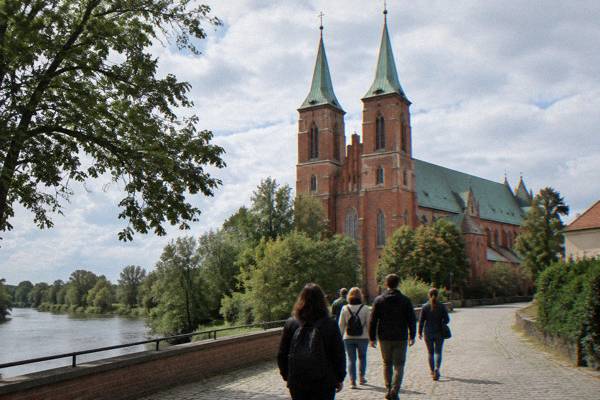
Rusalka Lake Poznan
Rusalka Lake is one of Poznan's quiet water spots, a world away from the regatta lanes of Lake Malta. Here is what verified sources say about visiting it, getting there and pairing it with the rest of the city.
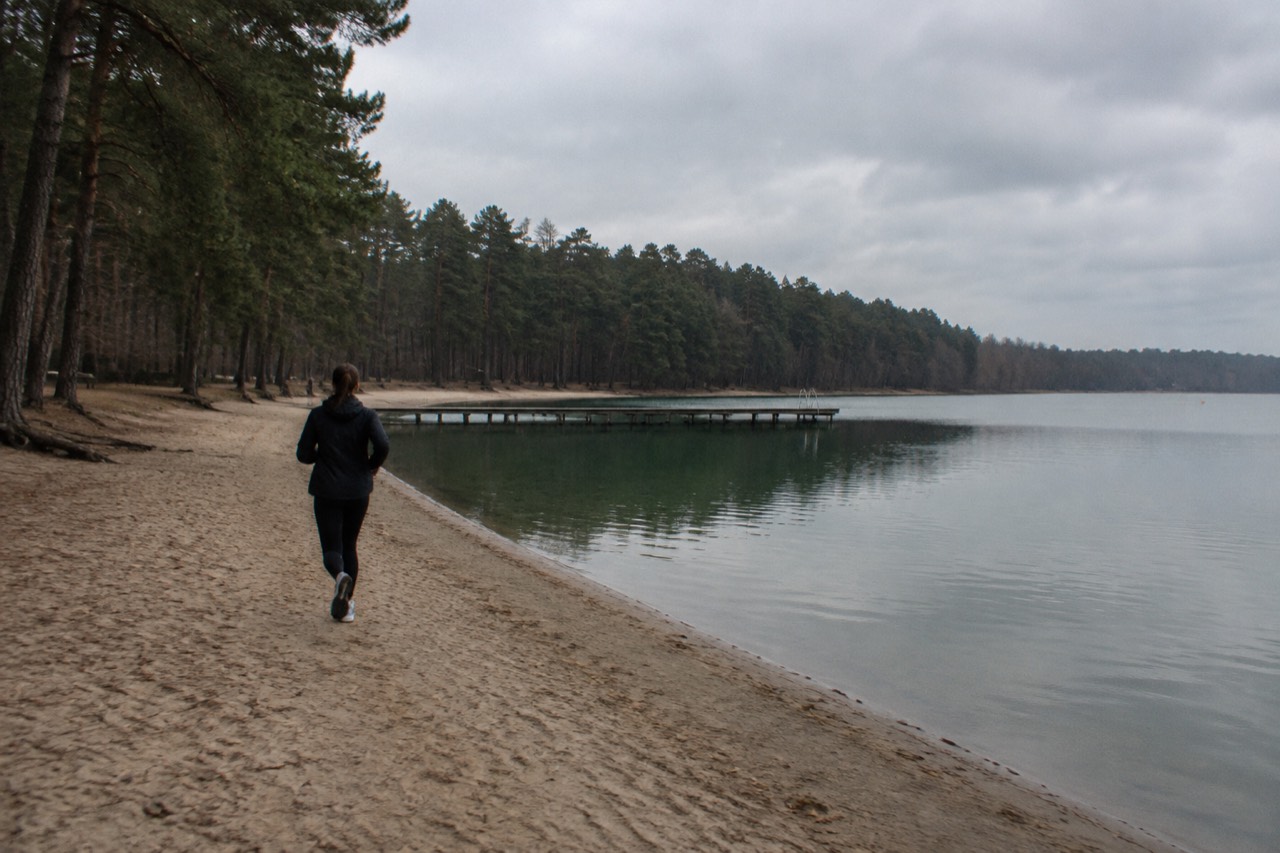
Short answer
Rusalka Lake is a recreational lake in Poznan, the capital of the Wielkopolskie voivodeship in western Poland, reached with a standard ZTM timed ticket from 5 zl; it is free to walk around, and its quieter character contrasts with the developed Lake Malta and Termy Maltanskie complex.
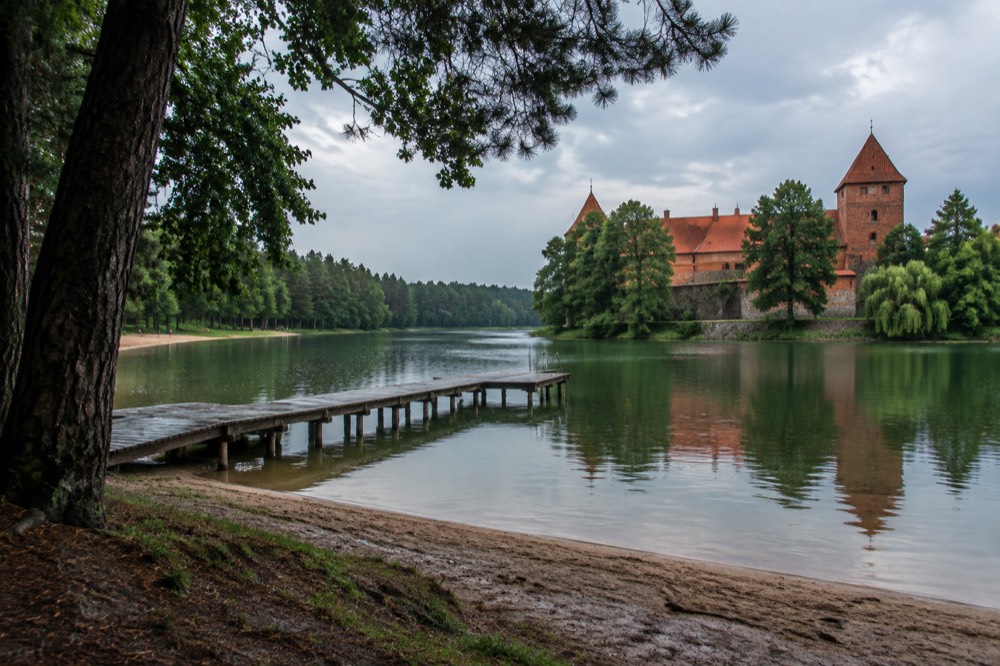
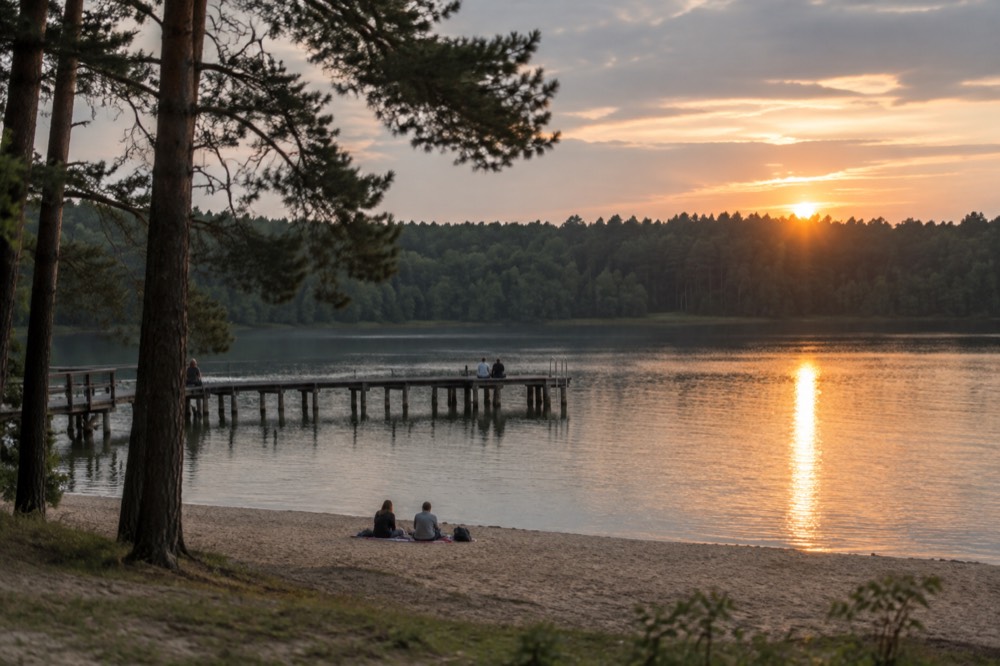
Rusalka Lake sits in the green northern fringe of Poznan, the capital of the Wielkopolskie voivodeship (Greater Poland) in western Poland, a city of 534,239 residents that stretches along the Warta river. While visitors often head straight for the Old Market Square or the lake-and-spa complex at Lake Malta, Rusalka is the water the locals keep for themselves: a leafy basin used for walking, picnics and summer swimming, with no stadium, no ski slope and no ticket desk at the shore. This page gathers what verified, official sources say about the lake and its setting, and is honest about the points where those sources fall silent, because a lake like this is exactly where lazy guidebooks invent depths, areas and bus numbers.
One honesty note before anything else. For Rusalka Lake specifically it carries no official surface-area figure, no depth, no creation date, no water-quality page and no published opening hours, because a free urban lake has none of those things written down in one place. Where a claim below has a number, the number comes from a verified source. Where a competing guide would print a number, this one tells you what is and is not published, which is more useful on the ground anyway.
Where Is Rusalka Lake In Poznan?
Rusalka Lake lies in the wooded northern part of Poznan, the capital of the Wielkopolskie voivodeship (Greater Poland) in western Poland, a city of 534,239 residents on the Warta river, and it is reached with the same ZTM tram and bus network that serves the whole city, not by any special lake transport. It is one of several bodies of water that give Poznan its unusually green character for a regional capital: the better-known pair are the Warta itself, whose official IMGW gauge "Poznan Most Rocha" sits at river kilometre 241.23, and Lake Malta on the eastern side, whose promenade, thermal baths and zoo dominate most itineraries.
Rusalka belongs to the other Poznan, the one that begins where the tenement streets of the centre give way to forest. The city's statistical office records Poznan covering some 262 square kilometres, and much of that northern sweep is woodland and water rather than blocks. The lake sits inside that belt, which is why it functions as a walking and swimming destination rather than a sight with a ticket office.
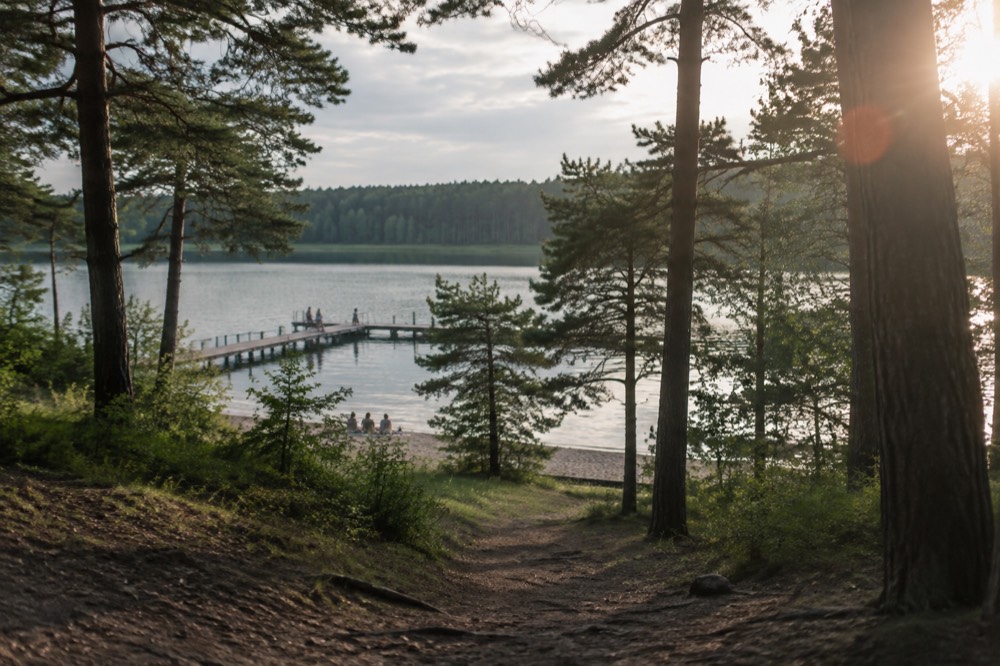
What that means practically is that Rusalka rewards a different pace. There is no monument to queue for and no facade to photograph at noon, a pleasant change from the Town Hall goats, whose daily appearance the National Museum's own page now describes as every day at noon and, since recently, also at 3 pm, without promising the show during the current facade works. At Rusalka the entire programme is the water, the trees and whatever you brought with you.
What Can You Actually Do At Rusalka Lake?
The honest answer is the low-tech one: walk the shore, swim in the summer season, picnic, and use the lake as a gateway to the surrounding woods, because this desk's verified sources publish no rental operators, no boat timetable, no food-truck schedule and no events calendar for Rusalka, and inventing any of those would be the classic guidebook failure. The lake is free to visit in the way that public water is free: there is no gate, no admission price and no card to tap. That alone sets it apart from nearly everything else in a Poznan itinerary, where even the free museums keep a desk.
Compare the rest of a standard day in this city and the pattern is clear. The Imperial Castle charges 10 zl with a map and 20 zl with an audio guide, daily 12:00 to 19:00. The Croissant Museum runs timed shows, its English "croissant and goat show" at 14:00 about 65 minutes long. Even the Old Zoo, genuinely free to enter, still closes at 16:00 in the November-to-February window. Rusalka asks nothing and closes nothing, though daylight and the swimming season do the work of a clock.
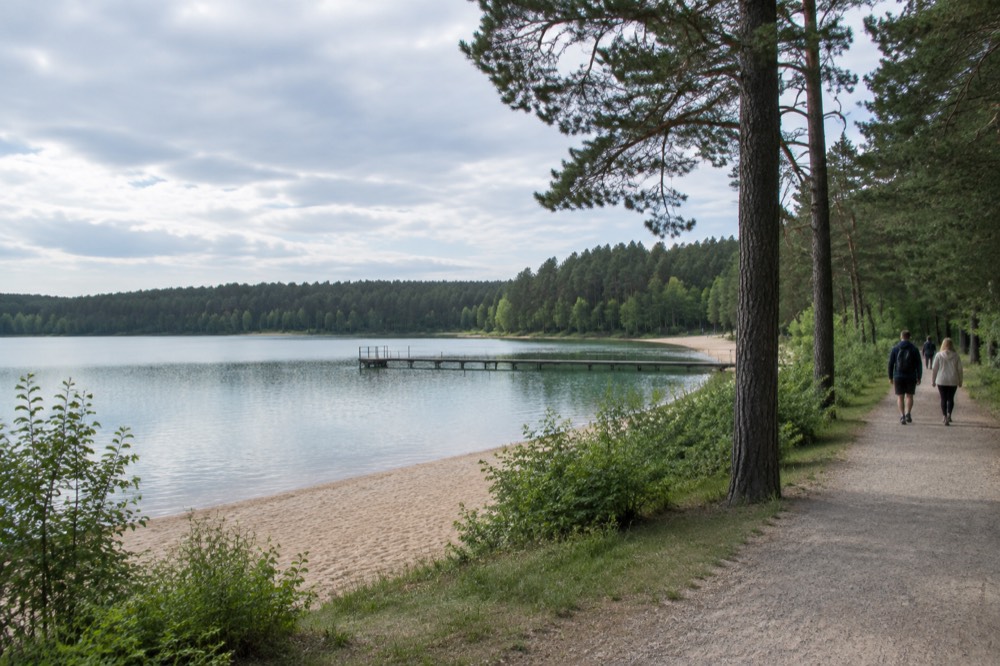
Two seasonal cautions are worth carrying. First, swimming at any urban lake in Poland is only advisable at officially supervised bathing areas in the season, and the city's published water-quality bulletins, not a travel site, are the place to confirm that a given beach is open in a given week. Second, do not plan around a city bike: Poznan's municipal bike system ran from 2012 to 2022 and has not returned, with only a council committee discussion in July 2026 on reviving it. There is no bike-share to rent at the lake, so arrive on foot, by tram or bus, or with a bike you already have.
If seeing the city by bike appeals despite that, a guided ride solves the equipment problem neatly. The operator's listing covers Poznan's highlights with a local guide and bikes included; details and current pricing render from the live listing rather than from this page.
Between them those three cover the angles most Rusalka-bound visitors want: a guided loop of the city's landmarks, a vehicle-based dive into Poznan's military past at the tank museum, and an evening beer tasting back in the centre. Each has its own live listing, and none requires you to book before you have even seen the lake.
Is Swimming At Rusalka Lake A Good Idea?
Swimming at Rusalka is a summer, supervised-area-only activity, and this desk publishes no water-quality rating, no depth figure and no lifeguard schedule for the lake because no verified official source supplies them; the safe rule for any Poznan lake is to swim only where the city's own bathing-area notices confirm supervision and water quality for the current season. That is not a hedge, it is the actual state of the information. Lakes in Poland are monitored and their bathing zones designated seasonally, and a guide that printed a year-round "safe to swim" verdict would be guessing.
The climate normals help you pick the window. WMO's 1991-2020 normals for the Poznan station (station 12330, observed by IMGW-PIB) put the mean daily high at 23.1 C in June, 25.2 C in July and 24.9 C in August, with mean lows of 11.9 to 14.1 C across those months. May reaches a mean high of 19.8 C and September 19.5 C, so the realistic open-water season runs from late June through August, with July the warmest month on average.
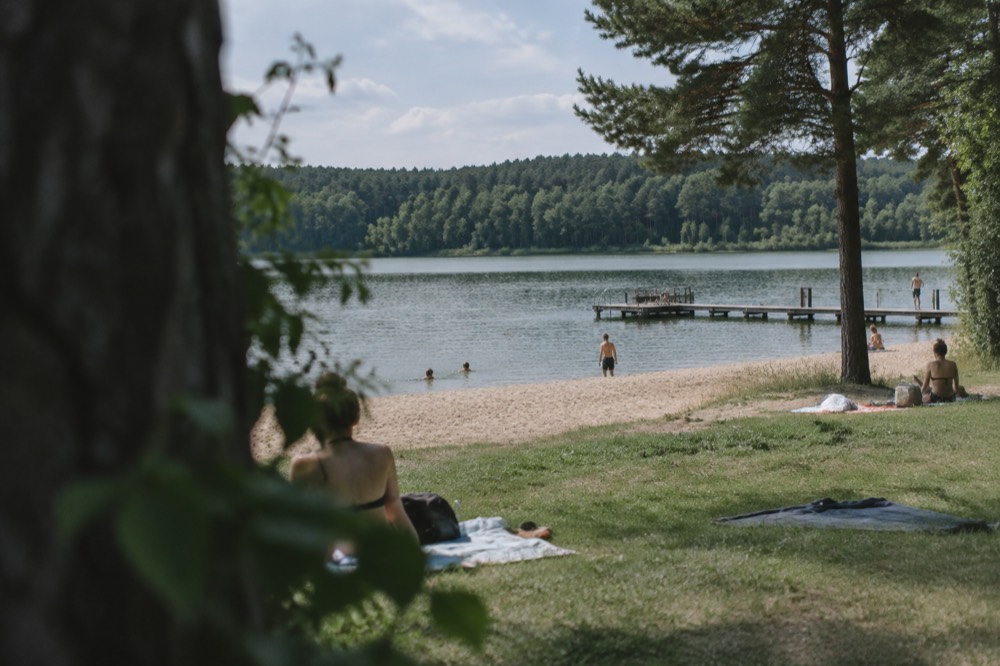
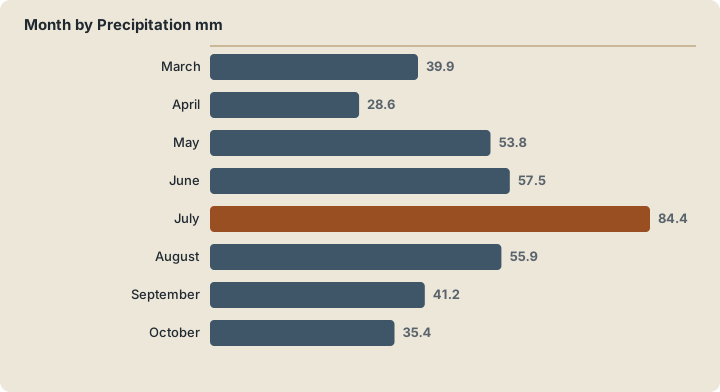
One twist in the data is easy to miss: July is not only the warmest month in Poznan, it is also the wettest, with 84.4 mm of precipitation on average across 9.5 days with a millimetre or more. April, oddly, is the driest month at 28.6 mm, but with a mean high of 15.0 C it is a walking month, not a swimming one. Pack for both warmth and a shower if your trip centres on July.
If guaranteed water whatever the weather is the priority, the city has an engineered answer an arm of the plan away. Termy Maltanskie, on the shore of Lake Malta, runs its Aquapark daily 9:00 to 23:00 with geothermal water, and the table in a later section carries its verified prices. A rainy-day combo of Rusalka in the morning and the aquapark in the afternoon is one of the more sensible days this city offers.
The button above leads to the live listing for the guided city ride, where cancellation terms and pay-later options are shown before you commit, and where the current price renders from the operator's own data rather than from a number typed here.
How Do You Get To Rusalka Lake Using Poznan Transport?
Poznan's ZTM network covers the whole city with trams and buses on a timed-ticket system: 15 minutes costs 5 zl, 45 minutes 7 zl and 90 minutes 9 zl, all valid in every zone A through D with transfers allowed, so any single journey to the lake costs no more than the 90-minute cap and a 24-hour zone A pass is 18 zl. Tickets are timed, not zoned for short rides, which is the detail visiting guidebooks most often get wrong. The ZTM price list confirms the full ladder below.
| ZTM ticket | Normal (zl) | Reduced (zl) |
|---|---|---|
| 15 minutes, all zones | 5 | 2.50 |
| 45 minutes, all zones | 7 | 3.50 |
| 90 minutes, all zones | 9 | 4.50 |
| 24 hours, zone A | 18 | 9 |
| 24 hours, zones A+B+C+D | 24 | 12 |
| 7 days, zone A | 59 | 29.50 |
| 7 days, all zones | 94 | 47 |
Real travel time counts from validation, tickets cannot be combined to extend time, and a weekend promotion lets a 24-hour ticket validated between 20:00 Friday and 24:00 Saturday run until 24:00 Sunday. Pay with a app, a ticket machine, cash at a sales point or the PEKA card, whose bearer version costs 27 zl of which 12 zl is a refundable deposit and 15 zl is travel credit. One thing you cannot yet do is tap a bank card on the tram: ZTM signed the PEKA modernisation contract in 2026, with contactless payment expected to arrive in 2028.
The penalty for riding without a valid ticket is 350 zl, reduced to 175 zl if paid within 7 days, which makes a 5 zl ticket the best-value purchase of any Poznan day. For exact tram and bus stops serving the lake's end of the city, the ZTM journey planner is the source to check before you set out, because stop-level routing for a specific address is beyond what any printed guide should promise.
Rusalka Lake Or Lake Malta: Which One Suits Your Day?
Choose Rusalka for quiet water and free, self-directed time; choose Lake Malta for infrastructure, because the Malta shore carries Termy Maltanskie thermal baths, the New Zoo, and in season the Maltanka park railway, while Rusalka carries trees, a path and nothing with a turnstile. The comparison is really between a park with a lake in it and a purpose-built recreation district, and Poznan is lucky enough to offer both.
The Malta side is fully documented in this desk's verified sources. Termy Maltanskie runs the Aquapark daily 9:00 to 23:00, the sauna zone from 14:30 on weekdays and 11:30 at weekends, and the sports pools from 6:00, on natural geothermal water. The New Zoo at ul. Krancowa 81 is open daily with seasonal hours, and the Maltanka railway linked its two stations hourly on working days in the 2026 season, though that season ended on Sunday 27 September 2026 and no 2027 start date is published, so never plan a ride in winter.
| Feature | Rusalka Lake | Lake Malta shore |
|---|---|---|
| Entry cost | Free to walk the shore | Free promenade; attractions ticketed |
| Swimming | Summer, supervised areas only | Termy Aquapark daily 9:00-23:00 |
| On-site attractions | None ticketed | Termy, New Zoo, Maltanka (seasonal) |
| Food and rental kiosks | Not published in verified sources | Termy cafes; zoo facilities |
| Character | Wooded, quiet | Developed, busy, event-ready |
For visitors who want the water whatever the sky is doing, the Termy price table is the deciding number. The operator's first price table for the Aquapark runs 46 zl for one hour, 61 for two, 75 for three and 109 for the whole day at the normal rate, with reduced rates of 37/52/65/94 zl and family tickets at 93/123/152/219 zl; overstaying costs 1 zl per minute, and the price page is tabbed per zone, so confirm the zone before quoting a price against a named zone.
The Maltanka railway's 2026 fares give one more data point for the Malta side: 18 zl single and 24 zl return at the normal rate, 12/16 zl reduced for children up to 16, family return 64 zl. Return tickets were new in the 2026 season. All of it is seasonal, all of it is on the other side of the city from Rusalka, and none of it is a reason to skip the quiet lake if quiet is what you came for.
When Is The Best Month To Visit Rusalka Lake?
WMO's 1991-2020 climate normals for the Poznan station show the warmest, most lake-friendly stretch is June through August, with mean daily highs of 23.1, 25.2 and 24.9 C, though July is also the wettest month at 84.4 mm, while April is the driest month at 28.6 mm but only 15.0 C on average by day, so walkers and swimmers want opposite ends of the calendar. Frost days tell the winter story plainly: 19.7 in January, 17.9 in February and 17.5 in December, against zero from June through August.
| Month | Mean high C | Mean low C | Precipitation mm | Frost days |
|---|---|---|---|---|
| March | 8.1 | 0.0 | 39.9 | 14.1 |
| April | 15.0 | 4.0 | 28.6 | 4.6 |
| May | 19.8 | 8.4 | 53.8 | 0.4 |
| June | 23.1 | 11.9 | 57.5 | 0.0 |
| July | 25.2 | 14.1 | 84.4 | 0.0 |
| August | 24.9 | 13.7 | 55.9 | 0.0 |
| September | 19.5 | 9.6 | 41.2 | 0.1 |
| October | 13.3 | 5.4 | 35.4 | 3.8 |
Read that table as a planner, not a forecast. May and September are the connoisseur months for a lake walk: mean highs near 20 C, almost no frost risk, and precipitation moderate at 53.8 and 41.2 mm. June and August split the difference between warmth and showers, and July delivers the heat alongside the heaviest rain. Winter turns the whole setting into a frost-forest walk, with the January mean low at -2.9 C, and there is no skating season to promise because none is published.
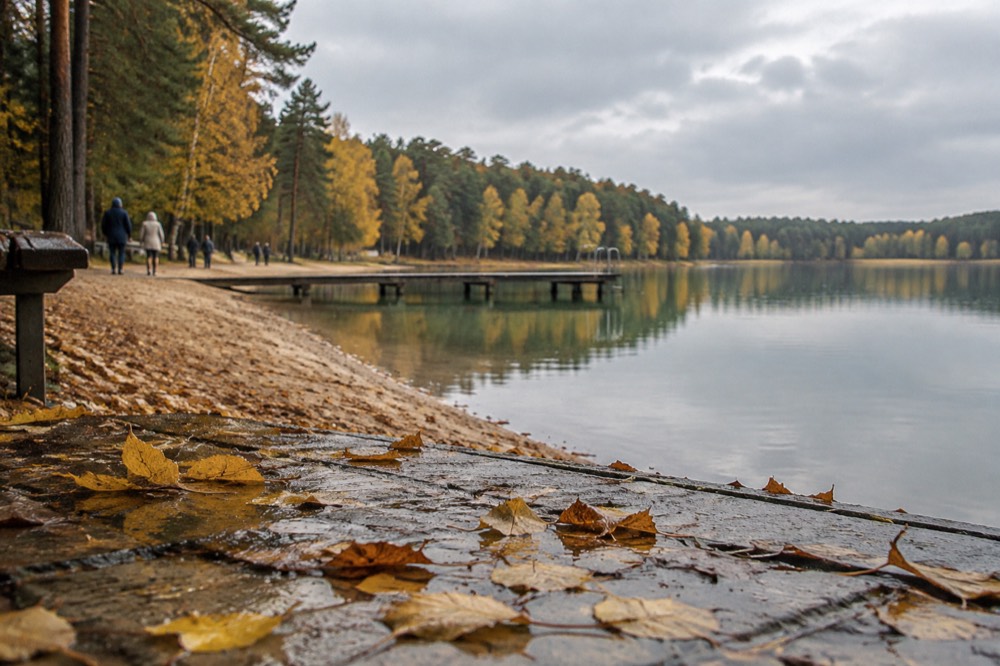
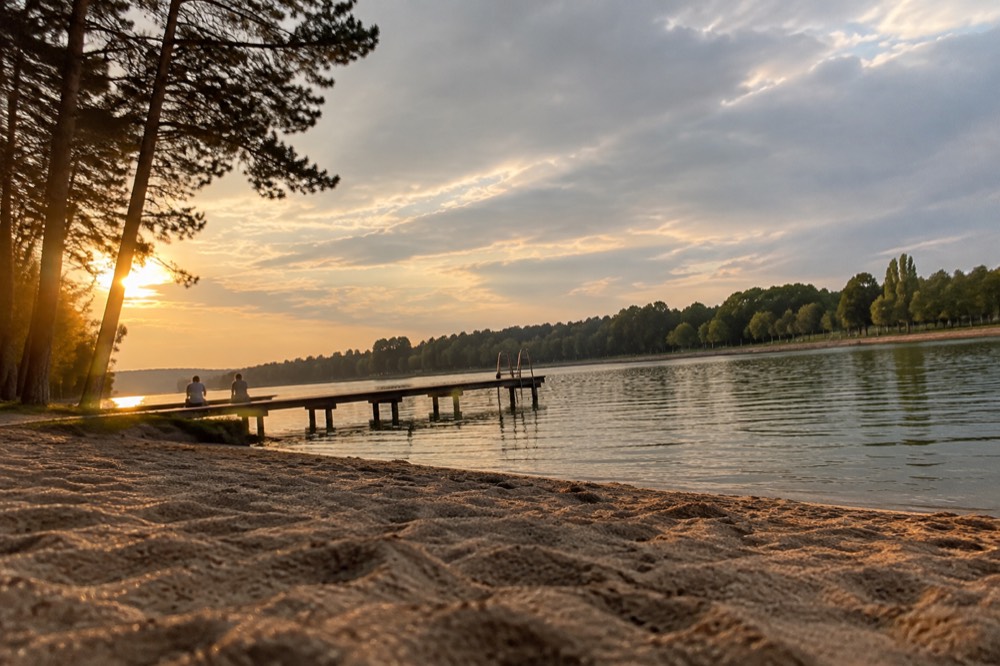
A reasonable reading of all this: treat Rusalka as a fair-weather morning or a golden-hour walk in the shoulder months, and keep the thermal baths as the standby for the wet July day that the normals quietly predict.
Which Other Green Spaces Pair Well With Rusalka Lake?
Poznan's two heavyweight green companions are Citadel Park, described by the city's own portal as the largest park in Poznan and a 15-minute walk from the Old Market Square, and the Lake Malta shoreline with its free-entry Old Zoo and ticketed New Zoo, both reachable on the same ZTM tickets that serve the whole city. Rusalka, Citadel and Malta between them cover the full range of outdoor Poznan, from woodland water to fortress park to promenade.
Citadel Park carries real history: the city portal describes it as a relic of a 19th-century fortress, called the largest artillery fort in Europe at the time, and its museums are precisely documented. The Museum of Armaments opens Tue-Sun 10:00-16:00 from November to February and 10:00-17:00 Tue-Sat from March to October, closed Mondays, at 15 zl normal, 10 zl reduced, with a combined ticket at 20/12 zl, free entry on Tuesdays and a visit length the museum itself puts at 45 to 90 minutes. The Museum of the "Poznan" Army next door is 10/6 zl.
| Poznan green space | Entry | Key detail |
|---|---|---|
| Rusalka Lake | Free | Wooded lake, no ticketed facilities |
| Citadel Park | Free (museums ticketed) | Largest park in the city, 15-minute walk from the Old Market Square |
| Old Zoo, ul. Zwierzyniecka 19 | Free | Open daily, 9:00-16:00 Nov-Feb |
| New Zoo, ul. Krancowa 81 | 45 zl weekdays Mar-Oct | 20 zl for everyone Nov-Feb |
| Lake Malta promenade | Free | Termy and seasonal railway alongside |
The zoo pairing deserves its own note because the pricing is unusual. The New Zoo charges 45 zl normal and 30 zl reduced on weekdays from March to the end of October, 55/35 zl on Saturdays and public holidays in that window, 60/40 zl on 1 and 3 May, Corpus Christi and 15 August, and a flat 20 zl for every visitor from November to the end of February, with a family ticket at 35 zl in winter and 80 zl on summer weekdays. Children under 3 are free, the car park is paid at 5 zl per hour on weekdays and 7 zl at weekends from April to October, and the two zoos do not share a ticket: the Old Zoo is a separate, free site on Zwierzyniecka.
For visitors whose interest in Poznan's military landscape runs deeper than the Citadel's two museums, the tank museum heritage tour above covers it by army vehicle; its live listing carries the current price, duration and departure details.
Can You Combine Rusalka Lake With A Day Trip Out Of The City?
Yes, and Poznan's northern and eastern surroundings are unusually rich in castles and early-Polish sites, with Kornik Castle open Tue-Sun 10:00-15:15 in low season for 40/20 zl, Biskupin's archaeological reserve open 9:00-16:00 from November to March at 28/19 zl, and Gniezno's Museum of the Origins of the Polish State free on Sundays, all reachable by regional train or bus from the same Glowny station. Rusalka, sitting on the green northern side of the city, sits naturally on the way out toward several of them.
| Day trip from Poznan | Season hours | Tickets (zl) |
|---|---|---|
| Kornik Castle | Low season Tue-Sun 10:00-15:15, last entry 14:30 | 40 normal / 20 reduced |
| Kornik Arboretum | Nov-Mar daily 10:00-16:00 | 10 / 7, family 25 |
| Biskupin | Nov-Mar 9:00-16:00 | 28 / 19, family 2+2 75 |
| Gniezno Origins museum | Oct-Apr daily 9:00-16:00 | Sunday free |
| Rogalin Palace | Nov-Feb Tue-Sun 9:00-16:00 | 20 / 13, Tuesday free |
| Lednica museum seat | Per 2026 price list | 30 / 20 |
Three cautions keep these plans honest. Kornik's 2026 tourist season closes on 14 December and the castle is closed Mondays, closed on 1 November, and open 10:00-15:00 on 11 November. Biskupin closes on 1 January, Easter Sunday, 1 November and 25 December, a different closure list from most. And at Gniezno's cathedral hill, from May to October the cathedral and museum are closed to tourists on Sundays, with only the viewing terrace opening in two afternoon windows, so Sunday suits the free museum but not the cathedral interior.
Train times to these towns follow the general rule for this whole region: use "about" ranges and check the operator's planner for the day. The Poznan-to-Gniezno regional run is reported at roughly 25 to 45 minutes, and the desk's weakest figures, the long-distance ranges to Warsaw, Berlin and beyond, should always end with a look at the PKP Intercity planner. One border note matters for anyone combining Rusalka with a Berlin leg: Poland has temporary internal border controls at its land borders with Germany and Lithuania from 2 October 2026 to 30 March 2027, so carry a passport or national ID on the train.
Whichever way the day ends, the beer tasting above is the classic Poznan finale: a guided walk through Polish brews with the story of the city's brewing culture, all details carried on the live listing. Book only what the day's shape actually allows; every product here shows its cancellation terms before payment.
What Should You Know Before You Go To Rusalka Lake?
Take a ZTM ticket from 5 zl, expect free and undeveloped shorelines rather than facilities, swim only in the supervised summer season, bring cash-free pockets anyway since Poland's currency is the zloty, and set expectations from the climate normals: about 20 C mean highs in May and September, 25 C in July, and frost on nearly 20 days in January. That single paragraph is the whole packing list for the lake itself, and it is built entirely from figures this desk can trace.
Money first: Poland uses the zloty (PLN), is in the EU and Schengen but not the euro area, and no fixed exchange rate belongs in evergreen copy because rates move daily. Visa-exempt visitors from the UK and US should also know two border facts. The EU Entry/Exit System has been fully operational at all external Schengen borders since 10 April 2026, so fingerprints and a photo may be registered on first entry, at no cost. The ETIAS travel authorisation's start date and fee are not settled in any source this desk trusts, so check the EU's official ETIAS site before you travel rather than relying on any printed date.
Safety is the last piece, and Poznan grades well: the US State Department's advisory for Poland stands at Level 1, the lowest tier, and the emergency number 112 works free from any phone, even one without a SIM. Tap water is safe to drink, the city utility Aquanet says so plainly. Combine that with the free shore at Rusalka and a 5 zl tram ticket, and you have one of the cheapest good mornings available in any European regional capital.
For the full spread of walking routes, food and where to sleep, the rest of Poznan Travel Guide covers the city attraction by attraction, and the Srodka and Ostrow Tumski walk makes a natural cultural counterweight to a morning at the lake.
Common Questions About Rusalka Lake In Poznan
Is Rusalka Lake free to visit?
Yes. There is no gate, ticket desk or admission charge at the lake; walking the shore costs nothing, and reaching it costs only a ZTM timed ticket from 5 zl for up to 15 minutes or 9 zl for up to 90 minutes, valid in all zones.
Can you swim in Rusalka Lake?
Swimming is a summer activity and only advisable at officially supervised bathing areas in season. No verified official source publishes a water-quality rating or lifeguard schedule for the lake, so check the city's current bathing-area notices before you swim.
How do I get to Rusalka Lake from central Poznan?
Use the ZTM tram and bus network with a standard timed ticket: 5 zl for 15 minutes, 7 zl for 45, 9 zl for 90, or a 24-hour zone A pass at 18 zl. Consult the ZTM journey planner for the exact stop, and note that contactless bank-card payment on vehicles is not expected until 2028.
Is Rusalka Lake or Lake Malta better for families?
Malta, for infrastructure: Termy Maltanskie's Aquapark runs daily 9:00-23:00 with family tickets from 93 zl for one hour, and the New Zoo nearby charges a flat 20 zl in winter and 45 zl on summer weekdays. Rusalka suits families who want a free, quiet shore and bring their own entertainment.
What is the best month to visit Rusalka Lake?
June through August for warmth, with mean highs of 23.1 to 25.2 C, though July is also the wettest month at 84.4 mm. May and September, near 20 C by day with little frost risk, are the best months for walking rather than swimming.
Are there places to eat at Rusalka Lake?
No verified source publishes a kiosk, cafe or rental schedule for the lake, so treat it as a bring-your-own picnic spot. The developed food options sit on the Lake Malta side and in the city centre.