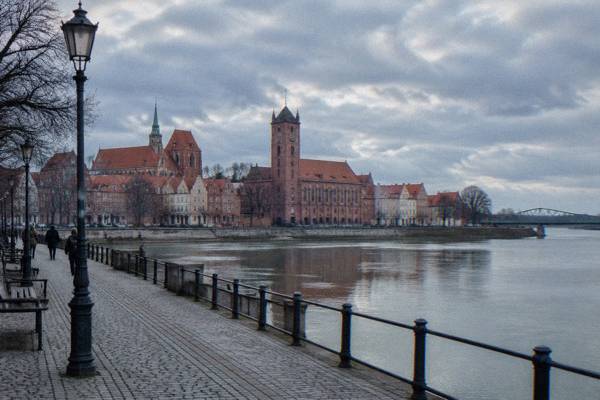
What Is The Prettiest Town In Poland?
Torun leads most lists of Poland's prettiest towns, but Poznan, Gniezno and Kornik all have a claim. A Poznan-based comparison of the candidates, with verified entry prices.
Poznan, the capital of the Wielkopolskie voivodeship in western Poland, sits on the Warta river and is home to 534,239 people, which by Polish standards makes it a city rather than a town. That distinction matters, because the question of the prettiest town in Poland is usually answered with a smaller place, and the name that comes up again and again is Torun, the brick-gothic city on the Vistula where Copernicus was born. Yet Poznan has a genuine claim to the title's spirit: a rebuilt Old Market Square ringed with painted merchant houses, a cathedral island in the middle of the river, and a cluster of small historic towns, Gniezno, Kornik and Rogalin, within easy reach. This page compares the candidates from a Poznan point of view, using the entry prices and opening facts each venue publishes itself.

What Is The Prettiest Town In Poland?
Torun is the answer most rankings give, an almost intact gothic old town of brick churches, burgher houses and city walls on the Vistula river, protected as a UNESCO World Heritage Site and never flattened the way Poland's bigger cities were. Poznan is the strongest contender from the Wielkopolska region: its Old Market Square, Ostrow Tumski cathedral island and the Srodka district give it the same visual punch at city scale.
Torun earns the crown honestly. Its old town survived the Second World War largely intact, so the brick you see is medieval rather than reconstructed, which is rare in this part of Europe. The trade-off is that everyone knows it, and in high summer the main squares fill early. Poznan's story is different: its Old Market Square was rebuilt after wartime destruction, and the result, a wide square with richly painted facades and the Town Hall tower at the centre, photographs beautifully at any hour. The National Museum's goat page records that the two metal goats on the facade appear every day at noon and, since recently, also at 3 pm, a small mechanical show no other Polish city can match. For travellers who want pretty without the crush, the honest answer is that Torun wins on authenticity and Poznan wins on atmosphere, with far fewer queues.
Why Do So Many Travellers Name Torun?
Torun is named because its old town is genuine gothic brick rather than postwar reconstruction, because it is compact enough to walk end to end in an afternoon, and because it sits above the Vistula in a way that gives the town a skyline of towers and gables that has barely changed in centuries. Copernicus was born there, and the gingerbread tradition gives the streets a smell and a story.
The comparison with Poznan is instructive. Poznan's Old Market Square is larger and its colours bolder, but the square is a faithful rebuild, and the Town Hall museum inside is currently closed for renovation, with the National Museum's visit page listing every weekday as closed and no reopening date published. Torun's advantage is completeness: walls, gates, churches and granaries all at once. Poznan's advantage is everything else around the pretty core. Ostrow Tumski, the island where Poznan Cathedral stands, holds the crypts with the tombs of Mieszko I and Boleslaw Chrobry, open to tourists from 1 March to 15 November with crypt tickets at 10 zl reduced to 8 zl and tower tickets at 14 zl or 12 zl. Across the island, Porta Posnania charges 35 zl normal and 29 zl reduced for its multimedia interpretation centre, closed Mondays. That density of history is why many travellers who see both end up preferring Poznan for a longer stay and Torun for a single photogenic day. A Torun day trip from Poznan is one of the easier rail excursions in western Poland, and guided options exist on the operator listings.
If a day in Torun does not fit your dates, the city itself rewards the hours between sights with entries that are, by big-city standards, inexpensive. The next table gathers the published entry figures for the core of a Poznan visit.
| Sight in Poznan | Entry, normal zl | Entry, reduced zl | Closed |
|---|---|---|---|
| Imperial Castle, with map | 10 | 7 | none, daily 12:00-19:00 |
| Royal Castle, Museum of Applied Arts | 20 | 13 | Monday, Tuesday free |
| Poznan Cathedral tower | 14 | 12 | 16 Nov to end Feb |
| Porta Posnania | 35 | 29 | Monday |
| Enigma Cipher Centre | 35 | 29 | Monday |
| Croissant Museum, ticket price on the booking widget | listed on the widget | listed on the widget | Friday hours not listed |
What Makes Poznan A Contender For The Prettiest Town In Poland?
Poznan competes because its Old Market Square is one of the widest and most richly decorated in Poland, because the cathedral island of Ostrow Tumski and the small district of Srodka sit a short walk from it, and because the city wraps its prettiest streets around living institutions rather than a museum piece: a working basilica, a daily mechanical goat show and a food scene the Michelin Guide has begun to notice.
Start with the square. The City Hall tower anchors it, and the goat show at noon gives visitors a reason to be there at a fixed hour, a small ritual that turns sightseeing into an event. Walk off the square towards the river and you reach the Fara, the Collegiate Basilica open daily from 6:00 to 19:30 with free individual visits outside Mass times, an interior of baroque richness that costs nothing to see. Cross the bridge to Ostrow Tumski for the cathedral, then continue to Srodka, a formerly separate village now absorbed into the city, where the tenement at ul. Srodka 3 carries the large mural the city celebrated as ten years old in October 2025. That mix of grand and homely is Poznan's argument against Torun's uniform brick.
To find your way around the square and its stories, book an Old Town walking tour here.
The gastronomy backs it up. The Michelin Guide Poland 2026 lists 25 restaurants from Poznan and its surroundings, with Muga holding one Michelin star and Bib Gourmand awards for Fromazeria, POSTO, SPOT., TU. REStAURANT and Farmer & Sons in Skorzewo. A pretty town that also feeds you well is a stronger proposition than one that only photographs well. For planning how much time to give it, the question of how many days in Poznan is enough has its own answer on this site, and the comparison which is nicer, Poznan or Wroclaw covers the other obvious rival.

Poznan is not flawless. The Palm House in Park Wilsona, long a rainy-day favourite, is closed to visitors for rebuilding, with the city aiming to reopen part of the pavilions towards the end of 2028 and works running until 2030. The Town Hall museum interior is closed too. Neither closure touches the square itself, the goats or the cathedral island, but a fair comparison should say so.
Which Other Towns Deserve The Title?
Beyond Torun and Poznan, the strongest prettiest-town candidates in this part of Poland are Gniezno, with its cathedral hill and Europe's finest Romanesque bronze doors; Kornik, a small lake town with a castle and one of Europe's great arboretums; and Rogalin, whose baroque palace sits among ancient oaks by the Warta. Each is a short hop from Poznan and each publishes its own entry prices.
Gniezno holds a special place in the national story, covered in detail in this site's answer to which city was the first capital of Poland. The Gniezno Doors cost 16 zl normal and 14 zl reduced to see, the cathedral vaults 14 or 12 zl, and the viewing terrace 12 or 10 zl, or an all-inclusive pass with audio guide at 48 or 42 zl. Note the Sunday trap: from May to October the cathedral and museum are closed to tourists on Sundays, with only the terrace opening in two afternoon windows. The Museum of the Origins of the Polish State is open daily and admits visitors free on Sundays, a rare Sunday bargain in Poland.
Kornik suits the word "town" better than any other candidate here: a castle on a lake, a small market place and the Kornik Arboretum with roughly 3,000 species and varieties of trees and shrubs, open daily and costing 10 zl for adults. The castle is closed Mondays, opens at 10:00 in the low season with last entry at 14:30, charges 40 zl normal and 20 zl reduced, and its 2026 season closes on 14 December. Rogalin Palace, a National Museum branch, opens Tuesday to Sunday, charges 20 zl normal and 13 zl reduced and is free on Tuesdays. Biskupin, the reconstructed Iron Age settlement, is a different kind of pretty, an archaeological reserve in wetland forest, open 9:00 to 16:00 in the November to March season at 28 zl normal and 19 zl reduced.
| Town near Poznan | Signature sight | Entry, normal zl | Entry, reduced zl | Monday |
|---|---|---|---|---|
| Gniezno | Cathedral hill and Gniezno Doors | 16 | 14 | open, terrace hours vary on Sundays |
| Kornik | Castle on the lake | 40 | 20 | castle closed |
| Rogalin | Palace and ancient oaks | 20 | 13 | closed, Tuesday free |
| Biskupin | Iron Age settlement | 28 | 19 | open |
How Do You Choose Your Own Prettiest Town In Poland?
Choose Torun if you want the most complete gothic old town and can share it with crowds, choose Poznan if you want a beautiful square plus a working city of concerts, museums and restaurants around it, and choose Gniezno or Kornik if your idea of pretty is a cathedral hill or a lakeside castle without a tour group in sight. There is no wrong answer, only different kinds of pretty.
Timing changes the verdict. WMO's 1991-2020 normals for the Poznan station show July as both the warmest month, averaging a 25.2 C daily high, and the wettest, with 84.4 mm of rain, while April is the driest at 28.6 mm. A prettiest-town walk in April light with thin crowds can beat the same walk in July heat between showers. Winter has its own case: Poznan's Christmas market opens across the Old Market Square, Plac Wolnosci and the fair grounds, and the New Zoo drops to a flat 20 zl entry from November to the end of February. Solo travellers weighing practicalities can check is Poznan safe on this site before committing.
Whatever the season, Poznan rewards a longer look than its reputation suggests, and this site exists, as Poznan Travel Guide, to give it that look. One indoor stop worth reserving is the Interactive PRL Museum, a walk-through reconstruction of everyday life in communist-era Poland, a reminder that the country's recent past is part of its scenery too.
Common Questions About Poland's Prettiest Towns
What is the prettiest town in Poland?
Torun is the answer most rankings give, thanks to an almost intact gothic old town on the Vistula. Poznan is the strongest contender from Wielkopolska, with a rebuilt Old Market Square, the cathedral island of Ostrow Tumski and the small Srodka district.
Is Poznan prettier than Torun?
Poznan's Old Market Square is wider, more colourful and animated by the daily noon goat show on the Town Hall facade, while Torun's old town is more architecturally complete because it survived the war largely intact. Poznan also surrounds its pretty core with a working city, which Torun, smaller and quieter, does not to the same degree.
What is the prettiest small town near Poznan?
Kornik, with its castle on the lake and an arboretum of about 3,000 species and varieties, is the easiest case to make. Gniezno, with its cathedral hill and Romanesque bronze doors, is the more historic alternative.
When is the best time to visit the prettiest towns in Poland?
WMO's 1991-2020 normals for Poznan show July as the warmest month but also the wettest at 84.4 mm of rain, and April as the driest at 28.6 mm. Late spring and early autumn give the best mix of light, thin crowds and comfortable walking weather.
Is Torun a day trip from Poznan?
Yes, Torun works as a day trip from Poznan by train, with journey times varying by connection, so check the operator's planner for your day. Guided sightseeing day tours from Poznan to Torun are also sold on the operator listings.