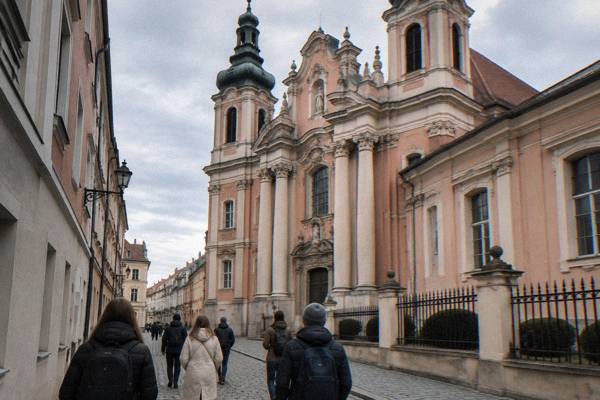
Is Poznań Better Than Krakow?
An honest comparison of Poznan and Krakow: sights, prices, crowds, day trips and which Polish city suits your trip better.
Poznan, the capital of the Wielkopolskie voivodeship (Greater Poland) in western Poland, sits on the Warta river and counts 534,239 residents according to the Statistical Office in Poznan. Krakow is bigger, older in its tourist reputation and far more visited, which is exactly why the question keeps coming up. Travellers who want the famous Poland itinerary go to Krakow; travellers who want a Polish city that still feels lived-in keep landing in Poznan. This page compares the two honestly, using only figures the cities' own operators publish, because a comparison built on vibes helps nobody plan a trip.

Is Poznań Better Than Krakow?
Poznan is better than Krakow for travellers who want a compact, walkable city with an authentic local pace, lower crowds and easier access to Wielkopolska's castles and archaeological sites, while Krakow is better for first-time visitors chasing the biggest concentration of landmark sights, because Poznan cannot match Krakow's sheer volume of world-famous monuments.
Neither city wins outright; they win on different briefs. Poznan's Old Market Square, its cathedral island of Ostrow Tumski and its layered merchant history reward a slower, curiosity-driven visit. Krakow trades on scale: a vast main square, a royal castle and day-trip gravity that pulls millions. The honest framing is not which city is superior but which one matches the trip you are actually taking, and the rest of this page breaks that down by category.
One point worth stating early: Poznan is not a lesser Krakow. The Michelin Guide Poland 2026 lists 25 restaurants from Poznan and its surroundings, with Muga holding one star, which puts the city's food scene on the national map in its own right. The city portal publishes that figure alongside the Bib Gourmand picks, so this is a place where eating well is not a compromise.
How Do The Sights And Atmosphere Compare?
Poznan's core sights sit within a short walk of each other, from the Old Market Square and the Town Hall goats to Ostrow Tumski's cathedral, while Krakow spreads its landmarks across a larger historic centre that demands more days; Poznan feels like a city you can finish in two or three days, Krakow does not.
The Poznan comparison set is tight and real. The Old Market Square carries the Renaissance Town Hall, where two metal goats appear on the facade every day at noon and, the National Museum's page adds, since recently also at 3 pm. The museum inside the Town Hall is closed for renovation with no reopening date published, so plan for the square, the facade and the goats rather than an interior visit. Ostrow Tumski holds the cathedral with the crypts of Mieszko I and Boleslaw Chrobry and a viewing tower open from 1 March to 15 November, plus Porta Posnania, the modern interpretation centre whose own page lists Tuesday-to-Sunday visiting and Monday closure.
Krakow's counterweight is volume: the Main Market Square, Wawel, Kazimierz and the day trips beyond. The trade is crowds for grandeur. What Poznan offers in exchange is a city where the square is busy but not crushed, where you can book the Croissant Museum's English show at 14:00 without fighting a wall of tour groups, and where districts like Srodka and Jezyce give you ordinary Polish neighbourhood life a short tram ride from the centre. The Srodka mural at ul. Srodka 3, which the city marked as ten years old in October 2025, is the kind of small, local landmark that has no Krakow equivalent, precisely because Krakow's centre has fully given itself over to tourism.
For structure, a guided walk compresses Poznan's story efficiently. The Old Town walking tour covers the square, the goats and the merchant legends in one loop, and a fuller option pairs the city with the region's archaeology on the Gniezno and Biskupin full-day trip. Details on both render in the listings above; the operators' pages carry current prices and times.
Which City Is Easier On The Budget?
Poznan and Krakow both price in the Polish zloty, and Poznan's published museum and transport figures are low enough that a sightseeing day costs relatively little: timed tram tickets run 5 to 9 zl, the Imperial Castle entry is 10 zl with a map, and the National Museum branches are free on Tuesdays, while Krakow's headline sights and food skew towards tourist pricing.
Poland is not in the euro area, so both cities use PLN and the same caution applies to both: never trust a fixed exchange rate printed anywhere, because the National Bank of Poland's rates move daily. The figure that matters for comparison is what each city's own operators publish. In Poznan that starts with transport: a 15-minute ZTM ticket is 5 zl, 45 minutes is 7 zl, 90 minutes is 9 zl, all valid across every zone with transfers, and a 24-hour zone A ticket is 18 zl. The fine for riding without a valid ticket is 350 zl, or 175 zl if paid within 7 days, which is worth knowing in both cities.
| Poznan item | Price (zl) | Notes |
|---|---|---|
| ZTM tram/bus ticket, 15 min | 5 | All zones, transfers allowed |
| ZTM 24-hour ticket, zone A | 18 | Weekend promo extends it to Sunday |
| Imperial Castle entry with map | 10 | Daily 12:00-19:00 |
| Royal Castle (Museum of Applied Arts) | 20 | Tuesday free |
| Porta Posnania | 35 | 21 with Poznan City Card |
| New Zoo, November to February | 20 | Everyone, family 35 |
Museum culture in Poznan is unusually generous. The National Museum's branches and the Independence Museum network, which includes the Museum of Armaments in Citadel Park, are free on Tuesdays. The Old Zoo on ul. Zwierzyniecka is free every day, all year. Add the Poznan City Card, which the official tourism page prices at 65 zl with transport or 59 zl without, and a dense two-day sightseeing run becomes cheap without resorting to skipping things. Krakow has free days too, but its headline paid attractions and centre-of-town eating carry the premium a mass-market destination charges.
How Do You Travel Between The Two Cities?
Direct trains from Poznan Glowny to Krakow take about 4 to 6 hours according to the PKP Intercity timetables, so the pair works as a two-city trip rather than a day-trip combo, and the practical route is to check the PKP Intercity planner for the specific day because journey times vary widely between services.
Those journey times are reported ranges, not a promise: they come from the operator's timetable documents and shift with the departure you pick. Never book around a minute-exact figure. Two related facts shape the planning. First, Poznan's own day-trip radius is outstanding: Gniezno is about 25 to 45 minutes away by train, Kornik Castle and its arboretum are a short hop south, and Biskupin's archaeological reserve pairs naturally with the Gniezno trip. Krakow's day trips run towards the salt mine and the memorial sites; Poznan's run towards early Polish history and castle parks. Second, anyone arriving from Berlin should carry a passport or national ID: Poland has notified temporary border controls at its land borders with Germany and Lithuania from 2 October 2026 to 30 March 2027.

For arrivals, Poznan-Lawica airport sits close to the city, and ZTM lines 148 and 159 link the terminals with Poznan Glowny, each running every 15 minutes at peak, which means a departure every 7 to 8 minutes on the corridor at busy times. Standard tram and bus tickets apply, the same 5 to 9 zl timed fares as anywhere in the network. One caution: there is no contactless bank-card payment on Poznan vehicles yet. ZTM's modernisation contract points to that arriving around 2028, so today you buy from a machine, an app or a PEKA card.
Which City Should You Actually Choose?
Choose Krakow if this is your first trip to Poland and you want the maximum-density hit of famous sights; choose Poznan if you have already seen Krakow or Warsaw, or if you prefer smaller cities, food worth planning around, fewer tour groups and a base for Wielkopolska's castles and early-history sites, and split the trip if you have a week or more.
A useful tiebreaker is pace. Poznan rewards two or three unhurried days: the square and the goats, Ostrow Tumski and Porta Posnania, the Enigma Cipher Centre on Sw. Marcin with its Polish, English and German exhibition, the Imperial Castle, and Lake Malta for open air. Lake Malta also carries Termy Maltanskie, the geothermal aquapark open daily 9:00-23:00, which the operator positions on the lake shore, and the free Old Zoo sits on the way. The Maltanka park railway beside the lake is seasonal: the 2026 season closed on 27 September and no 2027 date is published, so do not build a winter visit around it.
Krakow rewards a longer stay and tolerates a faster one, because its sights concentrate where the hotels do. The cost of that concentration is a historic centre engineered for visitors. Poznan's centre still contains the real city: Rynek Jezycki market trades Monday to Saturday 6:00-20:00, Stary Browar's gallery keeps ordinary shopping hours, and the evening crowds on the square are as likely to be locals as anyone else.
Common Questions About Poznan And Krakow
There is no single winner between the two cities: Poznan offers a calmer, cheaper, more local experience with strong day trips, while Krakow offers the densest concentration of Poland's famous sights, and the better choice depends on matching the city to the trip rather than crowning one of them.
Is Poznan worth visiting if you have already been to Krakow?
Yes. Poznan is a different experience rather than a repeat: a merchant city with its own dialect food, cathedral island of Ostrow Tumski, the Enigma Cipher Centre and day trips to Gniezno and Kornik. The case for visiting Poznan stands on its own sights, not on leftovers from Krakow.
How many days does Poznan need compared with Krakow?
Poznan works well with two or three days, which covers the Old Market Square, Ostrow Tumski, the Imperial Castle and Lake Malta plus one day trip. Krakow generally needs more. The days-needed breakdown for Poznan explains the pacing.
Is Poznan cheaper than Krakow?
Both cities price in the Polish zloty and neither is expensive by Western European standards, but Poznan's published figures are low across the board: 5 to 9 zl tram tickets, 10 zl Imperial Castle entry and free Tuesday museum admission. The cost guide for Poznan covers the detail.
Can you visit Poznan and Krakow on the same trip?
Yes, and it works well by train. Direct services from Poznan Glowny to Krakow take about 4 to 6 hours, so treat them as a two-city itinerary rather than a day trip. The Poznan to Krakow train guide covers the route.
Is Poznan safe for tourists?
Poznan is regarded as a safe city, and the US State Department's advisory level for Poland has been Level 1, the lowest tier. Emergency number 112 works free of charge across the EU, even from a phone without a SIM card. The safety overview for Poznan has the specifics.
For a final steer from Poznan Travel Guide: if the trip is about seeing Poland's greatest hits, Krakow; if it is about understanding one Polish city properly, Poznan; and if the calendar allows both, the train between them turns the choice into a sequence.