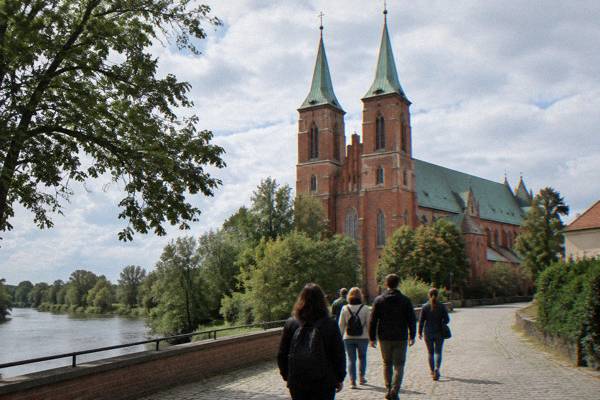
Is It Safe For Americans To Go To Poland Right Now?
Is it safe for Americans to go to Poland right now? A fact-checked answer covering entry rules, EES, Poznan safety basics, transport and practical tips.
Poznan, the capital of the Wielkopolskie voivodeship (Greater Poland) in western Poland, on the Warta river, is a city of 534,239 residents and one of the calmest big-city destinations an American traveler can pick in Central Europe. Poland sits inside both the European Union and the Schengen area, the US State Department's published advisory level for the country is reported as Level 1, the lowest tier, and the questions Americans actually ask tend to be about paperwork and payment cards rather than danger. This page answers the safety question directly, then covers the entry rules, the local basics and the small number of things that genuinely need advance planning, all drawn from official sources rather than forum chatter.

Is It Safe For Americans To Go To Poland Right Now?
Yes, Americans can travel to Poland safely right now: the US State Department's advisory level for Poland is reported as Level 1, its lowest tier, Poland is an EU and Schengen member, and Poznan is an ordinary, walkable regional capital with no elevated warnings attached to it. The practical issues for American visitors are administrative, not physical. The EU Entry/Exit System is fully operational at external Schengen borders, so fingerprints and a photo may be registered on first entry, and Poland is running temporary checks on its land border with Germany into early 2027. None of that makes a trip unsafe; it just means carrying a passport and allowing a few extra minutes at the border.
There is no sourced crime statistic, scam report or safety ranking in the verified fact pack behind this site, and an honest guide does not invent one. What can be said plainly is that Poznan is a university and trade-fair city with a busy, well-policed core, a modern tram network and the same everyday precautions any mid-sized European city deserves: watch pockets in crowds, don't leave bags unattended, and keep your phone off the café table edge. Readers who want the city-level picture can also read the companion page is Poznan safe, and solo travelers can see the dedicated answer on solo female travel safety in Poland.
The other half of the question is whether the trip is safe to plan, meaning will the trains run, will the card work, will the museum be open. On that front Poznan is predictable. The city portal, the ZTM transit authority and the museum network all publish current hours and prices, and this guide links to the pages where those basics are covered in depth, including how many days in Poznan is enough for a first visit.
What Do Americans Need To Enter Poland?
Americans need a valid passport and nothing more for tourism: US citizens are visa-exempt for short stays in the Schengen area under the same rules as other visa-exempt nationals, and no visa or advance authorization is required today. The EU Entry/Exit System (EES) has been fully operational at all external Schengen border crossing points since 10 April 2026, so on first entry an American visitor may be asked to register fingerprints and have a photo taken, a routine biometric step rather than an interview. The separate ETIAS travel authorization does not change that today: its start date and fee are not officially confirmed, so check the EU's official ETIAS site before you travel rather than trusting a blog that names a date.
One live detail matters for anyone arriving by land. Poland has notified temporary internal border controls at its land borders with Germany and Lithuania, running from 2 October 2026 to 30 March 2027, with an earlier period before that. On the train or bus from Berlin this can mean a passport check on board, so carry your passport, not a photocopy, and have it within reach rather than buried in a suitcase. Flying into Poznan-Lawica from outside Schengen means the EES registration happens at the airport instead.
The summary table below collects the entry facts Americans ask about most:
| Question | Answer for US citizens |
|---|---|
| Visa needed? | No, visa-exempt for short Schengen stays |
| Passport validity | Follow Schengen rules; UK guidance (same zone) says issued under 10 years before arrival, valid 3 months past departure |
| EES registration | Fully operational since 10 April 2026; fingerprints and photo may be taken, no fee |
| ETIAS | Not confirmed as required today; check the EU's official ETIAS site before travel |
| Land border from Germany | Temporary controls to 30 March 2027; carry your passport on the train or bus |
| US advisory level | Reported as Level 1, the lowest tier |
Money is the other entry-adjacent question, and it has a clean answer: Poland uses the zloty (PLN), not the euro, even though it is in the EU. The National Bank of Poland publishes exchange rates daily, so no fixed rate belongs in an evergreen guide. Cards are widely accepted in Poznan's restaurants, museums and shops, and the companion page on what currency Poznan uses covers the practical detail.
Is Getting Around Poznan Safe And Easy?
Yes, and it is cheap by US standards: Poznan's ZTM network runs trams and buses on a timed-ticket system covering all zones (15 minutes 5 zl, 45 minutes 7 zl, 90 minutes 9 zl, 24 hours in zone A 18 zl), with machines, apps and the PEKA card as the ways to pay. One genuine trap for Americans: you cannot yet tap a contactless bank card on a Poznan tram or bus. ZTM signed the PEKA modernisation contract in 2026 and contactless payment is expected in 2028, but today a tap-in with a Visa or Mastercard does nothing, and riding without a valid ticket carries a 350 zl fine, reduced to 175 zl if paid within 7 days.
Buy from the machine at the stop or in the app before boarding, and validate the paper ticket the moment you get on. The airport connection is simple: lines 148 and 159 link Poznan Glowny station with Lawica airport, each every 15 minutes at peak, which means a departure every 7 to 8 minutes at peak times on the shared corridor. Standard ZTM tickets apply, so the same 5 zl timed ticket logic covers the ride. The rest of the planning pages sit on Poznan Travel Guide.
A private guide is another comfortable way for a first-time American visitor to get oriented, especially across the river. The Srodka and Cathedral Island private walking tour covers Ostrow Tumski and the Srodka district with a local guide, and Check availability on the operator's live listing if a guided intro appeals.
Beyond transit, two absences are worth knowing so nobody plans around them. Poznan has no city bike system: the municipal scheme ran from 2012 to 2022 and has not returned, with only a council discussion about reviving it. And the Maltanka park railway at Lake Malta is seasonal; its 2026 season ended on 27 September, with no 2027 start date published yet. Neither is a safety issue, but both are the kind of thing a generic listicle gets wrong.
For everyday reassurance, the basics are solid. The emergency number 112 is free across the EU from landlines and mobiles and, according to Poland's interior ministry, works even from a phone without a SIM card, so any unlocked handset can call it. Tap water is drinkable: the city utility Aquanet states outright that Poznan's tap water is safe to drink, which saves money and plastic. Tap water, trams and walkable streets do most of the work of keeping a visit uneventful.
What Everyday Risks Should Americans Actually Plan For?
The realistic risks are mundane: pickpocketing in crowds at the Old Market Square or on packed trams, misreading the ticket system and eating a 350 zl fine, and cold-weather underdressing, since WMO's 1991-2020 normals for the Poznan station show January with an average low of -2.9 C and 19.7 frost days. None of these are reasons to stay home; they are reasons to keep a bag zipped, buy a ticket before boarding, and pack a real coat between November and March.
Weather deserves more respect than Americans often give it. July is both the warmest and the wettest month in the Poznan normals (84.4 mm of precipitation on average), while April is the driest at 28.6 mm. Summer visitors should expect the odd downpour rather than drought, and winter visitors should expect close to 18 frost days in both January and February. The month-by-month breakdown lives on the site's Poznan weather guide, and anyone timing a visit around events should check the events page, because seasonal highlights like the Betlejem Poznanskie Christmas market (14 November 2026 to 6 January 2027, across three sites) draw the year's biggest crowds.

Health and money contingency planning looks like this:
| Situation | What to do |
|---|---|
| Medical or police emergency | Call 112, free from any phone, works without a SIM |
| Illness or injury, non-urgent | Pharmacies (apteka) are widespread; carry travel insurance, as US plans rarely pay out in Poland |
| Payment card fails | Keep some cash in zl; Poland is not in the euro area and cards occasionally hit foreign-transaction blocks |
| Ticket inspection on a tram | Show the validated ticket; riding without one is a 350 zl fine, 175 zl if paid within 7 days |
| Lost passport | Contact the US embassy in Warsaw; carry a photocopy separately from the passport |
The 2025 edition had no parade, replaced by an all-day street festival, and the 2026 programme had not been published when this site's research window closed, so treat the day as busy and festive rather than counting on a specific event. Crowds on that day are good-natured but dense, which is exactly when pickpocket-prevention habits matter.
Is Poznan Safe Compared With Other Polish Cities Americans Visit?
Poznan holds up well in any honest comparison: it is a similar-order destination to Wroclaw or Krakow in terms of everyday safety, with the same low advisory level covering all of Poland, and its compact centre, free-entry Old Zoo and flat terrain between the Old Market Square and Ostrow Tumski make it one of the easier Polish cities to navigate without a car. The fact pack carries no city-by-city crime ranking, and any site claiming one for Poznan specifically is guessing, so the fair comparison is structural: same country, same entry rules, same emergency number, same currency.
What Poznan does have is a manageable scale. The Old Market Square, Freedom Square and the Imperial Castle sit on one axis, Ostrow Tumski is a short walk or tram ride east, and Lake Malta is a straightforward tram hop for anyone using the 24-hour zone A ticket. The practical planning pages on this site, starting with is Poznan worth visiting and the comparison in Poznan or Wroclaw, cover the trade-offs without inflating any safety claim.
For visitors who want structured sightseeing rather than self-navigation, the small-group and private options below are run by established local operators, with current prices, ratings and durations on each live listing:
The bottom line for Americans is that the obstacles are clerical. Get the passport right, expect an EES biometric registration at the border, carry the passport on any Germany train, buy tram tickets before boarding, and keep zloty in mind rather than euros. Everything else about a Poznan trip, from the goats on the Town Hall facade at noon to a Saturday organ concert at the Fara, is ordinary tourism in a city that handles visitors well.
Common Questions About American Traveler Safety In Poland
Is it safe for Americans to go to Poland right now?
Yes. The US advisory level for Poland is reported as Level 1, the lowest tier, Poland is an EU and Schengen member, and no elevated warning applies to Poznan. The practical requirements are a valid passport, an EES biometric registration at first entry, and ID on land borders with Germany through 30 March 2027.
Do Americans need a visa for Poland?
No. US citizens are visa-exempt for short stays in the Schengen area. The ETIAS authorization is not confirmed as required today; check the EU's official ETIAS site before you travel, since its start date and fee are not officially published.
Can I tap my credit card on a Poznan tram?
Not yet. Contactless bank-card payment on Poznan trams and buses is expected in 2028 under the PEKA modernisation contract. Today you need a ticket from a machine, an app or a PEKA card, and riding without one is a 350 zl fine, or 175 zl if paid within 7 days.
Is the tap water in Poznan safe to drink?
Yes. The city utility Aquanet states that Poznan's tap water is safe to drink, so filling a bottle is a normal thing to do.
What is the emergency number in Poland?
112. It is free of charge across the EU from landlines and mobiles, and Poland's interior ministry says it works even from a phone without a SIM card.
Is it safe to walk around Poznan at night?
Poznan's city centre, including the Old Market Square area, is a busy, well-lit university and trade-fair district. The usual European city precautions apply: keep valuables secure in crowds, and use the tram rather than long walks in unfamiliar districts late at night.